A smart plug that just switches things on and off is a party trick. The best smart plug with energy monitoring is a diagnostic tool: it tells you, in hard numbers, which of your appliances are quietly billing you every month. At 2026 electricity prices — still hovering around $0.17/kWh on average in the US and roughly 26p/kWh under the UK price cap — that information pays for the plug itself, usually within a few months.
We’ve researched specs, teardown reports, and hundreds of owner reviews across US and UK retailers to pick winners for both regions. That split matters: US and UK models use different plug hardware, so “just buy the Kasa” is bad advice in London. Here’s the short version, then the detail.
Why Energy Monitoring Is the Killer Smart Plug Feature in 2026
Every home has phantom loads — devices drawing power while “off.” Set-top boxes, consoles in rest mode, AV receivers and old TVs are repeat offenders in owner reports. Individually they’re 5–20W; together they commonly add up to 50–100W of constant draw, which is 440–880 kWh a year.
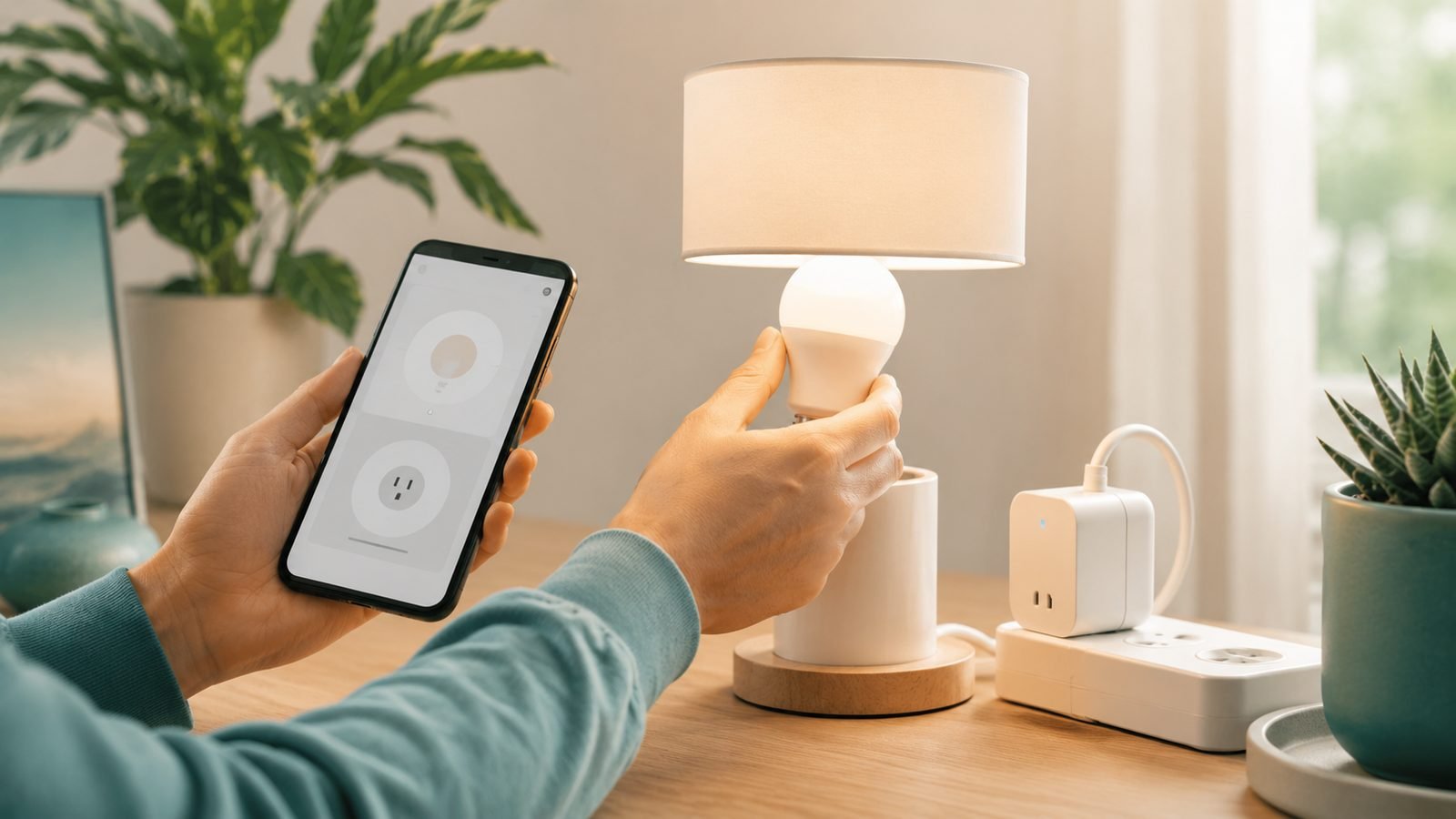
A smart plug to measure electricity usage turns suspicion into a number. Plug it in, leave it a week, and the app shows daily kWh and estimated cost. Then you either automate the device off overnight or move the plug to the next suspect. That loop is what actually saves money — and it’s why every pick below has real kWh tracking, not just scheduling.
Quick Picks: The Best Smart Plug With Energy Monitoring for US and UK Homes
| Pick | US model | UK model | Price (approx.) | Matter? |
|---|---|---|---|---|
| Best overall | Kasa EP25 (4-pack) | Tapo P110/P115 | ~$50 4-pack / ~£10 each (~£27 4-pack) | No |
| Best Matter smart plug | Kasa KP125M (2-pack) | Tapo P110M | ~$37 / ~£30 | Yes |
| Best for energy nerds | Emporia Smart Plug (4-pack) | Emporia Smart Plug (4-pack) | ~$35 / ~£35 | No |
| Best power strip | Tapo P306 | Tapo P306 | ~$50 / ~£40 | Yes |
| Best outdoor | Kasa EP40A | Tapo P400M (nearest UK option) | ~$25 / ~£25 | Partial (see below) |
All of these work with Alexa and Google Home; Matter and HomeKit support varies and is flagged per product. For a primer on what Matter actually gets you, see What Is Matter? The Smart Home Standard Explained (2026).
Best Overall (US): Kasa Smart Plug Mini EP25
Around $50 for a 4-pack (~$13 each). US sockets only — UK buyers, skip to the Tapo P110 below.
The EP25 is the boring, correct answer for most American homes. It’s compact enough to stack two per duplex outlet, the Kasa app shows real-time watts plus daily/weekly/monthly kWh, and it works with Alexa, Google Home, SmartThings and Apple Home — a four-platform spread that’s genuinely rare at this price.
In our research across thousands of owner ratings, the EP25’s standout trait is reliability: Kasa plugs have a long-standing reputation for staying connected on busy 2.4GHz networks where cheaper no-name brands drop off weekly. Schedules run locally on the plug, so a router reboot doesn’t kill your routines.
The catch: no Matter. Kasa bridges into Apple Home through TP-Link’s own integration — solid per owner reports, but occasionally slow to update state. If Matter-native control matters to you, that’s the KP125M’s job below.
Pros
- Excellent app with per-plug kWh history and runtime stats
- Works with all four major platforms
- Local schedules keep running if Wi-Fi drops
- Cheap per plug in the 4-pack
Cons
- No Matter certification
- 2.4GHz Wi-Fi only
- Energy data lives in TP-Link’s cloud, with limited export
Who it’s for: anyone in the US who wants a set-and-forget audit kit — buy the 4-pack, put one on the TV stack, one on the console, one on the office, one roaming.
Check price: Kasa Smart Plug Mini EP25 (4-pack)
Best Overall (UK): TP-Link Tapo P110/P115 — the Best Smart Plug UK Buyers Can Get
Around £10 each, roughly £27 for a 4-pack / about $13 in the US.
Consider this section our mini Tapo P110 review, because if you search “best smart plug UK” this is the model every forum thread lands on — deservedly. It’s frequently under £10 on offer, it tracks kWh with an in-app cost estimate you can tie to your actual tariff rate, and it’s rated for 13A/3120W, so it can legitimately sit on high-draw UK appliances like washing machines and (with the caveats in the safety section) heaters.
The P115 is the same plug with a tiny power readout on the body; most people should save the pound and buy the P110. Based on hundreds of UK owner reports, the app’s “energy saver” view is the hook: it ranks monitored devices by cost per month — exactly the nudge that gets the set-top box put on an overnight schedule. Trade-offs: 2.4GHz Wi-Fi only, no Matter on the standard P110 (the P110M has it — see below), and limited free history retention.
Pros
- Outstanding value; regularly under £10
- kWh tracking with tariff-based cost estimates
- 13A rating suits high-draw UK appliances
- Compact enough for adjacent sockets
Cons
- No Matter on the standard P110
- No HomeKit without the P110M variant
- Long-term history requires the app’s subscription or manual export
Who it’s for: almost every UK household starting out. Buy the multi-pack, audit everything, keep the plugs where the numbers surprise you.
Check price: TP-Link Tapo P110
Check price: TP-Link Tapo P110
Best Matter Smart Plug: Kasa KP125M (US) / Tapo P110M (UK)
Around $37 for a KP125M 2-pack / around £30 for the Tapo P110M.
A Matter smart plug with energy monitoring is still a rarer combination than it should be — Matter 1.x shipped for years before energy reporting was properly standardised, and many certified plugs still expose only on/off to Matter controllers. TP-Link’s pair are the best mainstream options that do both.
On the Kasa EP25 vs KP125M question: same core hardware job, different plumbing. The EP25 is cheaper and fine if you live in Alexa or Google Home. The KP125M adds Matter certification — native, local control from Apple Home, Home Assistant and SmartThings without TP-Link’s cloud in the loop. The wrinkle, echoed across many owner reports: full energy data still surfaces in the Kasa/Tapo app rather than every Matter controller, and HomeKit behaviour can be flaky unless a HomePod or Apple TV anchors the setup.
Pros
- Matter certification plus real energy monitoring — a rare combo
- Local control; survives cloud outages
- Works natively with Apple Home, Home Assistant, SmartThings
Cons
- Energy stats are richest in TP-Link’s own app, not all Matter controllers
- HomeKit reliability reports are mixed without a home hub
- Costs more per plug than the non-Matter equivalents
Who it’s for: Apple Home and Home Assistant households, and anyone buying plugs they want to still be platform-agnostic in 2030.
Check price: Kasa KP125M Matter Smart Plug (2-pack)
Best for Energy Nerds: Emporia Smart Plug (4-Pack)
Around $35 / £35 for four.
Emporia is an energy company that happens to make smart plugs, and it shows. The app’s dashboard is the best here: one-second views, proper graphs, CSV export, time-of-use tariff support, and — the real hook — integration with the Emporia Vue whole-home monitor. Run a Vue on your breaker panel and these plugs slot into the same dashboard, attributing circuit-level mystery loads to specific devices.
The compromise is platform support: Alexa, Google Home and a well-liked Home Assistant integration, but no HomeKit and no Matter. Owners also note the plugs are chunkier than the Kasa/Tapo minis and can crowd a second socket.
Pros
- Best energy dashboard and data export of any plug here
- Time-of-use tariff support
- Pairs with the Emporia Vue for whole-home context
- Cheap per plug
Cons
- No HomeKit, no Matter
- Bulkier housing
- Automation features are basic compared with Kasa/Tapo
Who it’s for: the person who has a spreadsheet of their electricity bills. You know who you are.
Check price: Emporia Smart Plug (4-pack)
Best Smart Power Strip: Tapo P306
Around $50 / £40.
The P306 solves the desk-and-TV-stand problem: six mains outlets, each individually switchable and energy-monitored, plus USB ports and surge protection in one strip. It’s Matter-certified for on/off control, with the full per-outlet energy breakdown in the Tapo app.
Per monitored outlet it’s the cheapest way into this category — six monitored sockets for the price of three or four single plugs. The honest downsides from owner reports: it’s bulky, the outlet spacing fights with fat wall-wart adapters, and it’s 2.4GHz-only.
Pros
- Six individually monitored and controlled outlets
- Matter support and surge protection
- Best price per monitored outlet
Cons
- Bulky; awkward with oversized adapters
- Per-outlet data is Tapo-app-first
Who it’s for: home offices and AV cabinets — anywhere one wall socket feeds six devices and you want to know which one is the vampire.
Check price: Tapo P306 Smart Wi-Fi Power Strip
Best Outdoor: Kasa EP40A — With One Honest Caveat
Around $25. US model; UK buyers should look at the Tapo P400M as the nearest equivalent.
The EP40A is a weather-resistant dual-outlet plug with independent control of each socket and direct HomeKit support alongside Alexa and Google — great for string lights, fountains and holiday decorations. The caveat: like most outdoor smart plugs, including its Matter sibling the EP40M, it does not offer energy monitoring; outdoor plugs with real kWh tracking barely exist in 2026. Use the EP40A for control and scheduling, and audit any outdoor load temporarily indoors with a monitored plug from above.
Pros
- IP-rated housing, two independently controlled outlets
- Direct HomeKit support without a hub
Cons
- No energy monitoring
- 2.4GHz only
Check price: Kasa EP40A Outdoor Smart Plug
Smart Plug Energy Monitoring Accuracy: Can You Trust the Numbers?
Fair question, because a monitoring plug that lies is worse than none. Based on published independent testing and aggregated owner comparisons against plug-in reference meters (a Kill A Watt in the US, an Energenie-style appliance monitor in the UK), the pattern is consistent: mainstream TP-Link and Emporia plugs track steady loads — kettles, heaters, bulbs — within a few percent of a reference meter. That’s more than good enough for cost decisions.
Where smart plug energy monitoring accuracy wobbles is at the extremes. Standby draws under roughly 1–2W may read as zero or fluctuate, and some switching loads like laptop chargers read slightly off because cheap metering chips handle poor power factor imperfectly. Translation: trust the plug for “this box costs me £4/month,” don’t ask it to referee a 0.5W difference between phone chargers.
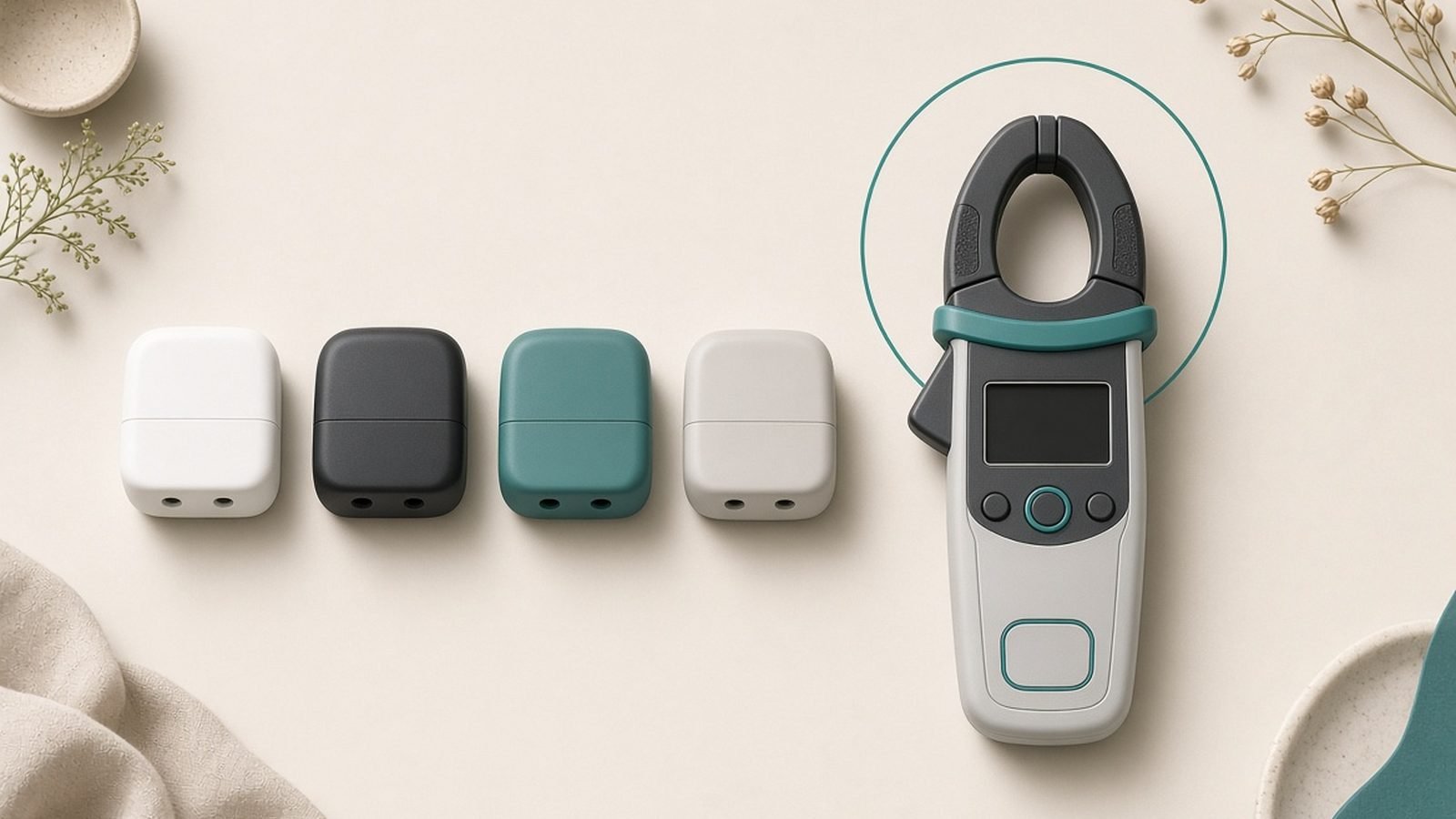
Want certainty? A reference meter costs about $30/£20. Run one appliance through both for 24 hours and compare kWh — agreement within ~5% means you can believe the plug.
What Smart Plugs Can and Can’t Switch Safely (Heaters, EVs, Fridges)
This is where spec sheets matter more than apps, and where the smart plug for heater safety question comes up constantly.
Space heaters: US picks here are rated 15A/1800W; the Tapo P110 is rated 13A/3120W. A heater sits at or near that ceiling for hours — the harshest duty a plug relay ever sees — and manufacturers warn against unattended heater control. Our position: monitoring a heater is fine; automating one to switch on while you’re out is not, regardless of rating. Automated heating is a thermostat’s job — see Best Smart Thermostats UK 2026: tado vs Hive vs Nest.
EVs: No. Even “granny charging” pulls 10–12A continuously for hours; consumer smart plugs aren’t built for that duty cycle, and melted plugs feature in owner reports of exactly this misuse. Use a dedicated EVSE.
Fridges and freezers: Safe to monitor, risky to automate — a schedule glitch that leaves the freezer off is an expensive failure. Monitor for a week to spot a dying compressor (rising kWh is an early symptom), then remove the plug.
Safe and useful: TVs and AV stacks, consoles, monitors, printers, lamps, dehumidifiers, aquarium and grow lights.
Automation Ideas That Actually Save Money
- The overnight kill switch. Schedule the TV/console/soundbar stack off from 00:30 to 06:30. A stack idling at 40W costs roughly $25/£24 a year in those hours alone.
- Standby-triggered shutoff. Kasa, Tapo and Emporia can trigger when draw falls below a threshold — the plug cuts power when the TV drops into standby, not on a dumb timer.
- Charge limiting. Power the e-bike or tool charger for two hours after you plug in, then cut it. Ends trickle waste.
- The audit rotation. One plug lives on a different appliance each week; log the weekly kWh. Within two months you have a ranked cost list of everything you own.
- A control surface. If you want a wall display for toggles and energy glances, see Echo Show 8 vs Google Nest Hub (2026): Best Smart Display. And pair plugs with cheap smart bulbs — see Best Philips Hue Alternatives in 2026: Cheaper Smart Bulbs — so lamps stop needing plugs at all.
FAQ
How do I find out how much electricity my appliance uses?
Put a monitoring smart plug (or a plug-in reference meter) between the appliance and the wall for a full week — a single day misses usage patterns. The app reports kWh; multiply by your tariff rate (around $0.17/kWh US, 26p/kWh UK in mid-2026). The Tapo and Emporia apps do this cost math for you once you enter your rate.
Are smart plug energy readings accurate enough to trust?
For steady loads, yes — independent comparisons against reference meters generally show mainstream Kasa, Tapo and Emporia plugs within a few percent. Accuracy degrades below about 1–2W and on some switching power supplies, so treat sub-watt standby readings as estimates. For billing-level confidence, sanity-check one plug against a $30/£20 reference meter once.
Is it safe to run a space heater on a smart plug?
Only within the plug’s rating (1800W US / 3120W UK on our picks), only while someone is home, and ideally never automated. Heaters are the heaviest sustained load a plug relay handles, and manufacturers explicitly discourage unattended use. Use the plug to measure the heater’s cost; use a thermostat to automate heat.
Kasa EP25 vs KP125M — which should I buy?
Buy the EP25 if you use Alexa, Google Home or SmartThings and want the lowest price per plug. Buy the KP125M if you want Matter — native local control in Apple Home or Home Assistant without TP-Link’s cloud. Energy data is nearly identical; you’re paying the difference for certification and local-first plumbing.
Do smart plugs themselves use electricity?
Yes — typically 0.5–1W each on standby, roughly 4–9 kWh a year, or about $1–1.50/£1–2 per plug. That’s why the winning strategy is targeting devices that waste 5W or more; a smart plug babysitting a 1W phone charger costs more than it saves.
Do I need a hub for any of these?
No. Every pick here is Wi-Fi (2.4GHz) and works hub-free with Alexa and Google. The Matter models benefit from a controller/hub — a HomePod, Apple TV, or Echo — for local control and remote access, and HomeKit is notably more reliable with one.
Verdict: Which Smart Plug With Energy Monitoring Should You Buy?
For most people the decision is regional and simple. In the US, the Kasa EP25 4-pack is the best smart plug with energy monitoring you can buy: reliable, cheap per plug, and compatible with everything short of native Matter. In the UK, the Tapo P110 is the default for a reason — under £10, accurate kWh-with-cost tracking, and a 13A rating that handles real appliances.
Go KP125M / P110M if Matter and Apple Home are your world, Emporia if you want the deepest data and don’t care about HomeKit, and the Tapo P306 strip if your problem is one socket feeding six devices. Whatever you pick, run the audit rotation for a month — the plug that pays for itself is the one that finds your 60W of phantom load, not the one with the prettiest app.
More smart home buying guides live in our hub: Smart Home.
Zen Tech Hub may earn a commission from links on this page, at no extra cost to you.