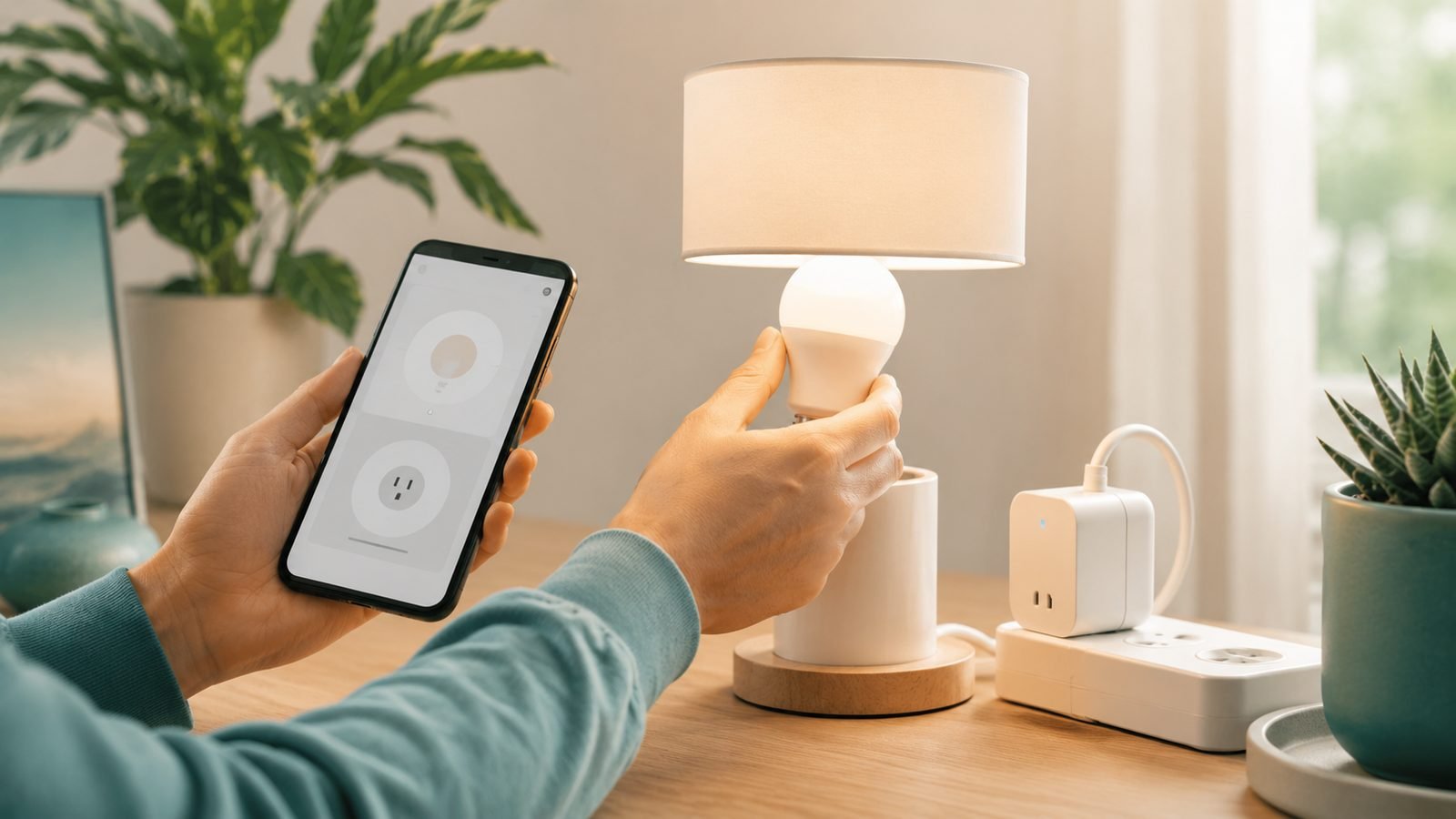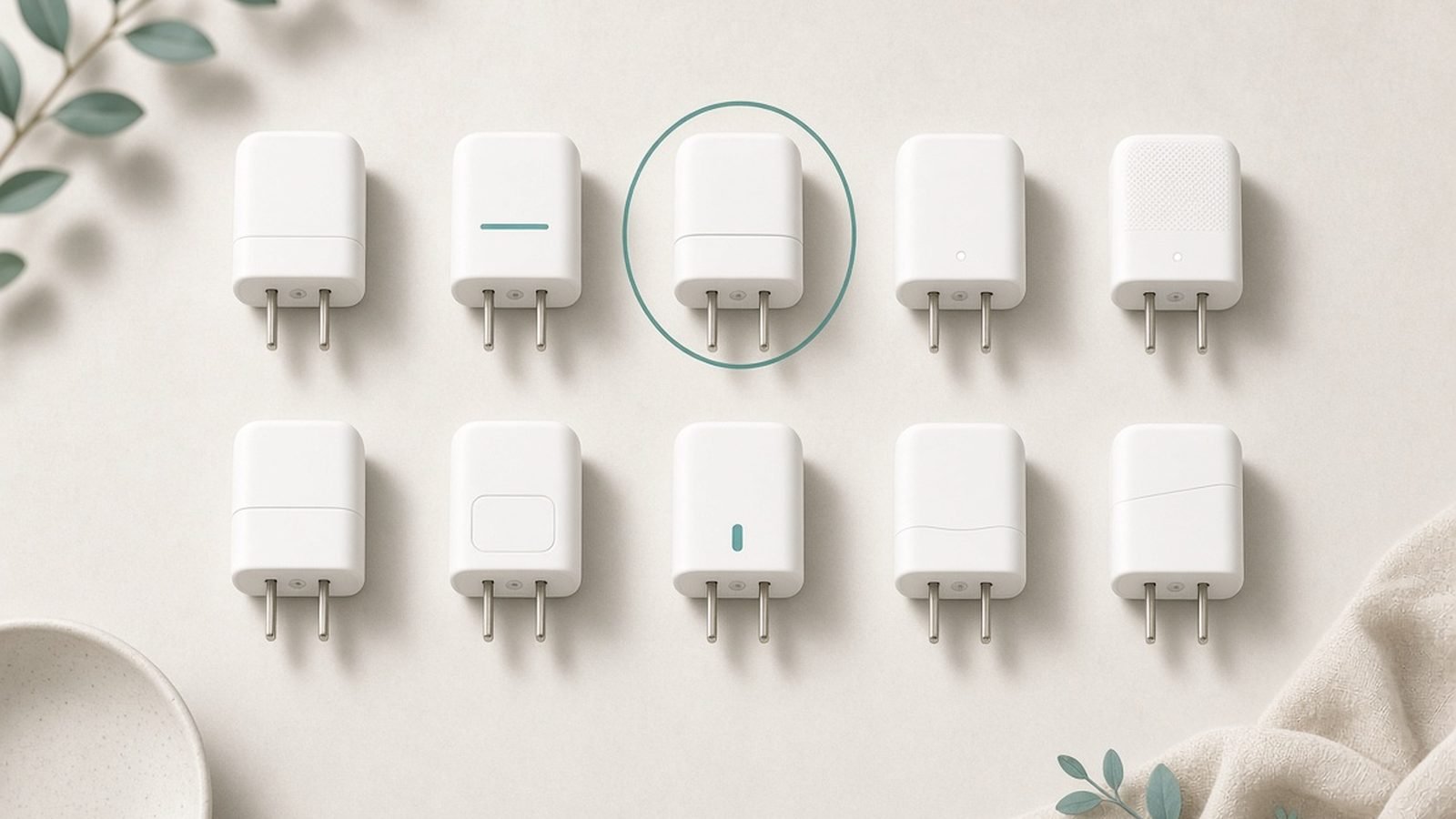
The best smart plug for most people in 2026 is the TP-Link Kasa EP25 (US) / Tapo P110 (UK) — cheap, reliable, hub-free, and with the energy monitoring that makes a plug genuinely useful. Smart plugs are the cheapest and lowest-risk way into home automation: for around $10-15 each you get app and voice control of any lamp, fan, or heater, plus the data to see what your appliances actually cost to run. This guide picks the best across brands and explains where energy monitoring earns its keep.
We’ve researched the current field — Matter and hub requirements, energy-monitoring accuracy claims, physical size, and hundreds of owner reports across the US and UK — to pick the best plugs at every need. If you’re still deciding whether they’re worth it, our companion explainer Do Smart Plugs Save Money? The Real Answer runs the actual standby-power math.
Best smart plugs at a glance
| Pick | Smart plug | Best for | Energy monitoring | Matter | Price (US / UK) |
|---|---|---|---|---|---|
| Best overall | Kasa EP25 / Tapo P110 | Reliable everyday use | Yes | No (Wi-Fi) | around $12 / £11 |
| Best value multipack | TP-Link Tapo P100 (4-pack) | Cheap whole-home | No | No | around $25 / £22 (4) |
| Best Matter plug | TP-Link Tapo P125M | Cross-platform / future-proof | Yes (some SKUs) | Yes | around $15 / £13 |
| Best for Alexa homes | Amazon Smart Plug | Simplest Alexa setup | No | No | around $25 / £25 |
| Best compact/UK | Meross Smart Plug Mini (Matter) | Small footprint, HomeKit | Some models | Yes | around $13 / £12 |
| Best outdoor | Kasa Outdoor Smart Plug EP40A | Garden & string lights | No | No | around $20 / £18 |
Prices swing with sales — TP-Link multipacks in particular drop hard around major shopping events.
How we picked the best smart plugs for 2026
Our analysis rests on published specs, Matter documentation, and aggregated owner feedback across US and UK retailers — not power-meter testing we didn’t run. Four factors decided it.
Reliability. A plug that drops off Wi-Fi is worse than a dumb one, because you have to fix it. TP-Link’s Kasa and Tapo lines have the strongest long-term reliability record in owner reports, which is why they dominate this list.
Energy monitoring. The single feature that turns a novelty into a tool. It lets you find power-hungry devices and phantom loads — the foundation of any real saving, which we detail in Do Smart Plugs Save Money? The Real Answer.
Size. Smart plugs are notorious for blocking the second socket on a UK double outlet or US duplex. Compact designs matter, and we flag the chunky ones.
Matter and ecosystem. Matter support future-proofs a plug across Alexa, Google, and Apple Home. Not essential for a simple lamp timer, but valuable if you’re building a broader system — see What Is Matter? The Smart Home Standard Explained (2026).
Best smart plug overall: Kasa EP25 / Tapo P110
Around $12 / £11 — reliable, hub-free, and with the energy monitoring most plugs skip.
TP-Link’s Kasa EP25 (the US favorite) and Tapo P110 (the UK favorite) are essentially the same idea done right: a compact Wi-Fi smart plug with energy monitoring, no hub required, and the most dependable track record in the category. They connect straight to your router, set up in a couple of minutes, and support Alexa and Google Assistant. Crucially, the energy dashboard shows real-time watts and running totals, so you can see exactly what your TV, space heater, or old fridge draws.
This is the plug we’d put on almost anything. Reliability is the reason: across years of owner reports, Kasa/Tapo plugs stay connected where cheaper no-name plugs drift off Wi-Fi. The energy data is the bonus that makes them genuinely useful rather than a gimmick — it’s how you find the appliances worth switching off, and whether standby power is costing you anything.
Trade-offs are minor. These are Wi-Fi, not Matter, so they live in TP-Link’s app and the major assistants rather than Apple Home natively. And like most plugs they’re a little bulky on a UK double socket. Neither is a dealbreaker at this price.
Pros:
- Excellent long-term reliability
- Built-in energy monitoring with real-time watts
- No hub needed; quick setup
- Cheap enough to buy several
Cons:
- Wi-Fi only — no native Matter/Apple Home
- Slightly bulky on a UK double outlet
- App-centric rather than platform-neutral
Who it’s for: Anyone wanting a dependable, hub-free plug that also shows what their appliances cost to run.
Check price: TP-Link Kasa EP25 / Tapo P110
Verdict: The default smart plug for 2026 — reliable, cheap, and the energy monitoring earns its place.
Best value multipack: TP-Link Tapo P100 (4-pack)
Around $25 / £22 for four — the cheapest way to automate a whole home.
If you want to put a plug on every lamp, fan, and Christmas tree in the house, the Tapo P100 four-pack is the value champion. It drops the energy monitoring of the P110 but keeps the reliability, compact-ish design, and hub-free setup, working out to little more than $6 / £5 per plug. For basic scheduling and voice control across many devices, nothing beats the per-plug price.
Buy these where you only need on/off and timers — bedside lamps, the coffee maker, seasonal lights. Save the energy-monitoring P110 for the appliances you actually want to measure. Mixing the two across a home is the smart-money approach: measure the big loads, automate everything else cheaply.
Pros:
- Lowest cost per plug for whole-home coverage
- Same reliable TP-Link platform
- No hub; simple scheduling and voice control
- Ideal paired with P110s on key appliances
Cons:
- No energy monitoring
- Wi-Fi only, no Matter
- Still blocks a second socket on doubles
Who it’s for: Anyone kitting out a whole home who only needs on/off and timers on most devices.
Check price: TP-Link Tapo P100 (4-pack)
Verdict: The value pick — buy a four-pack for the lamps and a P110 for anything you want to measure.
Best Matter smart plug: TP-Link Tapo P125M
Around $15 / £13 — future-proof control across every platform.
The Tapo P125M is a genuinely small, Matter-certified smart plug, which means it works natively across Alexa, Google Home, and Apple Home without living in one company’s app. That cross-platform flexibility is the whole point of Matter, and the P125M is one of the most compact ways to get it — it won’t hog a double socket the way older plugs do. Some regional SKUs add energy monitoring, so check the listing if that matters to you.
Buy this if you’re building a broader Matter smart home and want plugs that will still work if you switch assistants down the line. If you’re firmly in one ecosystem and just want a cheap lamp timer, the standard Kasa/Tapo plugs cost less. New to Matter? Our How to Set Up Matter Devices (Without the Headache) guide walks through pairing via QR code and controllers.
Pros:
- Matter-certified; works across all major platforms
- Compact — friendly to double outlets
- Future-proof if you change assistants
- Some SKUs include energy monitoring
Cons:
- Slightly pricier than non-Matter Tapo plugs
- Energy monitoring varies by region/SKU
- Matter setup has a small learning curve
Who it’s for: People building a Matter home who want platform-independent plugs.
Check price: TP-Link Tapo P125M
Verdict: The best Matter plug for the money — buy it if cross-platform flexibility matters more than saving a couple of dollars.
Best for Alexa homes: Amazon Smart Plug
Around $25 / £25 — the most foolproof setup if you’re all-in on Alexa.
The Amazon Smart Plug’s pitch is simplicity: if you own an Echo, it pairs almost automatically and integrates flawlessly with Alexa routines. There’s no third-party app to learn — everything happens in the Alexa app you already use. For a non-technical household that just wants “Alexa, turn on the lamp” to work first time, it’s the path of least resistance.
The downsides are clear-eyed: it’s pricier than a better-specced Tapo, has no energy monitoring, and is Alexa-only, so it’s a poor fit if you use Google or Apple. It’s also physically chunky. Buy it purely for the frictionless Alexa experience; buy Tapo/Kasa for everything else.
Pros:
- Effortless Alexa setup and routines
- No extra app to manage
- Trusted, widely stocked
- Reliable within the Alexa ecosystem
Cons:
- Alexa-only — useless for Google/Apple homes
- No energy monitoring
- Pricier and bulkier than better rivals
Who it’s for: Alexa-only households that value the simplest possible setup over features or price.
Check price: Amazon Smart Plug
Verdict: The easiest plug to set up in an Alexa home — but you pay more for less than a Tapo.
Best compact / Apple pick: Meross Smart Plug Mini (Matter)
Around $13 / £12 — small, cheap, and HomeKit-friendly.
Meross built a following by being one of the few affordable brands with proper HomeKit support, and its Matter Smart Plug Mini continues that. It’s genuinely compact, works across Alexa, Google, and Apple Home, and is priced to compete with TP-Link. For Apple households that want cheap plugs that show up natively in the Home app, Meross is the go-to.
Reliability is generally good, though a step behind TP-Link’s best in aggregated reports, and the app is more basic. Energy monitoring appears on some Meross models but not all — check the exact SKU. For an Apple-centric home wanting small, low-cost Matter plugs, it’s the standout.
Pros:
- Compact design; kind to double sockets
- Matter and native HomeKit support
- Affordable, especially in multipacks
- Cross-platform flexibility
Cons:
- Reliability a touch behind TP-Link
- Energy monitoring only on some models
- Basic app
Who it’s for: Apple households and anyone wanting small, cheap Matter plugs.
Check price: Meross Smart Plug Mini (Matter)
Verdict: The best cheap HomeKit/Matter plug — ideal for Apple homes and tight socket spacing.
Best outdoor smart plug: Kasa Outdoor Smart Plug EP40A
Around $20 / £18 — weatherproof control for the garden.
Most smart plugs are strictly indoor; the Kasa EP40A is built for outside, with a weather-resistant housing and two independently controlled outlets. It’s the plug for string lights, garden features, holiday decorations, or a pond pump — schedule them by sunset, control by voice, and forget them. Two independent sockets mean you can run, say, path lights and a water feature on separate schedules from one unit.
It’s Wi-Fi (no Matter) and needs your signal to reach outdoors, so check coverage near the socket. But for weatherproof outdoor automation at a fair price, it’s the obvious pick and pairs naturally with sunset-based schedules.
Pros:
- Weather-resistant for genuine outdoor use
- Two independently controlled outlets
- Sunrise/sunset scheduling
- Reliable Kasa platform
Cons:
- Wi-Fi only, no Matter
- Needs decent Wi-Fi reaching outdoors
- Larger than indoor plugs
Who it’s for: Anyone automating garden lights, decorations, or outdoor features.
Check price: Kasa Outdoor Smart Plug EP40A
Verdict: The default outdoor smart plug — two weatherproof sockets and reliable scheduling.
How to choose a smart plug
Four quick decisions.
Do you need energy monitoring? If you want to find power-hungry appliances or measure standby draw, yes — get a P110/EP25. If you only need timers and voice control, a cheaper non-monitoring plug is fine. The Do Smart Plugs Save Money? The Real Answer explainer shows exactly where monitoring pays off.
Wi-Fi or Matter? Wi-Fi plugs are cheapest and simplest within one ecosystem. Matter plugs cost slightly more but work across Alexa, Google, and Apple and survive an assistant switch. Choose Matter if you’re building a broad, future-proof system.
Mind the size. On UK double sockets and US duplex outlets, a fat plug blocks its neighbor. Prioritize compact models (P125M, Meross Mini) where outlet space is tight.
Indoor or outdoor? Never use an indoor plug outside. For gardens and decorations, buy a weather-rated outdoor plug like the Kasa EP40A.
FAQ: smart plugs
What is the best smart plug in 2026?
For most people it’s the TP-Link Kasa EP25 (US) or Tapo P110 (UK): reliable, hub-free, cheap, and with energy monitoring. If you want cross-platform Matter support, the Tapo P125M is the pick; for Apple homes, the Meross Matter Mini. Buy a Tapo P100 four-pack for lamps you only need to schedule.
Do smart plugs need a hub?
No. Every plug in this guide connects directly to your Wi-Fi (or, for Matter plugs, joins your existing Matter setup) with no separate hub. That’s a big part of why smart plugs are the cheapest, simplest entry into home automation.
Which smart plugs have energy monitoring?
The Kasa EP25 and Tapo P110 include it as standard, and some Tapo P125M and Meross SKUs add it. Energy monitoring lets you see real-time watts and running totals, which is how you find phantom loads and appliances worth switching off — the basis of any real saving, covered in Do Smart Plugs Save Money? The Real Answer.
Can smart plugs handle high-power appliances like heaters?
Check the plug’s rated load against the appliance. Most smart plugs handle up to around 10-13A (roughly 2,400-3,000W in the UK, 1,800W on US 15A circuits), which covers most heaters and kettles — but never exceed the rating. For anything drawing near the limit continuously, confirm the spec and avoid daisy-chaining.
Do smart plugs work with Alexa, Google, and Apple?
Wi-Fi plugs like Kasa/Tapo work with Alexa and Google natively but not Apple Home. Matter plugs (Tapo P125M, Meross Matter) work with all three, including Apple Home. If you use Apple or want to hedge your bets, buy Matter.
Are cheap no-name smart plugs worth it?
Usually not. The savings are small and the common complaint is Wi-Fi drop-outs that make the plug more hassle than a dumb one. TP-Link’s Kasa and Tapo lines are only a little more and far more reliable in long-term owner reports — worth it for something you want to forget about.
Zen Tech Hub may earn a commission from links on this page, at no extra cost to you.