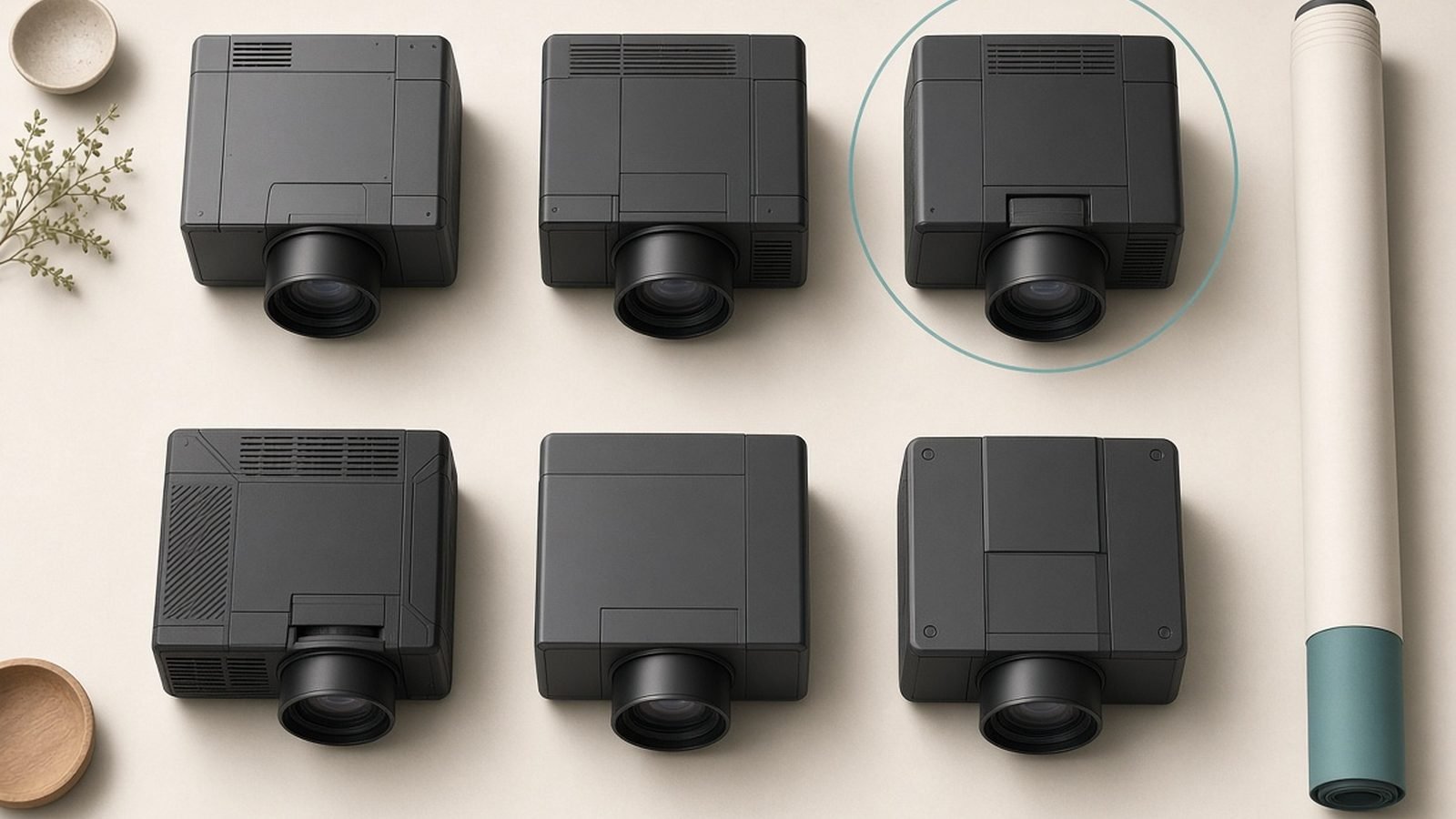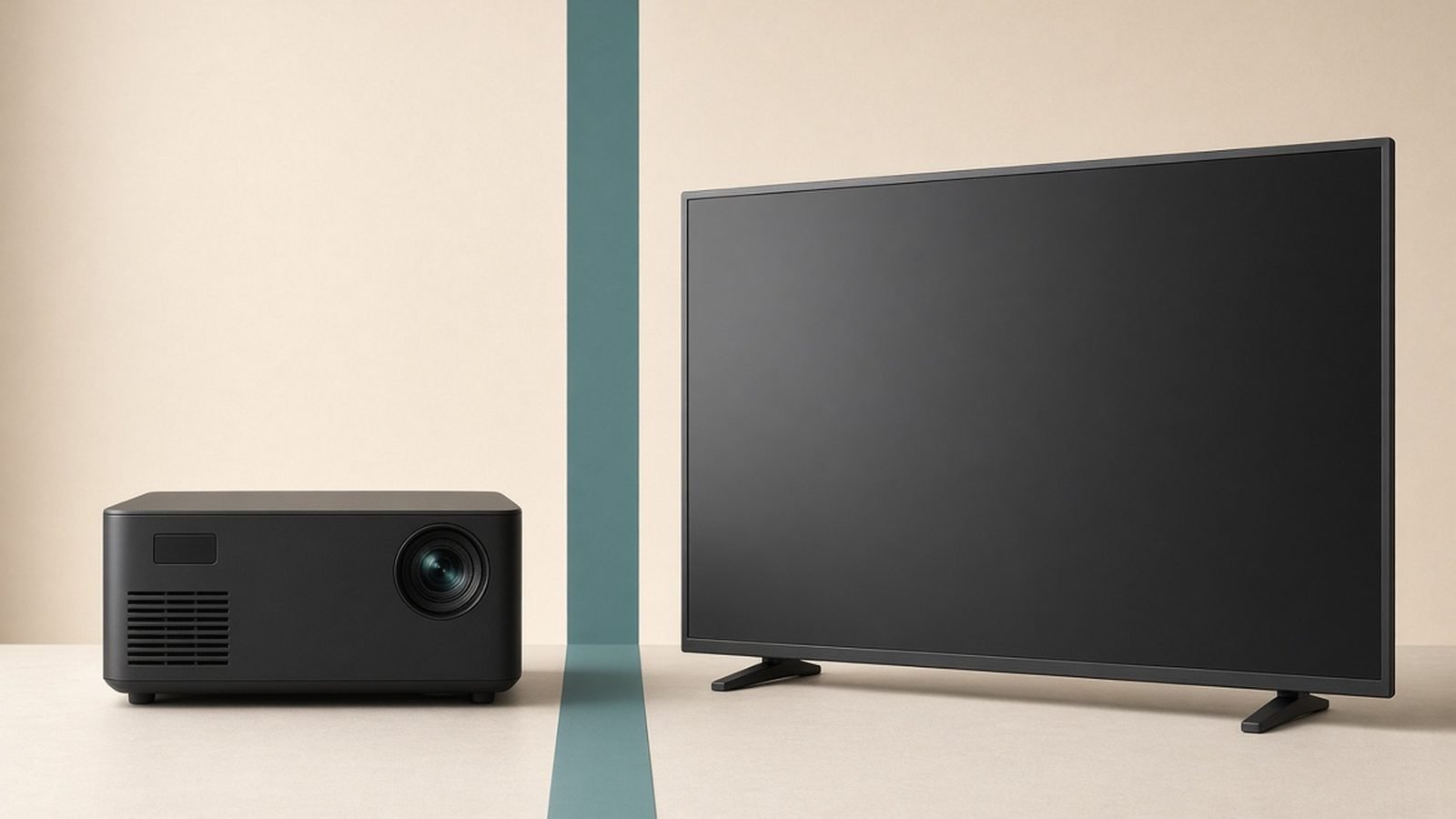
Finding the best projector under $1000 used to mean settling for a dim, plasticky box with a phone-grade smart platform bolted on. In 2026 that changed. This price bracket now buys genuine 4K resolution, bright LED and laser light engines, and Google TV built in — no streaming stick dangling off the back. The catch is that the marketing has gotten just as aggressive as the hardware, so a “2,600-lumen 4K” headline can mean very different things in a dark basement versus a sunny bedroom.
We’ve pulled together spec research and aggregated owner feedback to sort the genuinely good from the merely loud. Below are four projectors we’d actually put money on near the four-figure line, who each one is for, and where the corners were cut. If you’re cross-shopping a big TV instead, we’ll be honest about that too.
The best projectors under $1,000 at a glance
| Projector | Best for | Resolution | Brightness (claimed) | Light source | Price (US / UK) |
|---|---|---|---|---|---|
| BenQ GP520 | Best overall, bright rooms | 4K | 2,600 lumens | LED | around $999 / £949 |
| Epson Home Cinema 2350 (UK: EH-TW6250) | Movie & sports purists | 4K PRO-UHD | ~2,700 lumens | Lamp (3LCD) | around $999 / £879 |
| Anker Nebula Mars 3 Air | Portable / outdoor | 1080p | 400 lumens | LED (battery) | around $499 / £449 |
| Hisense C1 | Compact laser colour | 4K | 1,600 lumens | Trichroma laser | around $999 / £999 |
What $1,000 buys in projectors now
Three things define this tier in 2026. First, real 4K — either native or high-quality pixel-shift — is now standard rather than a stretch. Second, Google TV is baked into most models, so Netflix, Disney+ and your library log in on the device itself. Third, brighter, longer-lived LED and laser light engines have largely replaced the old lamps that dimmed and died, though Epson keeps a lamp around for good reasons we’ll get to.
What $1,000 does not reliably buy is a home-cinema black level that rivals an OLED TV, or enough brightness to fight direct sunlight. Manage those two expectations and this is the sweet spot of the whole projector market.
How we picked (brightness claims vs reality)
We weighted four things: picture quality in a realistically dim room, brightness honesty, the smart platform, and long-term owner sentiment. Brightness deserves a special note. A “2,600-lumen” DLP number and Epson’s colour-brightness spec are measured differently, and neither survives contact with a bright afternoon. In our research, the projectors that disappoint most are the ones bought for rooms they were never bright enough to serve. So we’ve flagged the realistic use case for each, not just the box claim. We have not run these through a lab ourselves; our verdicts draw on published measurements and aggregated owner reports.
Best overall: BenQ GP520
BenQ GP520 review
The GP520 is the projector most people asking for the best budget 4K projector 2026 should buy. It pairs a 4K DLP chip with a bright 2,600-lumen LED engine and full Google TV, and its auto-setup (autofocus, keystone, screen fit) is quick and genuinely usable rather than a gimmick. Crucially, it stays watchable with some ambient light — making it one of the few sub-$1k options that works in a living room, not just a blacked-out den.
Owner reports and reviews consistently praise the brightness-for-money and the tidy software. The trade-offs: the external power brick is large and slightly awkward to hide, and colour accuracy, while good, doesn’t quite match Epson’s out-of-box richness. Built-in audio is decent for casual viewing but you’ll still want a soundbar for movie nights.
Pros - Class-leading brightness near $1,000 - Full Google TV, fast auto setup - HDMI 2.1 and eARC for modern sources
Cons - Bulky external power brick - Colour slightly behind Epson - Fan audible in quiet scenes
Verdict: The best all-rounder here and our top pick for real rooms with real light. If you want one projector that just works, this is it.
Best for movie purists: Epson Home Cinema 2350 (UK: EH-TW6250)
Epson Home Cinema 2350 review
Sold as the Home Cinema 2350 in the US and the EH-TW6250 in the UK, this is the pick for people who care most about colour and motion. Epson’s 3LCD engine delivers equal white and colour brightness, which is why its images look punchier and more saturated than DLP rivals at the same lumen rating — especially with sport and bright animation. Its 4K PRO-UHD pixel-shifting resolves fine detail cleanly, and Android TV handles streaming.
Check price: Epson Home Cinema 2350
The compromises are real, though. Native contrast is the weak point — dark movies won’t have the inky blacks the laser and some LED rivals manage — and there’s no battery, so this is a stay-at-home unit. It’s also lamp-based rather than laser, so factor in an eventual bulb replacement over years of use.
Pros - 3LCD colour brightness beats DLP at the same spec - Excellent for sport and daytime viewing - Clean 4K PRO-UHD detail
Cons - Weaker native contrast / black levels - No battery, mains only - Lamp will need replacing eventually
Verdict: Buy this if vivid, accurate colour and bright-room sport matter more than deep cinema blacks. Regional buyers: match the model name to your market before ordering.
Best portable/outdoor: Anker Nebula Mars 3 Air
Anker Nebula Mars 3 Air review
Not everyone needs 4K nailed to a wall. If you want a portable projector for movies in the garden, the Mars 3 Air is the easy call and the value pick of this list at around $499 / £449. It’s a self-contained 1080p Google TV projector with a built-in battery and a carry handle — set it on a table, prop up a sheet, and you have a movie night with no cables. It’s also a strong shout for the best projector for bedroom duty where you want something you can move room to room.
Check price: Anker Nebula Mars 3 Air
Keep expectations grounded. At around 400 lumens it needs darkness — dusk or later outdoors, curtains drawn indoors — and it’s 1080p, not 4K. Within those limits it punches well above its price and its battery convenience is genuinely liberating.
Pros - True battery portability with handle - Full Google TV on board - Great value for casual and outdoor use
Cons - Only 400 lumens — needs darkness - 1080p, not 4K - Not for bright rooms
Verdict: The fun pick. If your main use is garden and bedroom movie nights, buy this and spend the savings on a screen and a snack budget.
Best compact laser: Hisense C1
Hisense C1 review
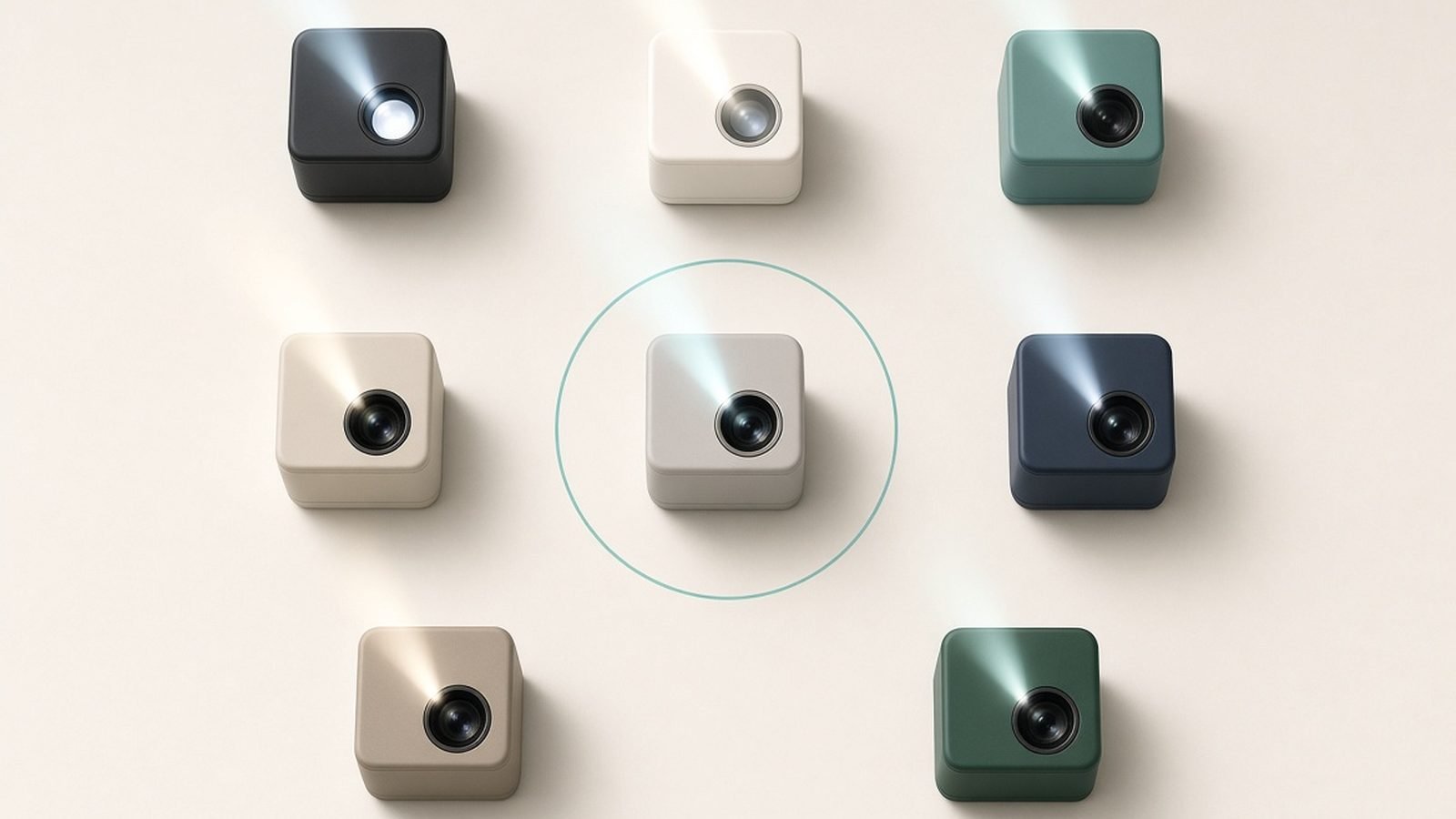
The C1 crams a trichroma (RGB) laser engine and 4K into a lunchbox-sized cube, and the result is the most vivid, wide-gamut colour on this list. Laser light gives it excellent saturation and instant on/off with no lamp to age. For anyone chasing cinema colour in a small footprint near $1,000, it’s a striking little machine.
It isn’t flawless. Owner reports and reviews flag audible fan noise and only so-so native contrast, so dark-room film fans who obsess over black level may prefer a dedicated long-throw. But as a compact, colour-rich all-in-one it’s hard to match at the price.
Pros - Superb trichroma laser colour and wide gamut - 4K in a genuinely compact body - Laser engine, no lamp to replace
Cons - Audible fan noise - Middling native contrast - Best in a controlled-light room
Verdict: Choose the C1 for the richest colour in the smallest box. It’s the enthusiast’s pick when space and vibrancy matter most.
Lumens, throw ratio and screens: quick buyer’s primer
Lumens measure brightness. For a dark room, 1,500 is plenty; for a living room with lamps and curtains, aim for 2,000+; direct sunlight beats every projector on this list — that’s a TV’s job. Remember DLP and 3LCD lumen figures aren’t directly comparable.
Throw ratio tells you how big an image you get at a given distance. Most models here are standard throw and want roughly 2.5–3.5m for a 100-inch picture. Short-throw units like the C1 sit closer. Measure your room before you buy.
Screens matter more than people expect. A basic matte-white screen, or even a smooth painted wall, sharpens contrast and colour versus a bumpy off-white wall. An ambient-light-rejecting (ALR) screen helps bright-room setups considerably. Budget $100–$200 for a screen and your sub-$1k projector will look meaningfully better.
Projector vs TV under $1,000: should you even buy one?
Be honest about your room. A projector gives you a 100-inch-plus image for the price of a mid-size TV, and nothing beats that scale for film. But if your main viewing happens in a bright room, or you watch a lot of daytime TV and sport with the blinds open, a good TV will look better and simpler every time. The projector vs tv under 1000 decision really comes down to light control: dark room, get a projector; bright room, get the TV. See our guides below before you commit.
Projector vs TV for Home Theater: Which in 2026? Best TVs for Bright Rooms 2026: Anti-Glare & High Nits
Verdict: which is the best projector under $1,000?
For most people, the BenQ GP520 is the best projector under $1000 in 2026 — the brightest, most flexible real-4K option that survives a normal living room. Colour purists and sport fans should take the Epson Home Cinema 2350 / EH-TW6250. Want portability and value? The Anker Nebula Mars 3 Air is the outdoor and bedroom champion. And for the richest laser colour in the smallest box, the Hisense C1 wins. Whichever you pick, set aside a little for a proper screen and control your room light — that’s where the biggest gains hide.
Ready to set up? Read our step-by-step guide next.
How to Set Up a Projector: Distance, Screen & Settings TVs & Displays
FAQ
Is a projector under $1,000 really 4K? Mostly yes, but read the fine print. The BenQ GP520, Epson 2350 and Hisense C1 all deliver a 4K image, whether native or via high-quality pixel-shifting that most viewers can’t distinguish from native at normal seating distance. The Nebula Mars 3 Air is 1080p. For sharp 4K detail on a big wall, any of the three 4K picks here will satisfy.
What’s the best projector under £1,000 in the UK? The same shortlist applies, with two notes. Epson’s model is sold as the EH-TW6250 rather than Home Cinema 2350, so search that name. UK pricing runs roughly £879–£999 across these picks. The BenQ GP520 at around £949 remains our overall pick; the Nebula Mars 3 Air at about £449 is the value and portability standout.
Which is the best smart projector with Google TV? The BenQ GP520 and Anker Nebula Mars 3 Air both run full Google TV on the device, so you get Netflix, Disney+ and YouTube without a separate stick. The GP520 is the better picture; the Nebula is the more portable. The Epson uses Android TV, which is closely related and equally capable for streaming.
Do I need a screen, or will a wall work? A smooth, clean wall works in a pinch, but a proper screen noticeably improves contrast, colour and sharpness for $100–$200. In brighter rooms an ambient-light-rejecting (ALR) screen makes the biggest difference of any single upgrade. If you’re spending near $1,000 on the projector, a screen is the cheapest way to get more from it.
Can I use these projectors in a bright room? Partly. The 2,600-lumen BenQ GP520 handles some ambient light and is the best of this group for living rooms. The Epson’s colour brightness helps in daylight too. But no sub-$1k projector beats direct sunlight — if your room can’t be dimmed, a bright-room TV is the smarter buy.
Zen Tech Hub may earn a commission from links on this page, at no extra cost to you.