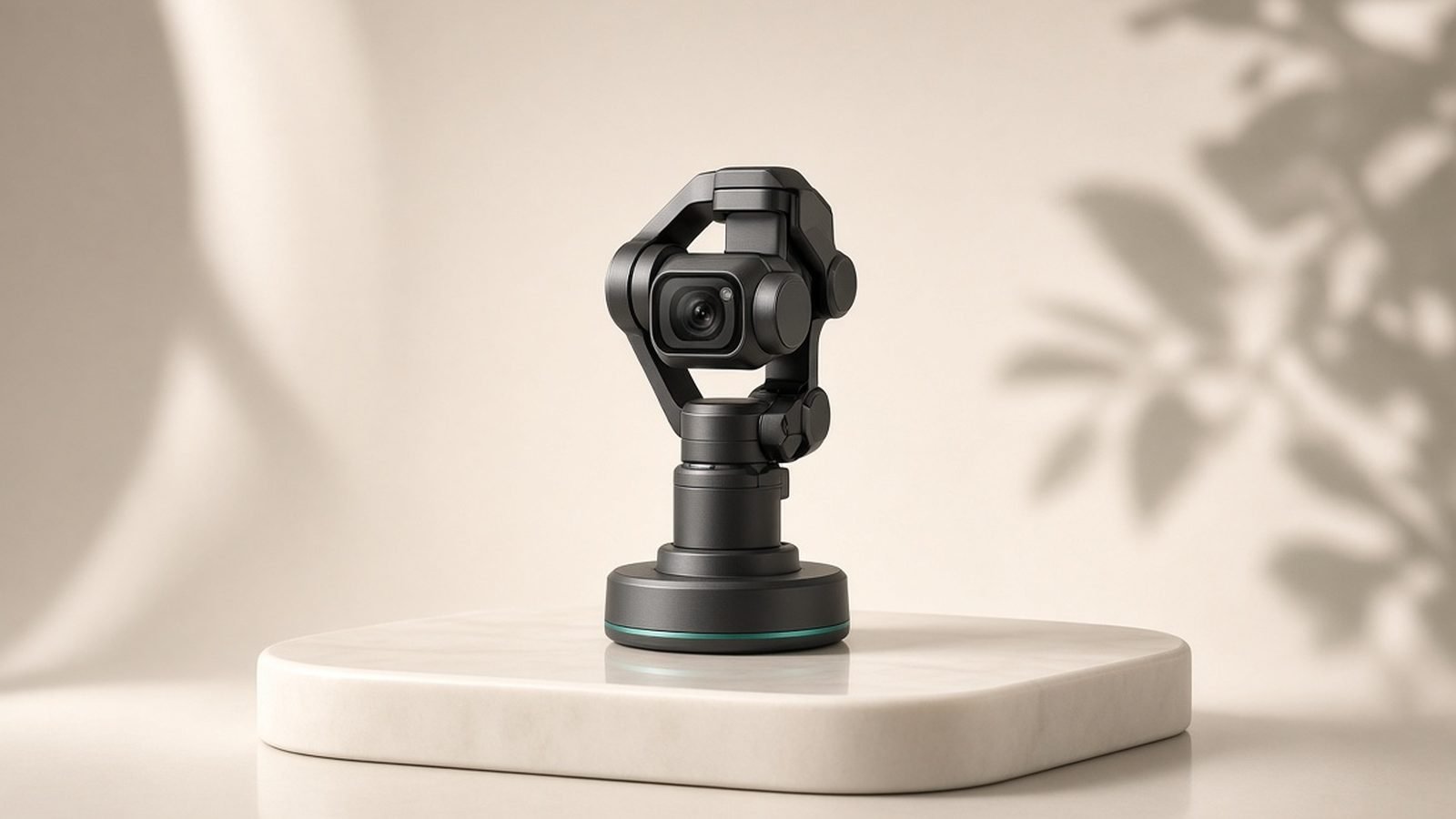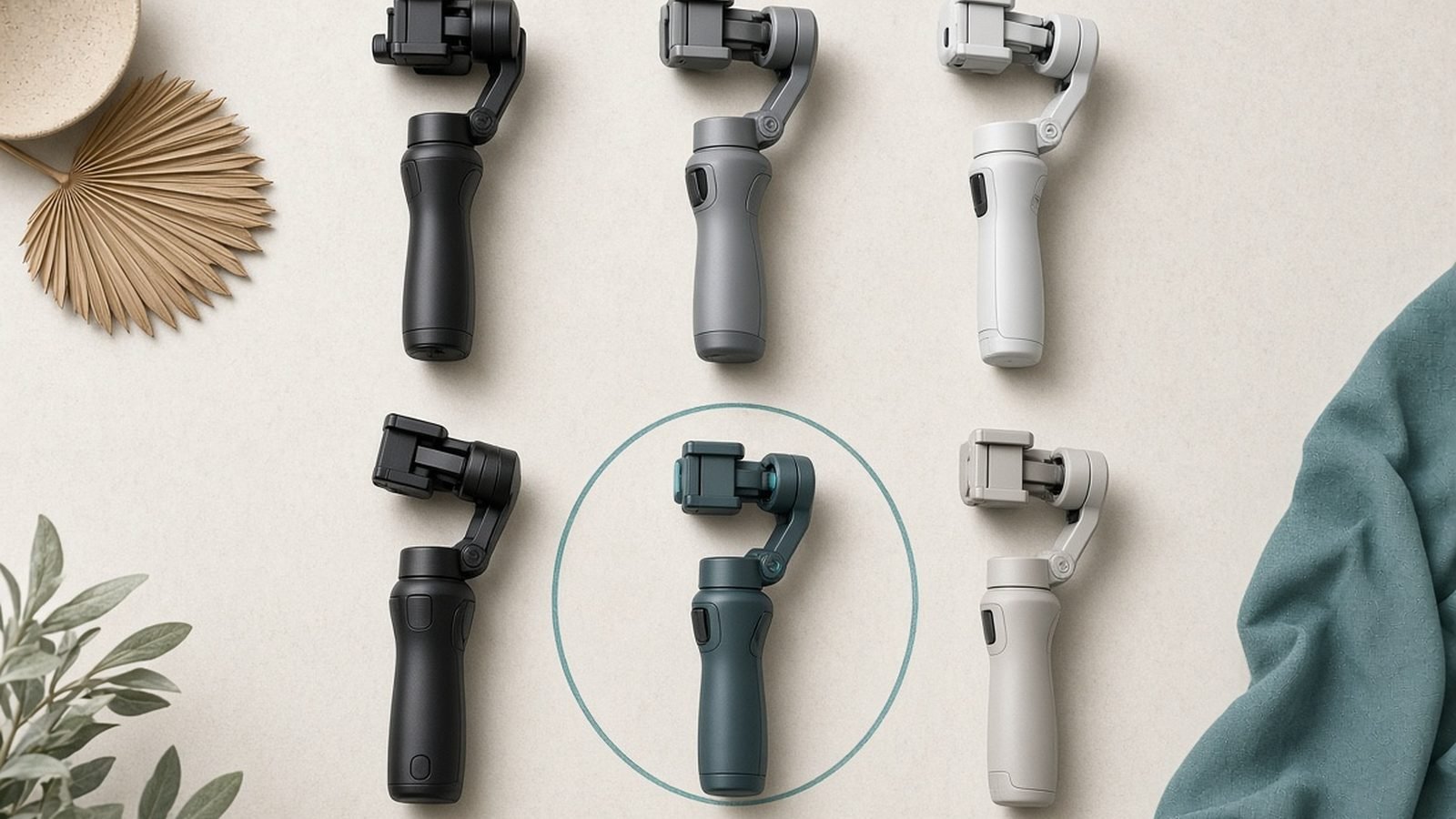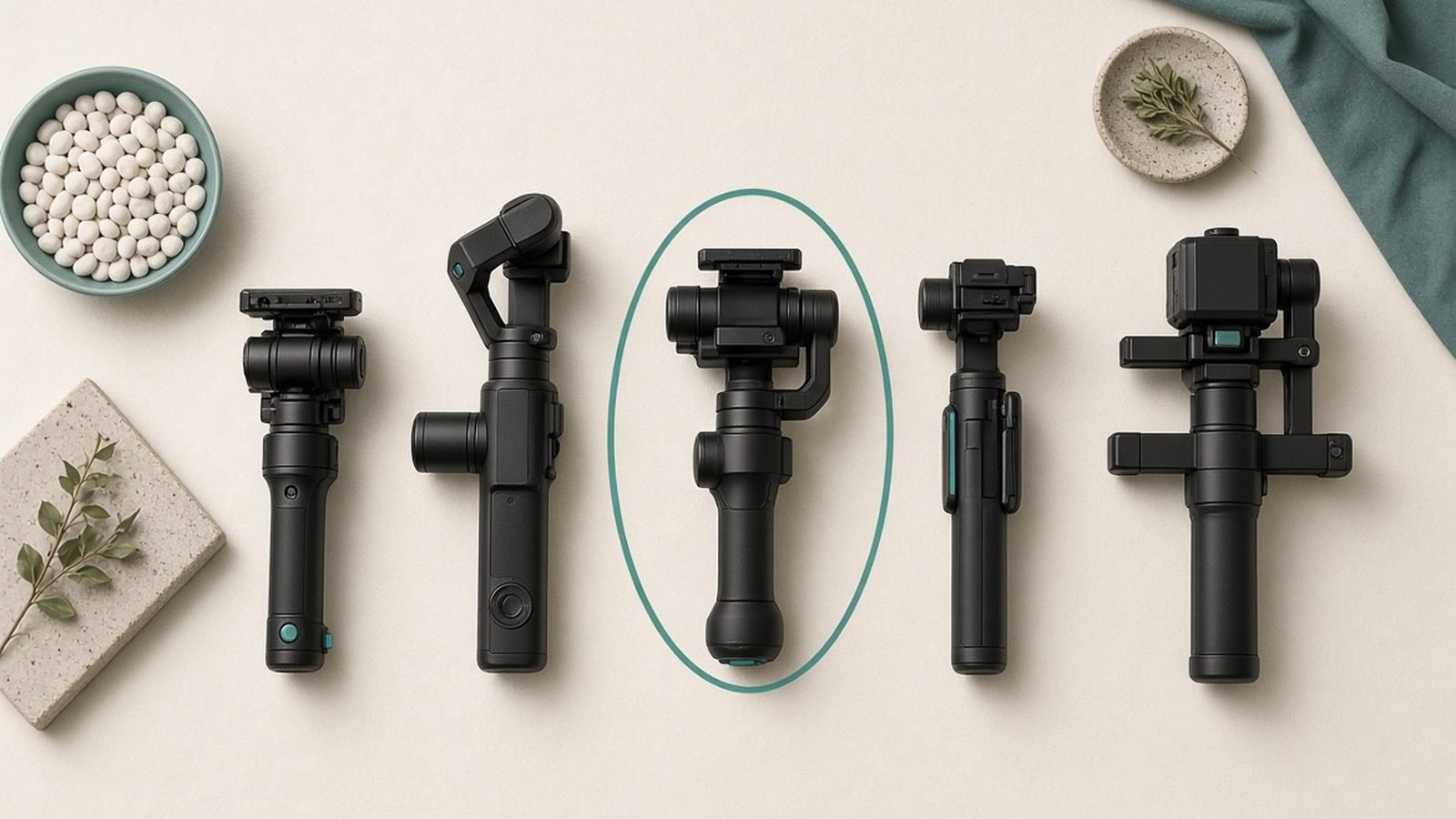
What separates gimbals in use is not the three stabilised axes every model advertises — it is how quickly they balance, whether the payload rating survives contact with your real camera-and-lens combination, and whether the companion app helps or fights you. On those practical tests the DJI RS 4 is the best gimbal in 2026 for most serious mirrorless and DSLR shooters: quick to balance, a payload rating with honest headroom, and the category’s most refined app and ecosystem. Phone-only creators should not pay for any of that — DJI’s much cheaper Osmo Mobile 7 serves them better. Below, we match the right gimbal to five different creators, from smartphone vloggers to hybrid pros carrying a heavy cine setup.
A gimbal is a motorised handle that physically holds your camera level and smooth, cancelling out the shake, jitter and bounce of handheld shooting so your footage glides. Unlike the electronic stabilisation baked into an action camera or a phone (see our Best Action Cameras 2026: GoPro, DJI & Insta360 guide), a real gimbal moves the whole camera on three motorised axes, which is why the results look cinematic. This guide cuts through the spec sheets and tells you which one actually fits your camera, your budget and how you shoot.
Best gimbal 2026 at a glance
| Pick | Product | Best for | Price US/UK |
|---|---|---|---|
| Best overall | DJI RS 4 | Mirrorless & DSLR creators | around $549 / £519 |
| Best for heavy rigs | DJI RS 4 Pro | Cine cameras & long lenses | around $869 / £829 |
| Best phone gimbal | DJI Osmo Mobile 7 | Smartphone vloggers | around $89 / £85 |
| Best value mirrorless | Zhiyun Weebill 3S | Budget-conscious hybrid shooters | around $329 / £319 |
| Best for run-and-gun phone | DJI Osmo Mobile 7 Pro | Creators who want tracking + light | around $149 / £145 |
Prices move around launch windows and sales, so treat the figures above as a guide and check the live price before you buy.
How we picked
We do not run a sponsored lab and we will not pretend to. These picks come from close reading of each gimbal’s manufacturer documentation and spec sheets, hands-on impressions published by independent reviewers across the filmmaking community, and aggregated owner feedback from thousands of real buyers through mid-2026.
For every gimbal we weigh rated payload versus real-world balance, how quickly it sets up, battery life against the rated figure, motor strength and stability in wind or fast motion, app reliability and tracking accuracy, build quality, and total cost once you add the accessories you will actually use. Where owner reports flag recurring issues, such as fiddly balancing or app quirks, we say so, and we never invent test numbers.
Best gimbal overall: DJI RS 4
Rated for around 3kg payload, quick-release balancing, DJI Ronin app — around $549 / £519
The RS 4 is the gimbal we would put in most serious creators’ hands. It hits the sweet spot for the cameras people actually own: a mirrorless body like a Sony, Canon or Panasonic with a standard zoom or prime, balanced and shooting in a couple of minutes. The redesigned axis locks and fine-tune knobs make balancing genuinely fast, which matters more than any spec because a gimbal you dread setting up is a gimbal you leave at home.
Independent reviewers and long-term owners consistently describe it as superb in use. The motors are strong and quiet, the vertical-to-horizontal switch for social clips is quick, and the bright touchscreen plus the mature DJI Ronin app give you responsive tracking, timelapse and app control without hunting through menus. Battery life comfortably covers a shoot day, and the ecosystem of focus wheels, grips and accessories is the deepest in the category.
The honest trade-offs: it is not the cheapest, and if you shoot a heavy cinema camera with a long lens you will bump into its payload ceiling. For that, step up to the RS 4 Pro. For everyone else with a normal mirrorless kit, this is the one.
Pros:
- Fast, refined balancing workflow
- Strong, quiet motors handle most mirrorless kits
- Best-in-class app, touchscreen and ecosystem
- All-day battery life
Cons:
- Premium price
- Payload ceiling for heavy cine rigs
Who it’s for: mirrorless and DSLR creators who want the most polished, reliable stabiliser for normal-weight setups.
Best for heavy rigs: DJI RS 4 Pro
Higher payload for cine cameras, extended battery, LiDAR focusing support — around $869 / £829
If your camera is a heavier cinema body, or you run long or fast lenses and external monitors, the RS 4 Pro is the tool. It carries a meaningfully larger payload than the standard RS 4, with stronger motors that stay composed when you are moving fast or fighting wind, and a longer axis arm that gives big lenses room to balance.
The Pro also unlocks the more advanced workflow features professionals lean on: support for DJI’s LiDAR focusing system for autofocus on manual lenses, more powerful accessory ports, and extended battery endurance for long production days. If you are billing clients and cannot afford a dropped shot, the extra motor headroom buys peace of mind.
The catch is simple: it is heavier, larger and considerably more expensive. Solo vloggers and anyone shooting a light mirrorless kit do not need it and will find it tiring to carry all day. This is a working professional’s tool, and priced accordingly.
Pros:
- Handles heavy cine cameras and long lenses
- Strongest motors and stability of the DJI line
- LiDAR focus support and pro accessory ports
- Long battery life for full production days
Cons:
- Heavy and bulky for casual use
- Significantly more expensive than the standard RS 4
Who it’s for: professional and hybrid shooters running cinema cameras, long lenses or monitors who need maximum payload headroom.
Best phone gimbal: DJI Osmo Mobile 7
Foldable smartphone gimbal, 3-axis stabilisation, ActiveTrack — around $89 / £85
If you shoot on a phone, do not overspend. The Osmo Mobile 7 delivers the vast majority of what a phone creator needs for well under a hundred dollars. It folds down small enough to live in a bag, unfolds and grips your phone in seconds, and its three motorised axes turn shaky handheld phone video into smooth, professional-looking footage.
The star feature is ActiveTrack, which locks onto your face or a subject and physically rotates the gimbal to keep them framed as you move, ideal for solo vlogging and piece-to-camera work. A built-in extension rod doubles your reach for group shots and high angles, and battery life is strong enough to double as a phone power bank in a pinch.
The obvious limitation is that it only carries a phone. But for the millions of creators who shoot on a modern smartphone, this is by far the best value stabiliser you can buy, and it makes phone footage look dramatically more considered.
Pros:
- Superb value for phone creators
- Reliable ActiveTrack subject tracking
- Foldable with a built-in extension rod
- Long battery life, doubles as a power bank
Cons:
- Phones only, no camera support
- Fewer pro controls than a camera gimbal
Who it’s for: smartphone vloggers and social creators who want smooth footage without spending much.
Best value mirrorless gimbal: Zhiyun Weebill 3S
Compact mirrorless stabiliser, built-in grip options, strong battery — around $329 / £319
Zhiyun is DJI’s most credible rival, and the Weebill 3S is its answer for hybrid shooters who want a capable camera gimbal without the flagship price. It carries most common mirrorless setups comfortably, its motors are strong and stable, and the compact, sling-friendly design is genuinely comfortable for low-angle and run-and-gun work.
The Weebill line’s calling card is integrated accessories: some configurations bundle a fill light and a longer built-in grip, which reduces the pile of add-ons you would otherwise buy. Battery life is excellent, and the balancing workflow, while not quite as slick as DJI’s, is perfectly manageable once you learn it.
The trade-offs are honest. Zhiyun’s app is less polished than DJI’s Ronin app, and the accessory ecosystem is smaller, so third-party support is thinner. But if you want most of the RS 4’s capability for meaningfully less money, the Weebill 3S is the value champion.
Pros:
- Strong payload for the price
- Comfortable, compact sling design
- Excellent battery life
- Useful integrated accessories on some kits
Cons:
- App less refined than DJI’s
- Smaller accessory ecosystem
Who it’s for: budget-conscious mirrorless shooters who want serious stabilisation without paying flagship money.
Best run-and-gun phone gimbal: DJI Osmo Mobile 7 Pro
Built-in fill light, extended tracking module, longer rod — around $149 / £145
For phone creators who want a step above the standard model, the Osmo Mobile 7 Pro adds the extras that make solo shooting easier. The headline feature is a built-in fill light, which is genuinely useful for vlogging in dim rooms or at night without carrying a separate lamp, and an enhanced tracking module that improves how reliably the gimbal follows you.
Everything good about the standard Osmo Mobile 7 carries over: fast folding design, strong three-axis stabilisation, a built-in extension rod and long battery life. The Pro simply removes friction for creators who film themselves constantly and want lighting and tracking baked in rather than bolted on.
The trade-off is price: at around $149 / £145 it costs meaningfully more than the standard model, and casual users will not need the light or the enhanced tracking. But for dedicated solo phone vloggers, the convenience is worth it.
Pros:
- Built-in fill light for dim scenes
- Enhanced, more reliable subject tracking
- Same foldable design and long battery life
- Ideal for solo, self-filming creators
Cons:
- Noticeably pricier than the standard model
- Still phones only
Who it’s for: serious solo phone vloggers who want lighting and better tracking without extra gear.
How to choose a gimbal
Four factors decide which gimbal is right for you.
Match the payload to your camera. This is the single most important rule. A gimbal rated well above your camera-and-lens weight balances easily and has motor headroom for fast moves; one at its limit strains and drifts. Weigh your heaviest setup and buy a gimbal comfortably above it.
Phone or camera? If you only shoot on a phone, a phone gimbal like the Osmo Mobile 7 costs a fraction of a camera gimbal and does everything you need. Do not buy a camera gimbal for phone-only work.
Balancing and setup speed. A gimbal you dread balancing gets left at home. DJI’s RS line leads here; the Weebill 3S is close behind. Read owner feedback on setup friction before you commit.
Ecosystem and app. Tracking, timelapse, focus control and firmware updates all run through the app. DJI’s Ronin app is the most polished, which is a real advantage if you lean on those features.
FAQ
What is the best gimbal in 2026?
For mirrorless and DSLR shooters with normal-weight setups, the DJI RS 4 is the best overall: fast balancing, strong motors, the most polished app and the deepest ecosystem. Phone-only creators should buy the far cheaper DJI Osmo Mobile 7, and professionals with heavy cine rigs should step up to the RS 4 Pro.
Do I need a gimbal if my camera has stabilisation?
They solve different problems. In-body and lens stabilisation smooths small handheld shake and helps for static or slow shots. A gimbal physically cancels the larger motion of walking, running and fast pans, producing that gliding cinematic look. For dynamic moving footage, a gimbal still makes a clear difference; for locked-off shots, it may be overkill.
DJI RS 4 or Zhiyun Weebill 3S: which should I buy?
Buy the DJI RS 4 if you want the fastest balancing, the most polished app and the biggest accessory ecosystem, and you do not mind paying more. Buy the Zhiyun Weebill 3S if you want most of that capability for meaningfully less money and are happy with a slightly less refined app. Both handle common mirrorless kits well.
Can I use a phone gimbal with a small camera?
Generally no. Phone gimbals like the Osmo Mobile 7 are calibrated for a phone’s weight and clamp design, and even a light compact camera can exceed their motors or fail to mount securely. For any dedicated camera, buy a camera gimbal such as the Weebill 3S or RS 4 rated for your setup’s weight.
Is a gimbal better than an action camera for smooth video?
They suit different shots. A gimbal with a mirrorless camera or phone gives the best image quality and the most cinematic glide for handheld work. An action camera’s electronic stabilisation is better for helmet-mounted, wet or high-impact footage. For a pocketable middle ground, a gimbal camera like the one in our DJI Osmo Pocket 4 Review 2026: Pocket Gimbal Camera combines both ideas.
Does a gimbal improve my audio too?
No. A gimbal only stabilises the picture; sound is a separate job. Great video with poor audio still looks amateur, so pair your setup with a proper microphone. See the Best USB Microphones in 2026 for Streaming and Podcasting for desk and voiceover work, and follow How to Get Better Audio for YouTube Videos to capture clean sound on location.
Zen Tech Hub may earn a commission from links on this page, at no extra cost to you.