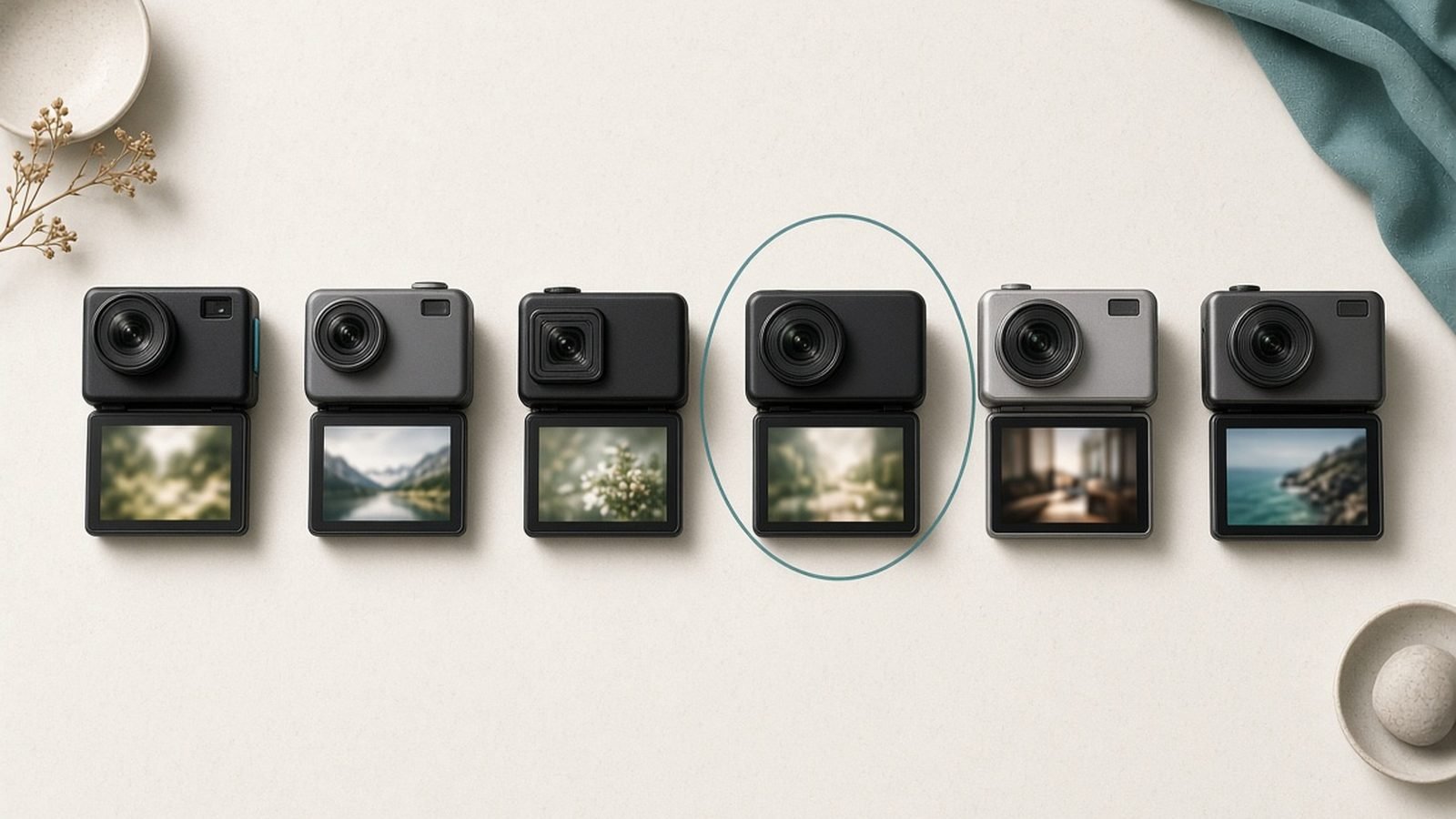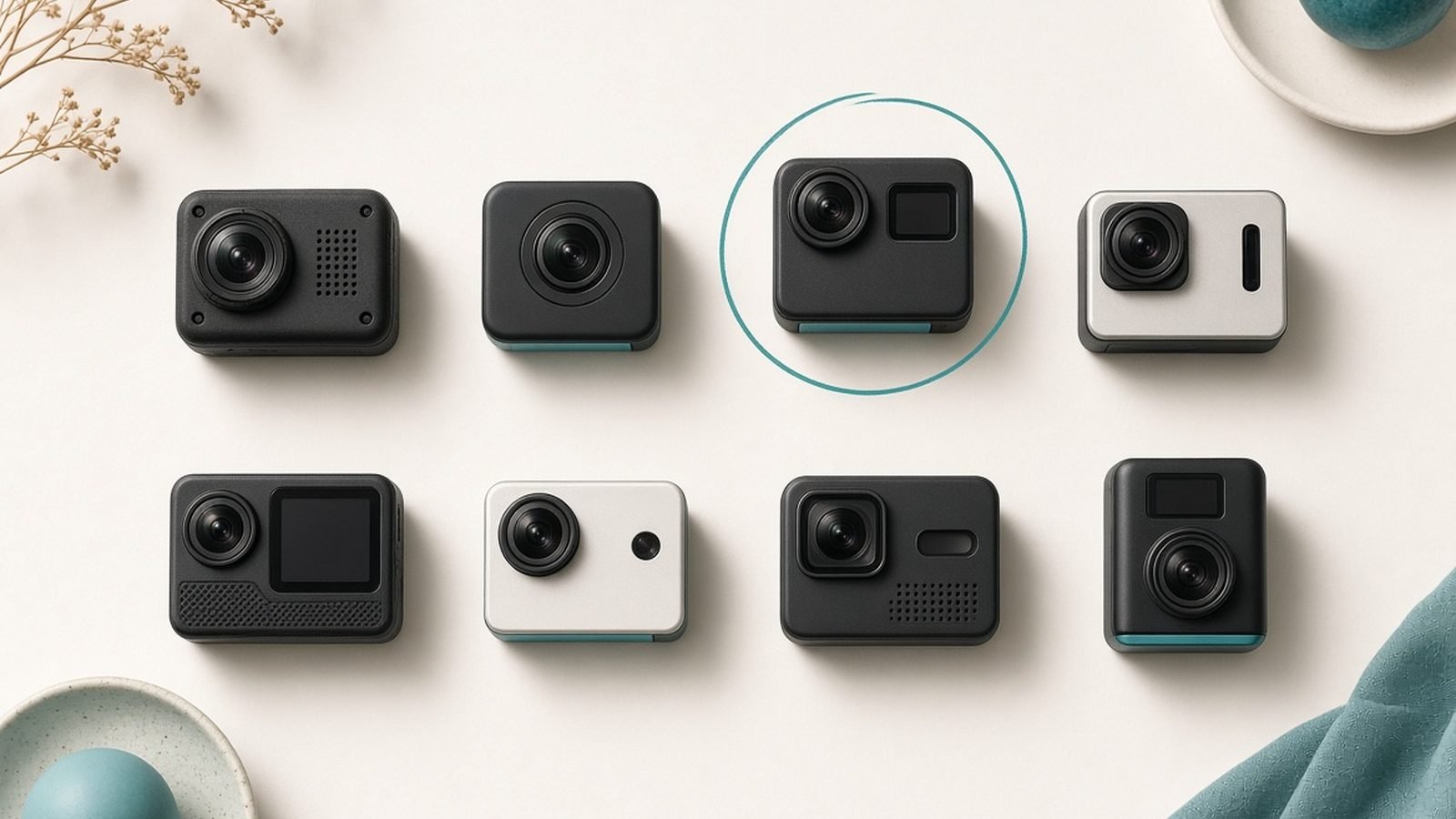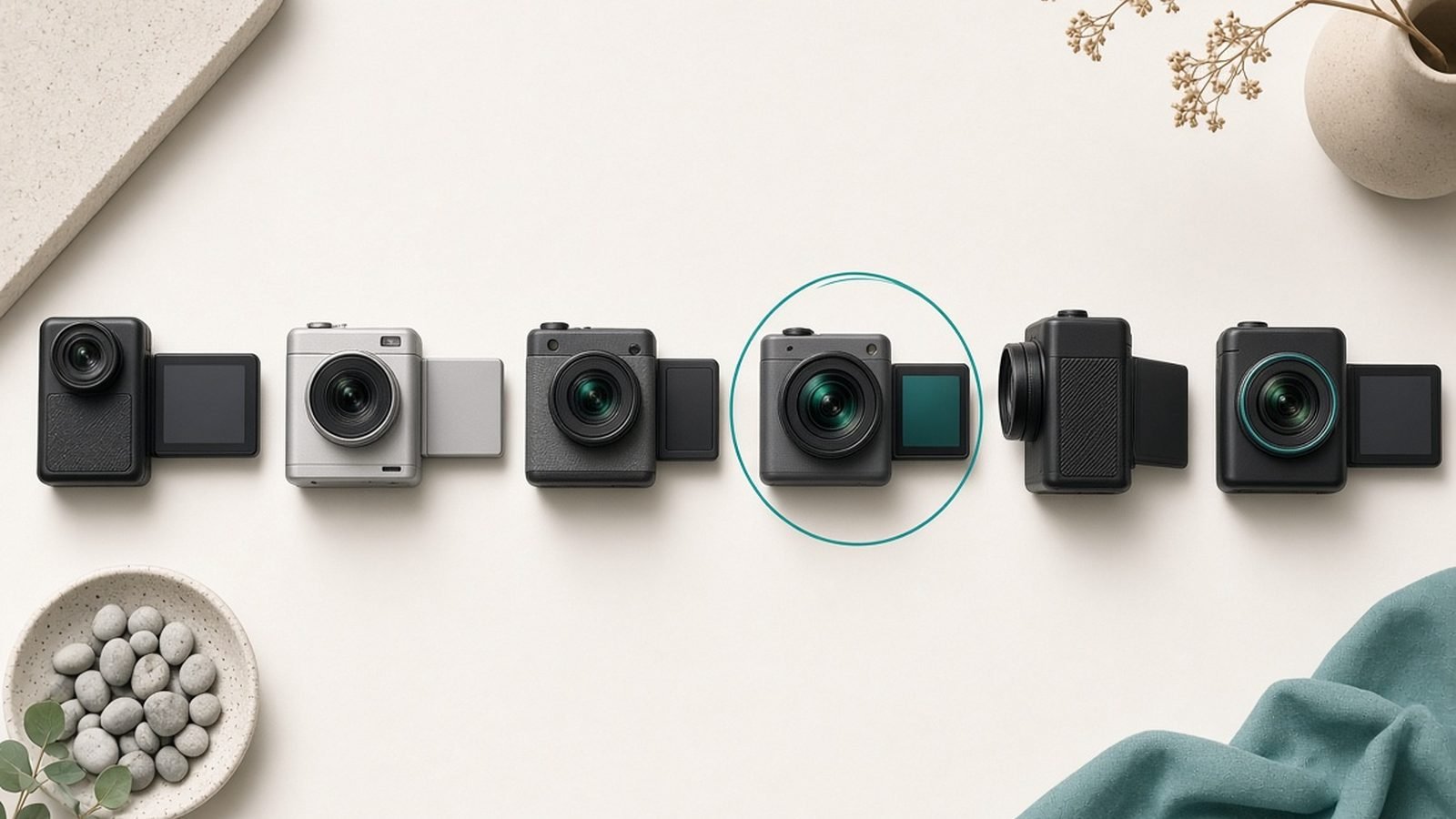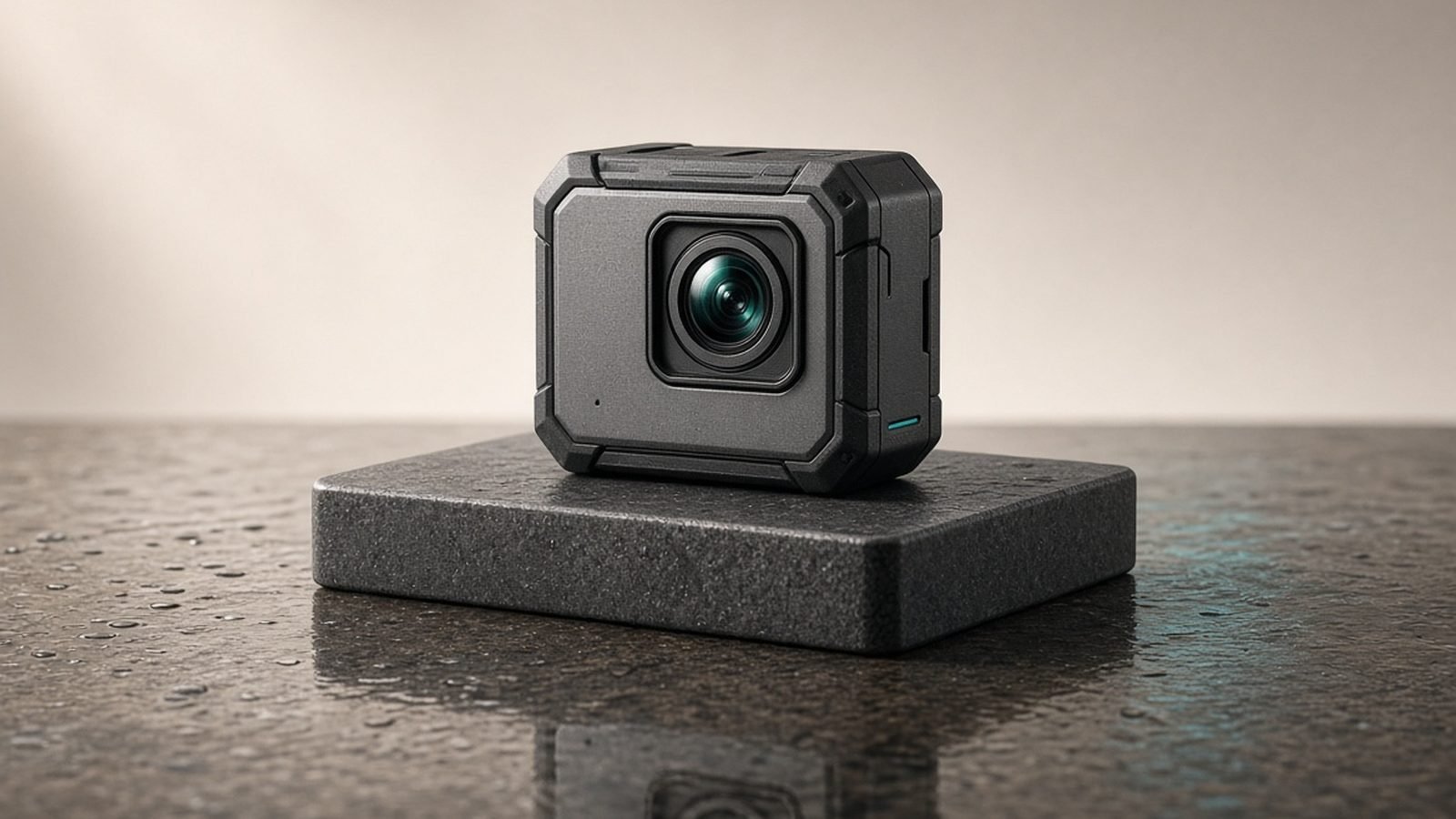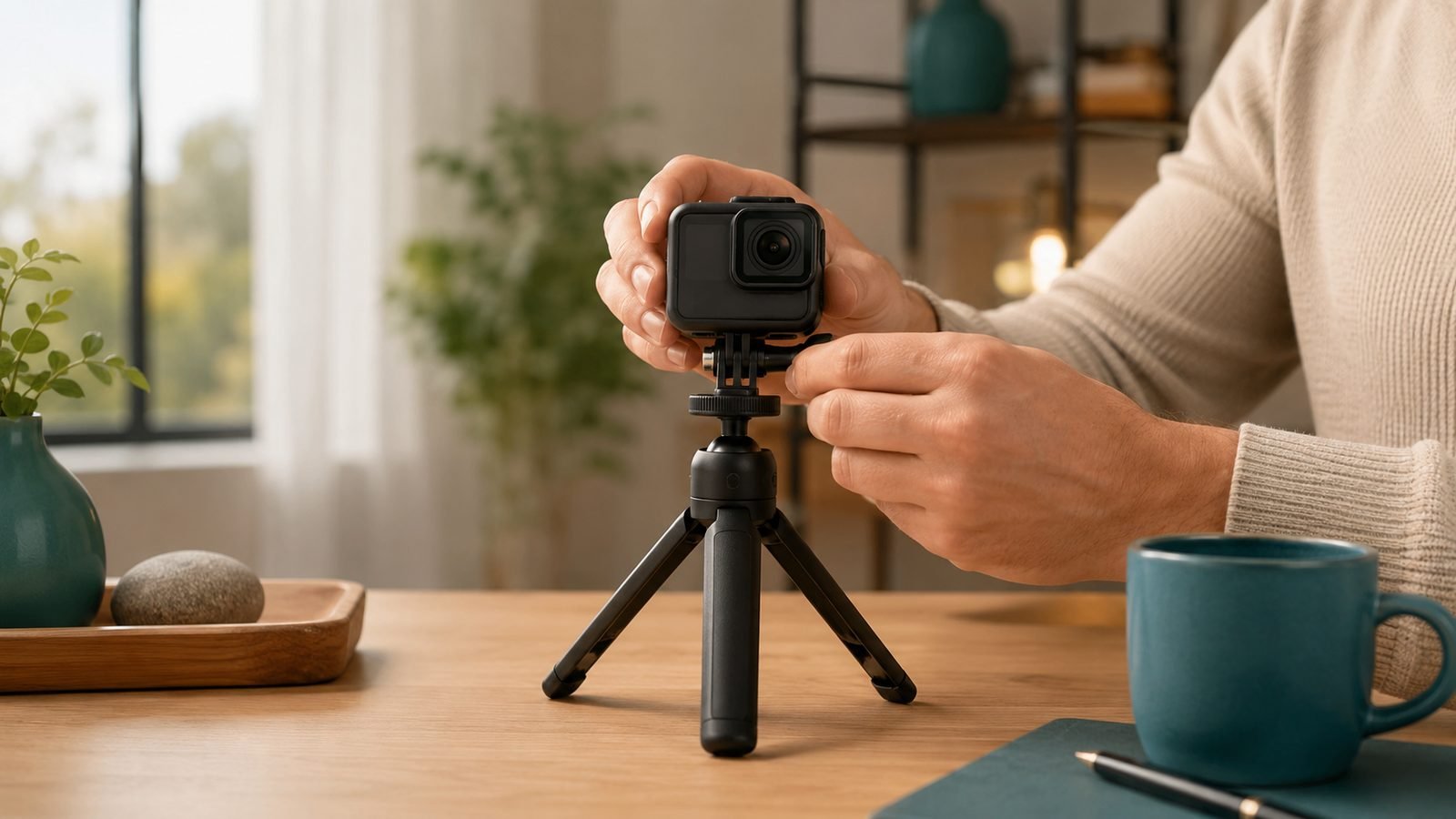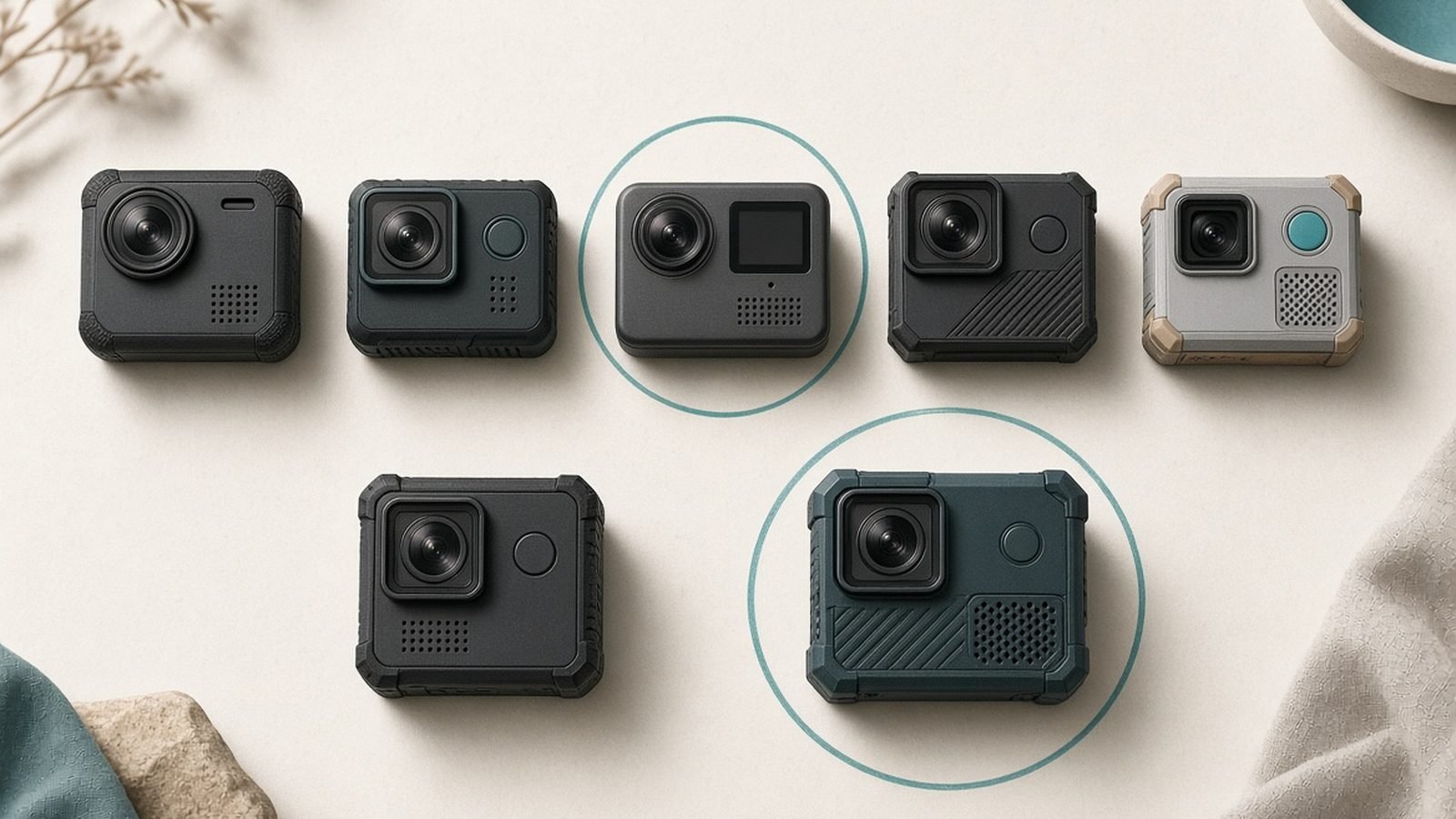
Short version: the best action camera in 2026 for most people is the GoPro Hero 14 Black, which pairs the smoothest stabilisation in the category with the deepest accessory ecosystem and, for the first time, a swappable Enduro power system. But “best” is personal, so we have picked the right camera for six different shooters below, from low-light travellers to 360 creators to anyone who dreads editing.
Action cameras are the most forgiving cameras you can own: nothing to focus, nothing to drop out of alignment, and a body that survives being thrown in a river. The genuinely hard part is choosing between the three brands that own the category. GoPro, DJI and Insta360 each have a real argument in 2026, and this guide tells you which one fits your budget, your patience and the kind of footage you actually shoot. New to the wider camera world? Our Best Cameras for Beginners 2026: Easy & Affordable guide is the wider companion to this one.
Best action camera 2026 at a glance
| Pick | Product | Best for | Price US/UK |
|---|---|---|---|
| Best overall | GoPro Hero 14 Black | Stabilisation + ecosystem | around $429 / £429 |
| Best low light | DJI Osmo Action 6 | Dim scenes & value | around $399 / £369 |
| Best for editing-haters | Insta360 Ace Pro 2 | AI auto-editing & POV | around $399 / £429 |
| Best 360 camera | Insta360 X5 | Reframing & “invisible” shots | around $549 / £519 |
| Best wearable | DJI Osmo Nano | Hands-free POV | around $299 / £289 |
| Best value | GoPro Hero 13 Black | A discounted do-it-all cam | around $329 / £329 |
Prices swing around launch windows and sales, so treat the figures above as a guide and check the live price before you buy.
How we picked
We do not run a sponsored lab and we will not pretend to. These recommendations come from close reading of each camera’s published specs and documentation, hands-on impressions from across the creator community, and aggregated owner feedback from thousands of real buyers through mid-2026.
For every camera we weigh stabilisation, low-light noise, straight-out-of-camera colour, real-world battery endurance against the rated figure, heat and overheating reports, app and firmware reliability, and the true cost once you add the batteries and mounts you will genuinely use. Where owner reports consistently flag a problem, such as a camera running warm on long takes, we say so plainly, and we never invent benchmark numbers.
Best action camera overall: GoPro Hero 14 Black
5.3K60 / 4K120 video, HyperSmooth stabilisation, 10m waterproof — around $429 / £429
The Hero 14 Black is the camera we would hand almost any buyer. GoPro effectively invented this category and the Hero 14 keeps it in front where it counts: HyperSmooth remains the reference for gimbal-like smoothness, especially on fast, jarring activities like mountain biking, skiing and trail running. If your top priority is footage that looks locked-down no matter how rough the ride, nothing else here is quite as bulletproof.
The bigger story this generation is the ecosystem finally maturing into a system. The HB-series swappable lens mounts (macro, ultra-wide, anamorphic and ND) carry over and grow, and GoPro’s mount catalogue is still the largest on the planet by a wide margin, so whatever you want to strap a camera to, someone makes the part. Battery life from the Enduro pack is strong, and the Quik app’s auto-highlight tools are genuinely useful.
Two honest trade-offs. Based on owner reports, GoPro bodies can run warm during long continuous 5K sessions, so extended takes in hot weather need a little planning. And GoPro’s very best pricing is tied to a GoPro subscription that bundles cloud backup and damage replacement, so factor that in rather than treating the sticker price as final. Read the full GoPro Hero 14 Review 2026: Still the Action King? for the deep dive.
Pros:
- Class-leading HyperSmooth stabilisation
- The largest, most mature mount and accessory ecosystem anywhere
- Swappable HB lenses add real creative range
- Excellent Quik app and auto-editing
Cons:
- Can run warm on long high-resolution clips
- Best pricing tied to a subscription
Who it’s for: action-sports shooters and anyone who wants the smoothest footage and the deepest ecosystem, and does not mind the subscription maths.
Best for low light: DJI Osmo Action 6
1/1.1-inch square sensor, variable aperture, 20m waterproof — around $399 / £369
If you shoot a lot as the light drops, the Osmo Action 6 is the smarter buy. DJI’s larger 1/1.1-inch square sensor with a variable aperture is the pick that most reliably turns in clean, low-noise footage in dim scenes, which is exactly where beginner action clips usually fall apart. It is also waterproof to 20 metres without a case, the deepest here.
Everything about it removes friction. Dual touchscreens front and rear make a piece to camera easy, the magnetic mount clicks on and off in a second, and the square sensor is genuinely good for the vertical clips you post to TikTok, Reels and Shorts. Close-focus macro is a fun bonus for travel detail. Battery life is strong, and DJI’s default colour science is punchy without looking cartoonish.
The honest caveat: DJI’s accessory ecosystem, while excellent and growing, is still smaller than GoPro’s, and there are no swappable lenses. For most travellers that will never matter. See how it stacks up in our GoPro HERO13 vs DJI Osmo Action 6: Which Wins? comparison.
Pros:
- Best low-light performance of the group for the money
- Dual screens make vlogging easy
- 20m waterproof and fast magnetic mounting
- Strong battery life and handy macro focus
Cons:
- Smaller accessory ecosystem than GoPro
- No swappable lenses
Who it’s for: travellers and vloggers who shoot a mix of daylight and dim scenes and want the best value flagship.
Best for editing-haters: Insta360 Ace Pro 2
Leica-tuned lens, flip-up screen, AI editing — around $399 / £429
The Ace Pro 2 is the smart pick for people who abandon their footage on a memory card because editing feels like a chore. Its on-device and in-app AI tools automatically find highlights, cut a watchable clip and clean up low-light footage with impressive results, removing the single biggest reason beginners never actually publish.
The hardware is a treat too. The Leica-tuned lens gives a richer, more filmic look straight out of camera, and the flip-up screen is the best design here for talking-head POV: you can see yourself while the camera points forward on a chest or helmet mount. Low-light is a genuine strength, rivalling the Osmo Action 6.
The catch is size. The Ace Pro 2 is bulkier and heavier than its rivals, which you notice on a helmet or across a long day of wearing it. Not a dealbreaker, but if you want the smallest possible camera, this is not it, and the best AI features are tied to Insta360’s own app.
Pros:
- Standout AI editing and highlight tools
- Leica lens gives a distinctive, filmic look
- Flip-up screen ideal for POV vlogging
- Excellent low-light performance
Cons:
- Bulkier and heavier than rivals
- Best AI features live inside Insta360’s app
Who it’s for: vloggers and talking-head creators who want great footage with the least editing effort.
Best 360 camera: Insta360 X5
8K 360 capture, “invisible” selfie stick, reframe in app — around $549 / £519
A 360 camera works differently: it films everything around you at once, then you choose the shot afterward by dragging a virtual camera through the footage. The Insta360 X5 is the best of these in 2026 and the most creative camera on this list. The party trick is the “invisible” selfie stick that vanishes from the frame, producing floating, drone-like shots no fixed-lens action cam can match.
The X5 improves low-light and detail over previous X-series models, and its reframing workflow is mature and forgiving: point the camera roughly in the right direction, and fix the framing later. For solo creators, cyclists and anyone who hates missing the shot because the camera was pointed wrong, that safety net is transformational.
Be realistic about the trade-offs. 360 footage takes more editing time and storage than flat video, and the final resolution of a reframed clip is lower than native 5K from a standard action cam. It is a specialist tool that rewards the effort, not a point-and-post camera.
Pros:
- Unique “invisible” stick and reframe-later workflow
- You never miss the shot; fix framing in the app
- Strong stitching and improved low light
- Doubles as a flat-video action cam
Cons:
- More editing time and storage than flat video
- Reframed output resolution is lower than native
Who it’s for: creative solo shooters, cyclists and travellers who want shots no fixed-lens camera can get.
Best wearable: DJI Osmo Nano
52g magnetic body, 4K 10-bit, Vision Dock — around $299 / £289
To capture a moment without holding anything, the Osmo Nano is the most fun camera here. It weighs about 52 grams, clips magnetically to a lanyard, cap or clothing, and shoots 4K 10-bit footage from a body smaller than a matchbox. For hands-free first-person POV, nothing else on this list is as effortless.
It ships with a clever Vision Dock that acts as a screen, battery bank and charging base: you frame from the dock, then detach the tiny cube to wear it. That split design is brilliant for cooking, crafts, parenting and any moment where a normal camera gets in the way.
Be clear-eyed about the compromises. Standalone battery life is shorter than the full-size cameras, and the naked camera has no large screen, so you lean on the dock or your phone to frame. It is a brilliant second camera, or a specialist first camera for POV creators.
Pros:
- Tiny 52g magnetic body, truly hands-free
- 4K 10-bit footage from a wearable
- Clever Vision Dock for control and charging
Cons:
- Shorter standalone battery life
- No large built-in screen
Who it’s for: POV and lifestyle creators who want a camera they can forget they are wearing.
Best value: GoPro Hero 13 Black
5.3K60 video, HyperSmooth, HB lenses — around $329 / £329
Here is the honest truth about cheap action cameras: sub-$100 no-name models look tempting, but their stabilisation and low light are usually poor enough that the footage disappoints and the camera ends up in a drawer. The best cheap action camera is the one you keep using, not the cheapest one, and in 2026 that is almost always a discounted last-generation flagship.
The GoPro Hero 13 Black is the standout. Now that the Hero 14 has launched, the Hero 13 regularly drops toward $329 / £329, and it still shoots superb 5.3K footage with class-leading stabilisation and the same HB-series lens system. For most people the real-world gap to the Hero 14 is small, and the money saved buys a spare battery and a mount bundle.
Whatever you choose at this price, buy from a brand with a real app and ongoing firmware support. That is where the no-name cameras fall apart.
Pros:
- Flagship stabilisation and 5.3K for far less
- Same HB lens ecosystem as the Hero 14
- Frequent post-launch discounts
- Full app and firmware support
Cons:
- Slightly older battery and processor than Hero 14
- Can run warm on long clips like all GoPros
Who it’s for: value hunters who want flagship-grade footage without paying flagship prices.
How to choose an action camera
Start with how you shoot, not the spec sheet. Five factors decide it.
Stabilisation is the feature that separates “professional” from “phone in a shaky hand.” All the flagships here are excellent, but GoPro’s HyperSmooth still leads for fast, violent motion.
Low light is where cheaper cameras collapse. If you film indoors, at dusk or underwater, the larger-sensor DJI Osmo Action 6 or the Insta360 Ace Pro 2 are the safer bets.
Mounting and ecosystem matter more than beginners expect. Magnetic quick-release (DJI, Insta360) is the friendliest, but GoPro’s sheer catalogue of mounts is unmatched if you want to stick a camera to something unusual.
Editing appetite should steer you. If you dread editing, the Ace Pro 2’s AI or the X5’s reframe-later workflow save hours. If you just want to point and post, a standard GoPro or DJI is simpler.
Total cost is never the sticker price. Budget for at least one spare battery, a fast V30-or-faster microSD card, and one or two mounts. Buy those on day one; add the rest as you learn what you shoot.
FAQ
Is GoPro, DJI or Insta360 best in 2026?
All three make excellent cameras, so it comes down to priorities. GoPro wins on stabilisation for fast sport and the size of its accessory ecosystem. DJI edges ahead on low light and value with the Osmo Action 6. Insta360 leads on AI auto-editing (Ace Pro 2) and creative 360 shots (X5). Pick the strength that matches how you shoot.
What is the best action camera for low light?
The DJI Osmo Action 6 is the strongest low-light pick for the money, thanks to its larger 1/1.1-inch square sensor and variable aperture. The Insta360 Ace Pro 2 is a close second and adds AI noise reduction. Both hold up far better than budget cameras once the sun drops or you move indoors.
Are these action cameras waterproof without a case?
Yes. Every flagship here is waterproof out of the box: the DJI Osmo Action 6 to 20m, the Insta360 Ace Pro 2 to around 12m, and the GoPro Hero 13 and Hero 14 to 10m. That covers swimming, snorkelling and watersports. For scuba diving deeper than the rated limit, add the optional dive housing.
Is a 360 camera better than a normal action camera?
It depends on your workflow. A 360 camera like the Insta360 X5 never misses the shot and enables floating “invisible stick” angles, but it needs more editing time and storage, and reframed clips are lower resolution than native flat video. If you want point-and-post simplicity, a standard action camera is easier; if you love editing and creative angles, 360 is magic.
Do I need an action camera for vlogging, or is a vlogging camera better?
For talking-head vlogging with good audio and background blur, a dedicated camera usually wins; see our Best Vlogging Cameras 2026: Creators' Picks guide. Action cameras shine for POV, travel and anything wet or fast. Many creators run both. Whatever you choose, upgrade your sound: pair it with one of the Best USB Microphones in 2026 for Streaming and Podcasting or follow How to Get Better Audio for YouTube Videos.
What accessories should I buy with an action camera?
Three things get used constantly: a spare battery (or two), the right mount for how you shoot (adhesive for helmets and boards, suction for cars, a chest clip for POV), and a fast V30-or-quicker microSD card so high-bitrate 4K records without errors. Buy the battery and a mount on day one and add the rest as your shooting habits settle.
Zen Tech Hub may earn a commission from links on this page, at no extra cost to you.