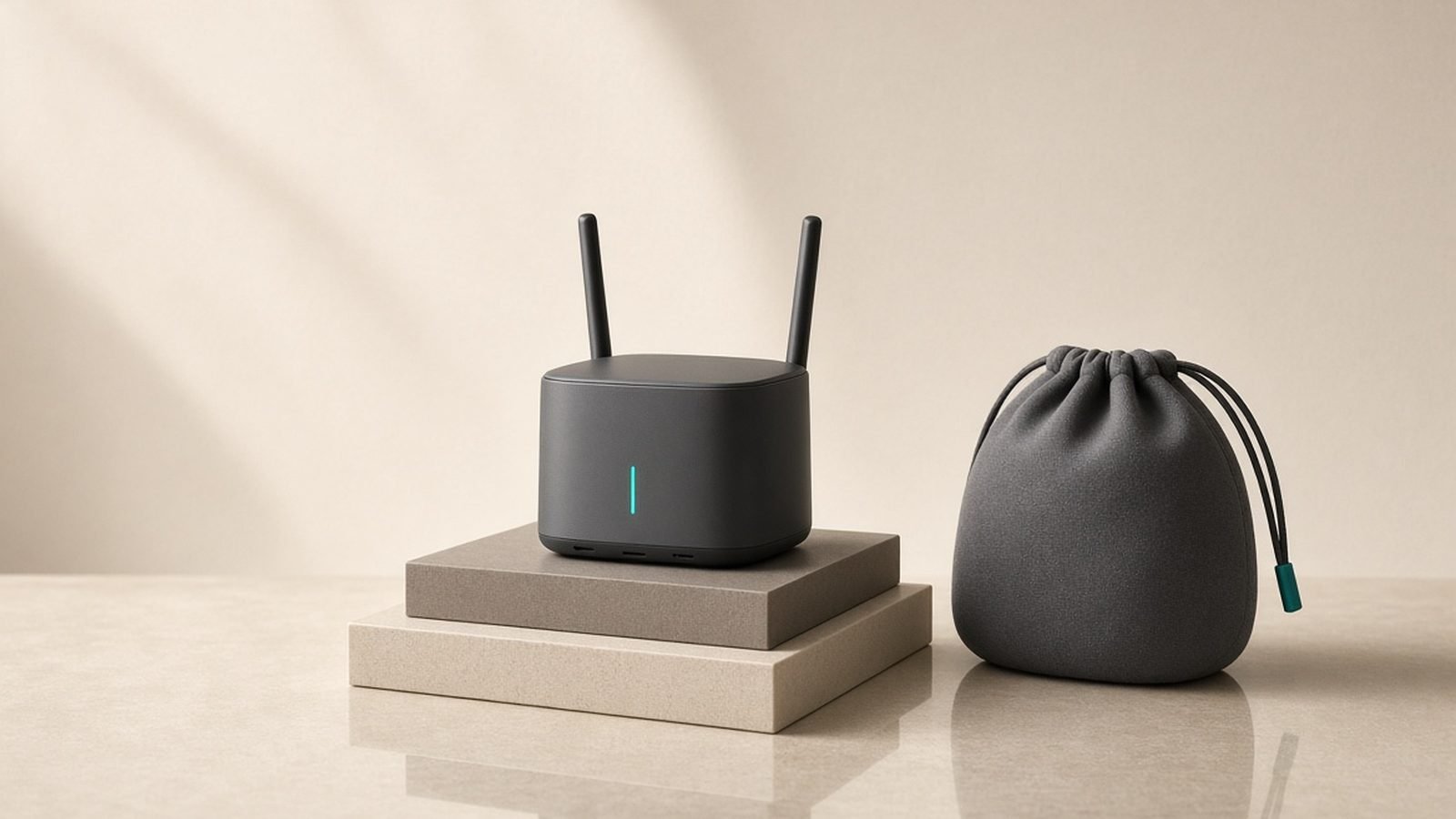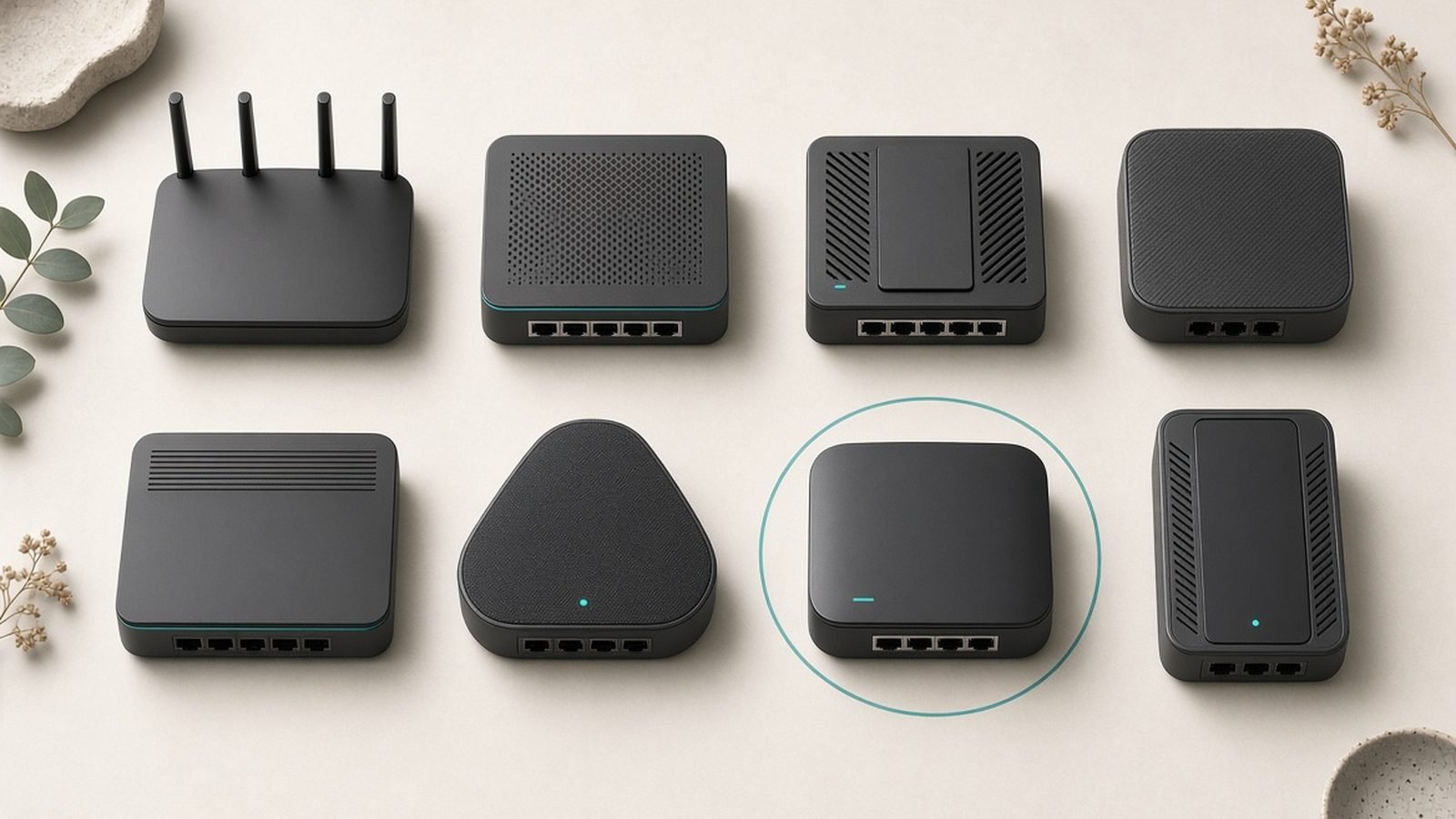
A VPN router protects every device in your home at once — your smart TV, your consoles, your IoT gadgets, the guest phone that would never install a VPN app — by running the encrypted tunnel at the router itself. The best VPN router in 2026 is the GL.iNet Flint 2 (GL-MT6000), which pairs genuinely fast WireGuard throughput with an approachable interface for around $160 / £150. It’s the rare VPN router that won’t strangle your internet speed.
That last point is the whole game. Encryption is CPU-intensive, and most routers with a VPN client buckle to a fraction of your plan’s speed once a tunnel is active. We’ve researched the current field — published throughput figures, firmware capabilities and aggregated owner reports — to find routers with the processing muscle to keep VPN speeds usable. Our five picks span the fast-and-affordable Flint line, Asus’s polished ecosystem, and a pocket-sized travel option. For non-VPN buyers, our Best Wi-Fi 7 Routers 2026: Top Picks for Every Budget and Best Wi-Fi 6 Routers 2026: Great Value Picks guides cover mainstream picks.
Best vpn router 2026 at a glance
| Pick | Model | VPN throughput (WireGuard) | Wi-Fi | Price (US / UK) |
|---|---|---|---|---|
| Best overall | GL.iNet Flint 2 (GL-MT6000) | ~900Mbps+ | Wi-Fi 6 | around $160 / £150 |
| Best Wi-Fi 7 | GL.iNet Flint 3 (GL-BE9300) | ~1Gbps+ | Wi-Fi 7 | around $250 / £240 |
| Best premium | Asus RT-BE88U | ~1Gbps+ | Wi-Fi 7 | around $300 / £290 |
| Best value | Asus RT-AX58U V2 | ~250-350Mbps | Wi-Fi 6 | around $110 / £100 |
| Best travel | GL.iNet Beryl AX (GL-MT3000) | ~500-900Mbps | Wi-Fi 6 | around $90 / £85 |
VPN throughput figures are drawn from published tests and vary with your VPN provider, protocol and server distance. Prices are typical street prices, not fixed MSRPs.
How we picked
We don’t run our own VPN benchmark rig, so these picks lean on published third-party throughput tests, each router’s documented CPU and firmware capabilities, and aggregated owner reports about real-world VPN speeds and stability. That combination matters here more than in most categories, because a router’s marketing rarely mentions the single number that counts: how fast it can actually push an encrypted tunnel.
Two hard filters shaped the list. First, WireGuard support — it’s dramatically faster and more efficient than legacy OpenVPN, and any serious VPN router in 2026 should run it. Second, honest throughput. We favored routers with the processing headroom to keep VPN speeds usable on a gigabit-class connection, and we’re upfront about which picks trade speed for price. A VPN router that drops your 900Mbps plan to 80Mbps isn’t protecting you so much as punishing you.
Best vpn router overall: GL.iNet Flint 2 (GL-MT6000)
Around $160 / £150 | Wi-Fi 6 AX6000 | WireGuard ~900Mbps+ | 2.5G WAN + 2.5G LAN
The Flint 2 is the router that made fast home VPN affordable, and it remains the pick for most people. GL.iNet built it around a capable quad-core processor specifically to handle encryption, and the result is published WireGuard throughput north of 900Mbps — enough to run a full-home tunnel on a gigabit plan without feeling the tax.
What sets GL.iNet apart is the software. Its firmware is based on OpenWrt but wrapped in a clean, genuinely usable interface where setting up a WireGuard or OpenVPN client is a guided process, not a config-file ordeal. It supports policy-based routing (send only certain devices through the VPN), VPN cascading, kill-switches, and AdGuard Home for network-wide ad blocking — features that cost extra or don’t exist on mainstream routers. The 2.5G WAN and LAN ports mean it also works as a straightforward fast router when the tunnel is off.
The trade-offs are modest. It’s Wi-Fi 6, not Wi-Fi 7, so wireless speeds trail the latest flagships (the Flint 3 below fixes that). The interface, while the best in class for VPN, still exposes more networking concepts than a totally hands-off buyer wants. And real VPN speed always depends on your provider and server choice — GL.iNet gives you the headroom, but a distant or overloaded VPN server can still slow you down.
Pros:
- Published WireGuard throughput over 900Mbps — rare at this price
- The clearest, most capable VPN interface in a consumer router
- 2.5G WAN and LAN ports, AdGuard Home, policy-based routing
- Strong ongoing firmware support from GL.iNet
Cons:
- Wi-Fi 6, not Wi-Fi 7
- Interface exposes more settings than casual users need
- Real VPN speed still depends on your provider and server
Who it’s for: Anyone who wants fast, whole-home VPN privacy on a gigabit plan without overpaying. It’s the default recommendation.
Check price: GL.iNet Flint 2 (GL-MT6000)
Best Wi-Fi 7 vpn router: GL.iNet Flint 3 (GL-BE9300)
Around $250 / £240 | Wi-Fi 7 BE9300 | WireGuard ~1Gbps+ | dual 2.5G + 10G ports
If you want VPN performance and cutting-edge wireless in one box, the Flint 3 is GL.iNet’s answer: a tri-band Wi-Fi 7 router with the same VPN-first firmware philosophy, more processing power, and multi-gig ports including a 10G option. Published WireGuard throughput pushes past 1Gbps, so it can keep pace with faster-than-gigabit plans while a tunnel runs.
You get everything that makes the Flint 2 great — guided WireGuard/OpenVPN setup, policy-based routing, kill-switch, AdGuard Home — plus genuine Wi-Fi 7 with 320MHz channels and Multi-Link Operation, and a port array (dual 2.5G plus 10G on the flagship configuration) that suits a modern multi-gig home. It’s effectively “the Flint 2 with no wireless compromises,” which is exactly what enthusiasts asked for.
The caveats are price and audience. At around $250 / £240 it costs more than plenty of capable Wi-Fi 7 routers that lack strong VPN chops, so it only makes sense if VPN throughput is a priority. As with all GL.iNet gear, the interface rewards users who enjoy control; total novices may find it busier than an Asus or TP-Link app. And you’ll want Wi-Fi 7 client devices to see the wireless benefit — see our Best Wi-Fi 7 Routers 2026: Top Picks for Every Budget guide for context on that.
Pros:
- Genuine Wi-Fi 7 plus over-1Gbps WireGuard throughput
- Multi-gig ports including a 10G option
- Same excellent VPN firmware as the Flint 2
- Future-proof for multi-gig internet plans
Cons:
- Around $250 / £240 is a premium over the Flint 2
- Interface is enthusiast-oriented
- Wi-Fi 7 benefits need Wi-Fi 7 client devices
Who it’s for: Enthusiasts on a multi-gig plan who refuse to choose between top wireless speeds and serious VPN performance.
Check price: GL.iNet Flint 3 (GL-BE9300)
Best premium vpn router: Asus RT-BE88U
Around $300 / £290 | Wi-Fi 7 BE88U | WireGuard ~1Gbps+ | dual 10G + multiple 2.5G ports
For buyers who want a mainstream-polished ecosystem alongside strong VPN capability, Asus is the natural home, and the RT-BE88U is the standout. It’s a dual-band Wi-Fi 7 router with an exceptionally generous port loadout — dual 10G plus multiple 2.5G ports — and a fast processor that keeps WireGuard throughput in the gigabit range.
Asus earns its place two ways. First, its VPN implementation is mature: a built-in WireGuard and OpenVPN client and server, an “VPN Fusion” feature that routes chosen devices through the tunnel while others use the normal connection, and one-click integration with several commercial VPN providers. Second, the wider platform — free lifetime AiProtection security, flexible AiMesh for adding nodes, and optional Asuswrt-Merlin firmware for deep customization — makes it a complete networking hub, not just a VPN box. The port array alone justifies interest from anyone with multi-gig gear.
The honest downsides: at around $300 / £290 it’s the priciest pick here, it’s dual-band rather than tri-band (no dedicated 6GHz-only radio in the classic sense), and Asus’s interface, while powerful, can overwhelm newcomers with options. If you don’t need the 10G ports or the ecosystem depth, the Flint 2 delivers the core VPN experience for roughly half the money.
Pros:
- Mature VPN Fusion with per-device tunnel routing
- Dual 10G and multiple 2.5G ports — outstanding connectivity
- Free lifetime AiProtection, AiMesh and Merlin firmware support
- Polished, well-supported ecosystem
Cons:
- The most expensive pick at around $300 / £290
- Feature-dense interface can intimidate newcomers
- Overkill without multi-gig internet or devices
Who it’s for: Asus-ecosystem fans and multi-gig households who want top-tier connectivity and VPN flexibility in one premium package.
Best value vpn router: Asus RT-AX58U V2
Around $110 / £100 | Wi-Fi 6 AX3000 | WireGuard ~250-350Mbps | gigabit ports
Not everyone has a gigabit plan or needs gigabit VPN speeds. The Asus RT-AX58U V2 is the sensible budget entry: a dependable AX3000 Wi-Fi 6 router with Asus’s full VPN and security software, at around $110 / £100.
It runs the same WireGuard and OpenVPN clients, VPN Fusion routing and free AiProtection as pricier Asus models, so the feature set is genuinely complete — you’re only giving up raw horsepower. Published tests put its WireGuard throughput in the 250-350Mbps range, which is more than enough to protect a household on a typical 200-500Mbps broadband plan, and it doubles as a solid everyday Wi-Fi 6 router with AiMesh support for future expansion. For most homes that aren’t on gigabit fiber, it’s all the VPN router they need.
The limits are clear: gigabit-only ports and modest VPN throughput mean it will bottleneck a fast connection once a tunnel is active, and it’s Wi-Fi 6 rather than 7. But matched to the right plan, it delivers the same privacy benefits as the flagships for a fraction of the price. If your internet is faster than roughly 350Mbps and you want full-speed VPN, step up to the Flint 2.
Pros:
- Full Asus VPN and AiProtection feature set for around $110 / £100
- Plenty of VPN throughput for sub-gigabit plans
- Reliable Wi-Fi 6 router with AiMesh support
- Easy, well-documented VPN setup
Cons:
- VPN throughput bottlenecks gigabit connections
- Gigabit-only ports, no multi-gig
- Wi-Fi 6, not Wi-Fi 7
Who it’s for: Households on typical broadband plans who want whole-home VPN privacy and Asus’s software without paying flagship prices.
Best travel vpn router: GL.iNet Beryl AX (GL-MT3000)
Around $90 / £85 | Wi-Fi 6 AX3000 | WireGuard ~500-900Mbps | 2.5G WAN + gigabit LAN
VPN routers aren’t only for the home. The pocket-sized GL.iNet Beryl AX brings the same VPN-first firmware to hotel rooms, rentals and coffee shops, protecting your devices on untrusted public Wi-Fi. It’s around $90 / £85 and fits in a jacket pocket.
Despite its size, it punches well above its weight: published WireGuard throughput can reach several hundred Mbps, it has a 2.5G WAN port for fast connections, and it runs the full GL.iNet toolkit — WireGuard/OpenVPN client, kill-switch, AdGuard Home, and the ability to repeat a hotel’s Wi-Fi while wrapping everything in your tunnel. It can even connect through a captive-portal hotel network and then share a secured connection to all your devices. Owner reports consistently praise it as the go-to travel companion for privacy-conscious travelers.
The caveats are inherent to its class: single-room coverage, modest antennas, and speeds that trail the full-size Flint 2 under heavy load. It’s a travel tool, not a home router. For the wider travel-router picture beyond VPN, and for pairing a home network with fast wired storage, see our Best Home NAS 2026: Top Picks for Backup, Plex & Photos guide when you’re back home.
Pros:
- Pocket-sized VPN protection for travel and public Wi-Fi
- Strong WireGuard throughput and a 2.5G WAN port for its size
- Full GL.iNet firmware: kill-switch, AdGuard, Wi-Fi repeating
- Excellent value at around $90 / £85
Cons:
- Single-room coverage; not a home router
- Modest antennas and lower peak speeds
- Small size means fewer ports
Who it’s for: Travelers and remote workers who want to secure every device on hotel, rental or cafe Wi-Fi with one tiny device.
Check price: GL.iNet Beryl AX (GL-MT3000)
How to choose a VPN router
Four factors separate a great VPN router from a frustrating one.
Prioritize VPN throughput, not Wi-Fi specs. The single most important number is how fast the router can push an encrypted tunnel. A flashy Wi-Fi 7 router with a weak CPU may still cripple your VPN speed. Match the router’s published WireGuard throughput to your internet plan.
Insist on WireGuard support. WireGuard is far faster and more efficient than legacy OpenVPN and IKEv2. Every pick here supports it. If a router only offers OpenVPN, expect much slower tunnel speeds.
Check VPN-provider compatibility. You’ll typically load a configuration file from your commercial VPN provider (NordVPN, Surfshark, Mullvad, ProtonVPN and others), or self-host your own server. GL.iNet and Asus both make this straightforward; confirm your provider supports router configs before buying.
Use policy-based routing if you need it. Not everything belongs in the tunnel — some streaming services block VPNs, and some devices need your real location. Routers like the Flint line and Asus’s VPN Fusion let you route specific devices through the VPN while others use the normal connection. It’s the feature that makes a whole-home VPN livable.
FAQ: VPN routers
What is the best VPN router in 2026?
For most people it’s the GL.iNet Flint 2 (GL-MT6000) at around $160 / £150. It combines published WireGuard throughput over 900Mbps with the clearest VPN setup interface in a consumer router, so it protects a whole home on a gigabit plan without gutting your speed. For Wi-Fi 7 there’s the Flint 3, for the Asus ecosystem the RT-BE88U, and for travel the pocket-sized Beryl AX.
Will a VPN router slow down my internet?
It can, because encryption is processing-intensive. A weak router may drop a gigabit connection to a fraction of its speed once a tunnel is active. That’s why VPN-optimized routers with strong CPUs and WireGuard support matter — the Flint 2, for instance, sustains over 900Mbps. Always match the router’s published VPN throughput to your internet plan, and prefer WireGuard over the slower OpenVPN protocol.
What’s the difference between WireGuard and OpenVPN on a router?
WireGuard is a newer VPN protocol that’s dramatically faster, more efficient and simpler than OpenVPN, so it maintains far higher speeds on the same hardware. OpenVPN is older, more widely supported by legacy systems, but much heavier on the CPU. In 2026, WireGuard is the protocol to prioritize for a home VPN router; use OpenVPN only if a specific provider or setup requires it.
Do I need a VPN subscription to use a VPN router?
Usually yes. Most people load a configuration from a commercial VPN provider such as Mullvad, ProtonVPN, NordVPN or Surfshark, which requires a subscription. Alternatively, you can self-host your own VPN server at home (for secure remote access to your own network) using the router’s built-in server feature, which needs no third-party subscription. The router itself is a one-time hardware purchase either way.
Can I put only some devices through the VPN?
Yes, using policy-based routing. Routers like the GL.iNet Flint line and Asus models with VPN Fusion let you send specific devices or groups through the encrypted tunnel while others use your normal connection. This is genuinely useful because some streaming services block VPN traffic and some devices need your real location. It’s one of the most important features to look for in a whole-home VPN router.
Is a VPN router better than a VPN app on each device?
They serve different needs. A VPN router protects every device on your network automatically — including smart TVs, consoles and IoT gadgets that can’t run VPN apps — and covers guests without any setup. A per-device app gives you easy on/off control and per-device server choice. Many privacy-focused users run both: the router as a baseline, and apps on phones and laptops for flexibility on the go.
Zen Tech Hub may earn a commission from links on this page, at no extra cost to you.