The Orbi vs Eero decision comes down to a genuine philosophical split, not just a spec sheet. Netgear Orbi builds big, expensive tri-band systems with a dedicated wireless backhaul that muscles a strong signal to the far corners of large homes. Amazon’s eero builds smaller, cheaper, friendlier systems that set up in ten minutes and quietly manage themselves for years.
Both now sell mature Wi-Fi 7 line-ups, both are excellent, and both will cost you real money — so the question in 2026 isn’t “which is good?” but “which fits your house, your ISP and your patience?” In our research across spec sheets, independent reviews and hundreds of owner reports, a consistent picture emerged: Orbi wins raw range and long-distance throughput; eero wins price, polish and smart-home integration.
Here’s the quick version, then the detail.
Quick Answer: Range vs Simplicity
- Buy Netgear Orbi if you have a large detached home (3,500+ sq ft), thick walls, or outbuildings, and you want the fastest possible speeds at the far end of the house. The dedicated 5 GHz backhaul on the 770/870/970 series is the single biggest hardware advantage either brand holds.
- Buy Amazon eero if you want the easiest setup and most reliable “forget it exists” experience, if your home is under ~3,500 sq ft, or if you’re deep in the Alexa ecosystem. Eero Pro 7 in particular undercuts its Orbi equivalent by around $100 / £100 while matching it in most rooms.
| Orbi 770 (3-pack) | Orbi 870 (3-pack) | Eero Pro 7 (3-pack) | Eero Max 7 (3-pack) | |
|---|---|---|---|---|
| Wi-Fi standard | Wi-Fi 7, tri-band | Wi-Fi 7, tri-band | Wi-Fi 7, dual-band | Wi-Fi 7, tri-band |
| Dedicated backhaul | Yes (5 GHz) | Yes (5 GHz) | No (TrueMesh dynamic) | No (TrueMesh dynamic) |
| Rated coverage | Up to 8,000 sq ft | Up to 9,000 sq ft | Up to 6,000 sq ft | Up to 7,500 sq ft |
| Fastest wired port | 2.5G | 10G | 5G | 10G |
| Smart-home radios | None | None | Zigbee, Thread, Matter | Zigbee, Thread, Matter |
| Typical price | ~$800 / £800 | ~$1,300 / £1,250 | ~$700 / £700 | ~$1,700 / £1,700 |
| Optional subscription | Armor, ~$100/yr | Armor, ~$100/yr | eero Plus, ~$100/£100 per yr | eero Plus, ~$100/£100 per yr |
For the wider market context — including TP-Link Deco, ASUS ZenWiFi and Google Nest Wifi — see our full guide: Best Mesh Wi-Fi Systems 2026: Wi-Fi 6 & Wi-Fi 7 Compared. And if it’s Deco specifically you’re weighing eero against, we’ve covered that head-to-head too: Eero vs Deco (2026): Which Mesh Wi-Fi Should You Buy?.
Line-ups Decoded: Orbi 370/770/870/970 vs Eero 7/Pro 7/Max 7
Both brands make their ranges needlessly confusing, so here’s the decoder ring.
Netgear Orbi runs four Wi-Fi 7 tiers. The Orbi 370 is the budget dual-band entry (skip it — at that price eero is simply better). The Orbi 770 is the sweet spot: tri-band with a dedicated 5 GHz backhaul and 2.5G Ethernet. The Orbi 870 adds a 10G WAN port, stronger antennas and higher throughput for very large homes on multi-gig fiber. The Orbi 970 is the four-figure halo product with a quad-band design and a dedicated 6 GHz backhaul — spectacular, but overkill for almost everyone.
Amazon eero runs three Wi-Fi 7 tiers. The base Eero 7 is dual-band (no 6 GHz radio at all) and best treated as a budget option for smaller homes. The Eero Pro 7 adds the 6 GHz band and 5G Ethernet, and is the model most people should buy — our full breakdown is here: Eero Pro 7 Review: Is Amazon's Wi-Fi 7 Mesh Worth It?. The Eero Max 7 is the tri-band flagship with two 10G ports per node, aimed at multi-gig fiber homes.
The natural netgear orbi vs eero pairings, then: Orbi 770 vs Eero Pro 7 in the upper mid-range, and Orbi 870 vs Eero Max 7 at the flagship end. Those are the two fights that matter, and we’ll score both below.
Price Comparison US/UK: Hardware Plus Subscriptions Over 3 Years
Sticker price is only half the story with these two brands, because both push optional subscriptions hard — and this is where competing comparison pages usually go quiet.
The Orbi subscription cost question: Netgear Armor (Bitdefender-powered network security) runs around $100 / £85 per year after a 30-day trial. Netgear has also moved advanced parental controls behind its Smart Parental Controls plan at roughly $70 / £60 per year. Neither is required — the routers work fully without them — but the app nags, and based on hundreds of owner reports, that nagging is the single most common Orbi complaint after price.
Eero Plus costs around $99.99 / £99.99 per year (or ~$9.99 / £9.99 monthly) and bundles network security, ad blocking, advanced parental controls, plus 1Password, Malwarebytes and NordVPN subscriptions in the US. As a bundle it’s genuinely better value than Armor — the included third-party apps alone are worth more than the fee if you’d otherwise pay for them. The catch: eero locks more everyday features (historical usage data, ad blocking, content filters) behind the paywall than Netgear does.
Here’s the honest three-year maths for the mid-range pairing, assuming you take the subscription:
| 3-year cost | Hardware | Subscription (3 yrs) | Total |
|---|---|---|---|
| Orbi 770 + Armor | ~$800 / £800 | ~$300 / £255 | ~$1,100 / £1,055 |
| Eero Pro 7 + eero Plus | ~$700 / £700 | ~$300 / £300 | ~$1,000 / £1,000 |
| Orbi 870 + Armor | ~$1,300 / £1,250 | ~$300 / £255 | ~$1,600 / £1,505 |
| Eero Max 7 + eero Plus | ~$1,700 / £1,700 | ~$300 / £300 | ~$2,000 / £2,000 |
Skip the subscriptions entirely — which most owners can, in our view — and eero’s hardware advantage at the Pro 7 tier holds, while Orbi claws back ground at the flagship tier, where the 870 undercuts the Max 7 by around $400 / £450.
Check price: Eero Pro 7 (3-pack) Check price: Orbi 770 (RBE773, 3-pack)
Performance: Dedicated Backhaul vs TrueMesh in Testing
The core architectural difference: Orbi’s 770 and up reserve an entire 5 GHz radio purely for node-to-node traffic (the backhaul), so your devices never share airtime with the mesh’s own plumbing. Eero instead uses TrueMesh, a dynamic routing system that sends backhaul traffic over whichever band is least congested at that moment.
Across the independent testing we aggregated — including long-running lab data from major US and UK reviewers — the pattern is consistent. Close to the main router, the two brands are effectively tied; any Wi-Fi 7 client on a gigabit line will saturate it either way. Two rooms and one satellite hop away is where Orbi pulls ahead, typically holding noticeably more of its near-router speed at distance than eero manages, because the dedicated backhaul doesn’t degrade as client load rises.
In the orbi 770 vs eero pro 7 fight specifically, the Pro 7’s dual-band design means backhaul and client traffic share the same two bands. In small and mid-size homes with light congestion, owners report it’s a non-issue. In busy households — 40+ devices, 4K streams, cloud backups — reports of evening slowdowns on far satellites are more common with eero than with the 770.
The orbi 870 vs eero max 7 matchup is closer, since the Max 7’s tri-band design gives TrueMesh more spectrum to play with. But the 870’s reserved backhaul still delivers steadier throughput at the far node, and it does so for less money. Where eero punches back is multi-gig wired networking: the Max 7’s dual 10G ports per node beat the 870’s single 10G WAN if you’re wiring several rooms.
One more real-world note in eero’s favour: wired backhaul. Run Ethernet between nodes and TrueMesh uses it automatically, erasing Orbi’s headline advantage entirely. If your home is already wired, buy the cheaper system.
Coverage for Large Homes: The Orbi Case
If you searched “orbi vs eero for large house,” here is your answer: Orbi, and it isn’t particularly close once you pass roughly 3,500–4,000 sq ft of awkward, wall-heavy space.
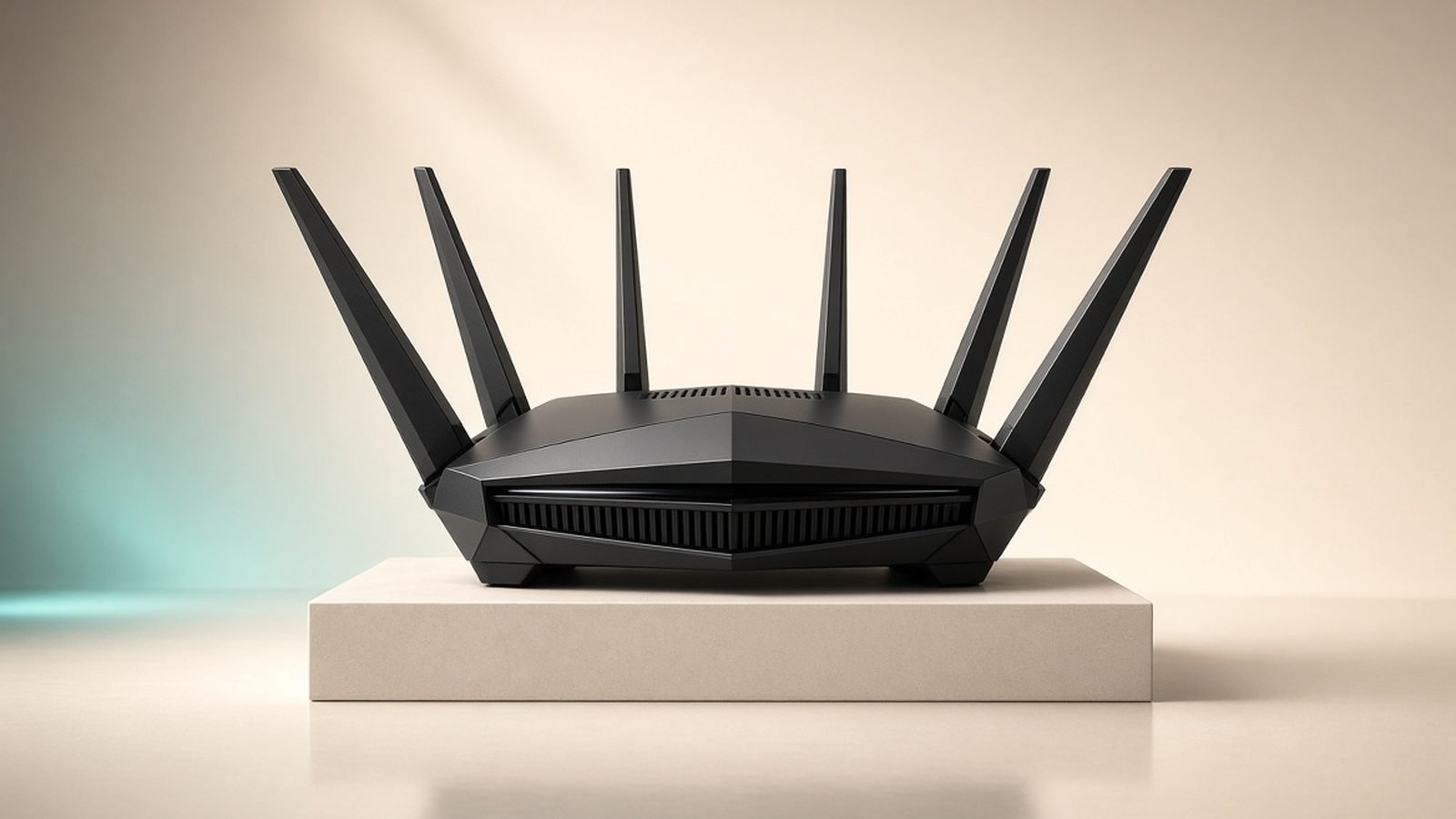
Orbi units are physically enormous compared with eero’s palm-sized pucks, and that bulk buys high-gain antenna arrays that eero’s industrial design simply can’t match. Netgear rates a 770 3-pack for up to 8,000 sq ft and the 870 for 9,000 sq ft; marketing numbers, yes, but the relative gap over eero’s 6,000–7,500 sq ft ratings shows up consistently in owner reports from large UK detached houses and US colonials alike. Garden offices, detached garages and stone-walled period homes are exactly the scenarios where Orbi owners report success after an eero system left dead zones.
The trade-off is honest, though: those big Orbi towers need shelf space and line-of-sight-ish placement to shine, and each additional satellite costs substantially more than an eero add-on. Eero’s counter-argument for big homes is density — because individual nodes are cheap and small, you can scatter four or five eeros for the price of three Orbis. That works in long single-storey homes; it works less well through thick masonry, where each low-power hop loses more than it gains.
Netgear Orbi 770 (RBE773, 3-pack) — around $800 / £800
Pros
- Dedicated 5 GHz backhaul keeps far-satellite speeds high under load
- Excellent range per node; genuinely covers large homes with three units
- 2.5G Ethernet on router and satellites
- Works fully without any subscription
Cons
- Big, imposing units that demand shelf space
- App is functional but clunky, with persistent Armor upselling
- Costs ~$100 / £100 more than Eero Pro 7
Check price: Orbi 770 (RBE773, 3-pack)
Netgear Orbi 870 (3-pack) — around $1,300 / £1,250
Pros
- Class-leading long-range throughput in its price bracket
- 10G WAN port ready for multi-gig fiber
- Meaningfully cheaper than Eero Max 7
Cons
- Only one 10G port; the Max 7 offers better wired flexibility
- Same dated app experience as the rest of the Orbi range
Check price: Orbi 870 (3-pack)
Apps and Ease of Use: The eero Case
Flip the question to software and the verdict flips with it. Eero’s app is the best in the mesh business: setup genuinely takes about ten minutes, firmware updates install silently overnight, and the interface surfaces exactly what a normal household needs — device list, pause buttons, guest network — without burying you in menus.
Netgear’s Orbi app has improved, but based on hundreds of owner reports it remains the brand’s weakest link: slower to load, more prone to losing sight of satellites, and pushier about subscriptions. Power users get more knobs than eero offers (and a proper web interface, which eero still lacks), but eero’s philosophy is deliberate: it’s a managed system that self-heals and self-optimises, and most owners never think about it after day one.
That “never think about it” quality is why eero keeps winning recommendations in orbi vs eero Reddit threads for anyone buying on behalf of parents or non-technical family. The consensus in those threads mirrors our own research: Orbi for the biggest houses and tinkerers, eero for everyone who wants Wi-Fi to be an appliance. The one recurring eero gripe worth knowing: no local web admin and heavy cloud dependence, which rubs privacy-conscious buyers the wrong way.
Amazon Eero Pro 7 (3-pack) — around $700 / £700
Pros
- Best-in-class app and a famously painless setup
- Built-in Zigbee, Thread and Matter smart-home hub
- 5G Ethernet ports; wired backhaul supported out of the box
- Around $100 / £100 cheaper than Orbi 770
Cons
- Dual-band only — no dedicated backhaul, so far-node speeds dip under heavy load
- Useful everyday features paywalled behind eero Plus
- No web interface; cloud-dependent management
Check price: Eero Pro 7 (3-pack)
Amazon Eero Max 7 (3-pack) — around $1,700 / £1,700
Pros
- Two 10G ports on every node — the best wired story in mesh
- Tri-band Wi-Fi 7 with strong all-round performance
- Same effortless eero software experience
Cons
- Very expensive; the Orbi 870 delivers comparable coverage for less
- Still no dedicated backhaul band
Check price: Eero Max 7 (3-pack)
Smart Home and Extras
This category is a clean eero sweep. Every current eero doubles as a Zigbee hub and Thread border router, with full Matter controller support — meaning smart bulbs, sensors and locks can join your network with no extra hub. If you own Echo speakers, eero integrates directly with Alexa for things like pausing the kids’ Wi-Fi by voice.
Orbi offers none of that. Netgear’s extras run in a different direction: more granular network controls, VLAN options on higher tiers, and better multi-gig port selections at each price point. If your “smart home” is a rack of wired gear, Orbi’s extras matter more; if it’s fifty Matter and Zigbee gadgets, eero’s do.
Verdicts: Which Should You Buy?
Large detached home (3,500+ sq ft, thick walls, outbuildings): Buy the Orbi 770, or the 870 if you have multi-gig fiber. The dedicated backhaul and bigger antennas are the difference between “usable” and “fast” in the far bedroom. This is the orbi vs eero scenario where paying Netgear’s premium is clearly rational.
Gigabit fiber flat or typical family house: Buy the Eero Pro 7. It’s around $100 / £100 cheaper than the Orbi 770, effectively identical in day-to-day speed at this scale, dramatically nicer to live with, and it replaces a smart-home hub for free.
Multi-gig fiber with wired rooms: Buy the Eero Max 7 if you need 10G ports everywhere; buy the Orbi 870 if you want flagship wireless coverage for around $400 / £450 less.
Budget buyer: Honestly, neither flagship line. A base Eero 7 3-pack is the cheapest respectable Wi-Fi 7 mesh from either brand, but at that money TP-Link’s Deco range deserves a look first — see Eero vs Deco (2026): Which Mesh Wi-Fi Should You Buy? and our full rankings at Best Mesh Wi-Fi Systems 2026: Wi-Fi 6 & Wi-Fi 7 Compared. More networking guides live in our hub: Networking & Wi-Fi.
FAQ: Orbi vs Eero
Is Orbi or Eero better in 2026?
Neither wins outright. Orbi is better for large homes because its tri-band models reserve a 5 GHz band purely for node-to-node traffic, holding speed at distance. Eero is better for ease of use, smart-home integration and price at the mid-range. For homes under roughly 3,500 sq ft, the Eero Pro 7 is our default pick; above that, the Orbi 770 or 870.
Does Orbi have a monthly fee?
No — Orbi works fully without a subscription. Netgear sells optional add-ons: Armor security at around $100 / £85 per year and Smart Parental Controls at roughly $70 / £60 per year. Core routing, guest networks and basic controls are free forever; expect in-app prompts to upgrade, which owners frequently cite as an annoyance.
Is eero Plus worth it?
If you’d otherwise pay for a password manager, VPN or antivirus, yes — eero Plus (~$99.99 / £99.99 per year) bundles 1Password, NordVPN and Malwarebytes in the US alongside network security and advanced parental controls. If you just want fast Wi-Fi, skip it; the system performs identically without a subscription, though ad blocking and content filters stay locked.
Can I mix Orbi and Eero together?
No. Orbi nodes only mesh with Orbi, and eero only with eero — there’s no cross-brand mesh standard either brand supports. You can technically run one system behind the other in bridge mode, but you’d lose features and gain complexity. Pick one ecosystem, and buy same-brand satellites when you need to extend coverage.
Which is faster, Orbi 770 or Eero Pro 7?
Close to the router, they’re effectively tied — both saturate a gigabit connection with Wi-Fi 7 clients. At the far satellite, the Orbi 770 is consistently faster in aggregated testing, because its dedicated 5 GHz backhaul doesn’t compete with your devices for airtime. The Pro 7 closes the gap entirely if you connect nodes with Ethernet.
Do Orbi and Eero work in the UK?
Yes, both brands sell full Wi-Fi 7 ranges in the UK with local warranties, and both work with FTTP providers like BT, Sky (in modem-only setups), Virgin Media (modem mode) and altnets such as Community Fibre. UK pricing is broadly at dollar-parity, so the value equation between the two brands is the same on both sides of the Atlantic.
Zen Tech Hub may earn a commission from links on this page, at no extra cost to you.