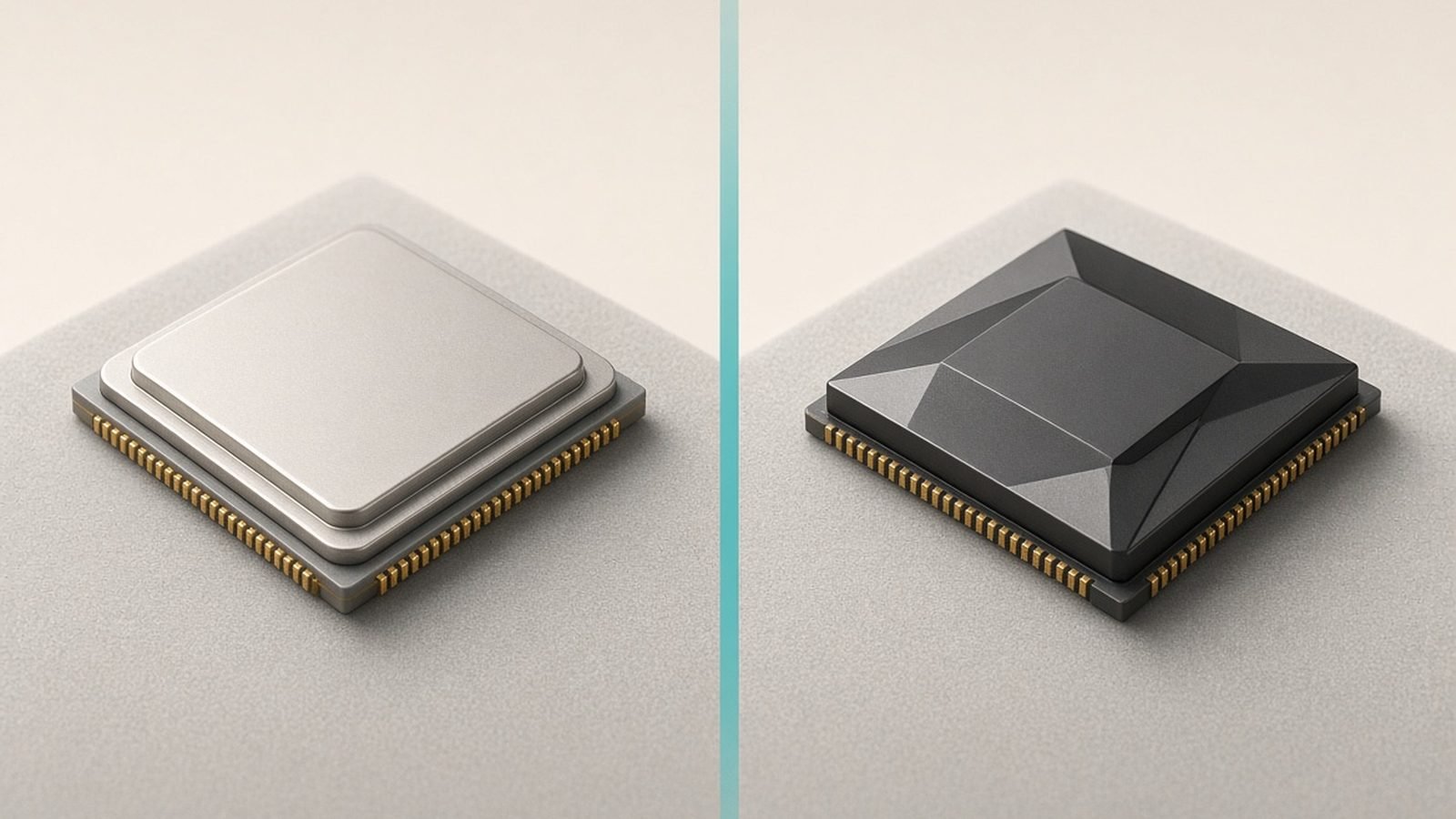
If you are building or upgrading a PC in 2026, here is the direct answer: for gaming, AMD wins, thanks to its 3D V-Cache X3D chips and a longer-lived socket. For mixed productivity and efficiency, Intel is genuinely competitive again with its Core Ultra 200S line. Most gamers and gamer-creators should buy a Ryzen X3D chip on the AM5 platform; heavy multitasking and productivity users who value low power draw and strong all-core work should give Intel’s Arrow Lake a serious look.
This is not the blowout some headlines suggest. Both platforms are excellent in 2026 — the right pick depends on what you actually do with the machine. Below we compare Ryzen 9000 (Zen 5) against Core Ultra 200S (Arrow Lake) on the things that decide the purchase.
AMD vs Intel 2026 at a glance
| Factor | AMD Ryzen 9000 (Zen 5) | Intel Core Ultra 200S (Arrow Lake) |
|---|---|---|
| Socket | AM5 | LGA 1851 |
| Gaming leader | Yes (X3D chips) | Close, but behind X3D |
| Productivity | Strong | Very strong (all-core) |
| Efficiency | Good | Excellent (big gen leap) |
| Platform longevity | AM5 supported into 2027+ | LGA 1851 shorter runway |
| Top gaming chip | Ryzen 7 9800X3D | Core Ultra 9 285K |
| Value gaming chip | Ryzen 5/7 non-X3D | Core Ultra 5 245K |
| Memory | DDR5 | DDR5 |
The one-line summary: AMD owns the frame-rate crown and the upgrade path; Intel answers with efficiency, productivity throughput and often keener platform pricing.
Gaming performance
For pure gaming, AMD’s X3D chips are the story of the generation. The stacked 3D V-Cache dramatically boosts the large, latency-sensitive workloads that games throw at a CPU, and the AMD Ryzen 7 9800X3D Review: Still the Gaming King? chip in particular sits at the top of virtually every aggregated gaming benchmark. If your priority is the highest frame rates — especially at 1080p and 1440p where the CPU matters most — a Ryzen X3D part is the clearest buy in the whole comparison.
Intel’s Core Ultra 200S closed a lot of ground on efficiency and productivity, but Arrow Lake’s gaming performance was its weakest showing at launch. It is a perfectly good gaming platform — the Core Ultra 9 285K and Core Ultra 7 265K run modern games smoothly — but head-to-head against an equivalent X3D chip, it generally trails in average and, more importantly, 1% low frame rates. For a build centred on gaming, that gap is decisive.
The nuance: at 4K, where the GPU does most of the work, the difference between these CPUs shrinks and often disappears. If you game exclusively at 4K with a strong GPU like an Nvidia RTX 5080 Review 2026: The Sweet-Spot GPU? card, either platform delivers essentially the same experience. The CPU choice matters most for high-refresh 1080p/1440p players. See our Best CPUs 2026: Gaming & Productivity Processors roundup for the specific chips at each budget.
Productivity and content creation
Flip the workload to rendering, code compilation, video export and heavy multitasking, and Intel becomes far more compelling. Arrow Lake’s redesigned core layout delivers strong all-core throughput, and the Core Ultra 9 285K trades blows with — and sometimes beats — AMD’s non-X3D flagships in productivity benchmarks.
AMD is no slouch here. The standard Ryzen 9000 chips (non-X3D) are excellent all-rounders, and the Ryzen 7 9800X3D vs 9950X3D: Which to Buy in 2026? comparison shows how AMD’s higher-core X3D parts now blend top gaming with serious content-creation muscle. But if productivity is your primary use and gaming is secondary, Intel’s all-core performance and included NPU for on-device AI tasks make Core Ultra 200S a smart, often cheaper-per-thread option.
For a gamer who also streams, edits or compiles, AMD’s higher-core X3D chips (like the Ryzen 9 9950X3D) are the true best-of-both-worlds pick — you pay more, but you get category-leading gaming and strong multithreaded work in one chip.
Efficiency and thermals
This is Intel’s biggest turnaround. Previous Intel generations ran hot and thirsty; Arrow Lake made a large efficiency leap, drawing notably less power under load than its predecessors while keeping temperatures in check. In a build where power draw, heat and cooling noise matter, Core Ultra 200S is now the easier platform to keep cool and quiet.
AMD’s Zen 5 is efficient too, but the X3D chips have a quirk: the stacked cache is heat-sensitive, so they respond best to good cooling even though they do not draw enormous power. Neither platform is hard to cool in 2026, but both reward a quality air or AIO cooler. Our Best CPU Coolers 2026: Top Air & AIO Liquid Picks guide covers the units that suit each — and if you go liquid, the Arctic Liquid Freezer III 360 Review: Best AIO Value? is a standout value pick for either socket.
Platform and longevity
Longevity is one of AMD’s strongest, least-flashy advantages. The AM5 socket has been committed to support into 2027 and beyond, meaning you can drop a future Ryzen chip into today’s motherboard without a platform rebuild. That upgrade path has real long-term value and is a major reason enthusiasts lean AMD.
Intel’s LGA 1851 has a shorter confirmed runway, so a Core Ultra 200S board is more likely to be a one-and-done platform. That is not a dealbreaker — plenty of people never upgrade the CPU mid-socket — but if you like the option of a cheap chip swap in two or three years, AM5 is the safer bet. Both use DDR5 memory; see Best 32GB DDR5 RAM for Gaming in 2026 for kits that suit either, and How to Enable EXPO for DDR5 RAM (Ryzen AM5) if you go AMD.
Which should you buy?
Buy AMD (Ryzen X3D) if: gaming is your priority, you want the highest frame rates, or you value the long AM5 upgrade path. The Ryzen 7 9800X3D is the default best gaming CPU of 2026, and higher-core X3D parts add content-creation strength for creators who also game.
Buy Intel (Core Ultra 200S) if: productivity and multitasking lead your workload, you want the best efficiency and easy cooling, or you find a strong platform deal. The Core Ultra 9 285K and Core Ultra 7 265K are excellent all-round chips that game well and export/render fast.
For most readers of this site — gamers and gamer-creators — the recommendation tilts AMD, specifically an X3D chip. But dismissing Intel in 2026 would be a mistake; Arrow Lake is the most competitive Intel has been in years, and for the right workload it is the smarter buy. Pair whichever you pick with a suitable power supply and a well-ventilated case — our Best Power Supplies 2026: Reliable PSUs Ranked and Best PC Cases 2026: Airflow, Looks & Value guides cover both.
FAQ
Is AMD or Intel better for gaming in 2026?
AMD, in most cases. Its X3D chips with 3D V-Cache lead virtually every aggregated gaming benchmark, especially at 1080p and 1440p where the CPU matters most. Intel’s Core Ultra 200S games well but generally trails an equivalent X3D chip in average and 1% low frame rates. At 4K the gap shrinks because the GPU does most of the work.
Is Intel Arrow Lake worth buying?
Yes, for the right user. Core Ultra 200S made a big efficiency leap and offers strong all-core productivity performance, making it excellent for content creation, multitasking and quiet, cool builds. It is less compelling if pure gaming frame rates are your only concern, where AMD’s X3D chips hold a clear lead.
Does the AMD AM5 socket really last longer?
AMD has committed to supporting AM5 into 2027 and beyond, so you can upgrade to a future Ryzen chip without replacing the motherboard. Intel’s LGA 1851 has a shorter confirmed support window. If a mid-socket CPU upgrade in two or three years appeals to you, AM5 offers the more flexible path.
Which is more power-efficient, AMD or Intel?
In 2026 both are efficient, but Intel’s Arrow Lake made the larger generational improvement and draws notably less power under load than its predecessors, making it the easier platform to keep cool and quiet. AMD’s Zen 5 is efficient too, though the X3D chips reward good cooling because the stacked cache is heat-sensitive.
Should I get an X3D chip or a standard Ryzen?
Get an X3D chip if gaming is your priority — the 3D V-Cache delivers a meaningful frame-rate boost. Choose a standard Ryzen 9000 chip if you want strong all-round performance for a lower price and game less seriously. Higher-core X3D parts like the Ryzen 9 9950X3D blend top gaming with strong content creation for those who do both.
Do I need a new motherboard to switch between them?
Yes. AMD uses the AM5 socket and Intel uses LGA 1851, so the two are not cross-compatible — switching brands always means a new motherboard. Both platforms use DDR5 memory, so a compatible RAM kit can usually carry over, but the CPU and board must match the platform you choose.
Zen Tech Hub may earn a commission from links on this page, at no extra cost to you.