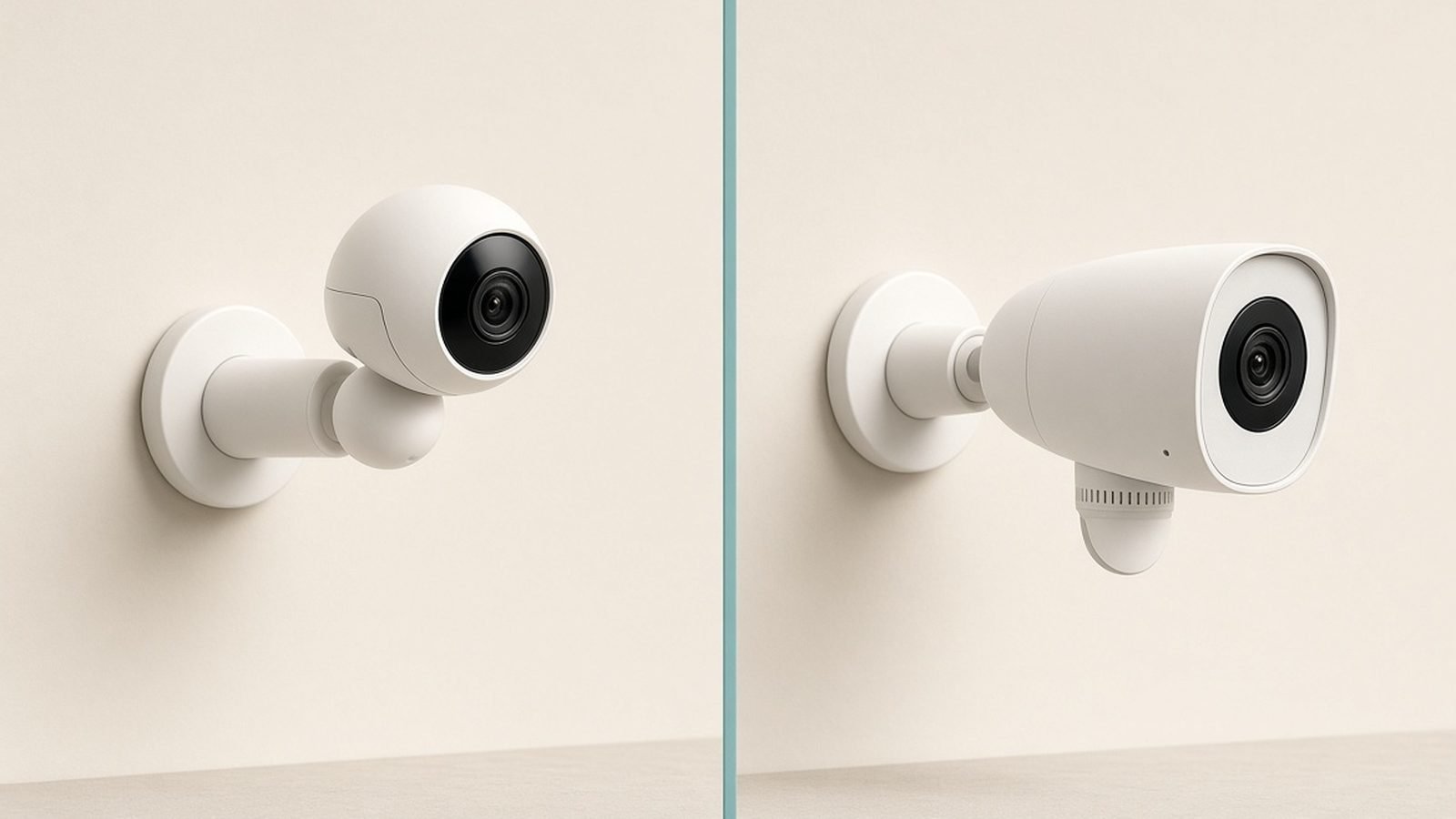
The Arlo vs Ring decision comes down to a single question most comparisons bury: how much do you value video quality and ecosystem-independence versus tight Alexa integration and low upfront cost? In 2026, Arlo wins on camera hardware and cross-platform flexibility, while Ring wins on Alexa integration, value pricing, and ease of use. Both lock their best features behind a subscription, so neither is the choice if you refuse to pay monthly.
Here’s the short version. Choose Arlo if you want the sharpest video (up to 4K), better HDR and low-light performance, and a system that works equally well with Alexa, Google Home, and — on many models — Apple HomeKit. Choose Ring if you live in the Amazon/Alexa world, want the simplest setup and the widest ecosystem of doorbells and alarm gear, and prefer a lower entry price. The rest of this guide shows exactly where each earns that verdict.
Arlo vs Ring at a Glance
| Arlo | Ring | |
|---|---|---|
| Max resolution | Up to 4K (Ultra/Pro flagships); 2K on mainstream | 2K and “Retinal 4K” on newer models; 1080p on older |
| Best video | Superior HDR, wider color night vision | Strong, radar-assisted detection; color night vision on Pro |
| AI detection | Person, vehicle, animal, package (subscription) | Person, package (subscription); radar 3D on Pro models |
| Ecosystem | Alexa, Google Home, some HomeKit | Alexa (deep); limited Google; no HomeKit |
| Free recording | None (live view only) | None (live view only) |
| Subscription | Arlo Secure from ~$7.99/mo (£4.99) | Ring Home from ~$4.99/mo (£4.99) |
| Power | Battery-first; wired and solar options | Battery and wired options |
| Upfront price | Higher hardware, premium build | Lower entry price, frequent discounts |
| Best for | Video quality + platform flexibility | Alexa homes + value + doorbells |
The Two Philosophies: Premium Hardware vs Value Ecosystem
Arlo and Ring approach home security from opposite directions, and understanding that framing settles most of the arlo vs ring which is better debate before you compare a single spec.
Arlo positions itself as the premium, hardware-first brand. Its flagship cameras push resolution (up to 4K on Ultra and Pro models), invest in better sensors and HDR, and stay deliberately platform-neutral — Arlo wants to work with whatever smart home you have, including Apple HomeKit on many models, which Ring flatly doesn’t support. You pay more upfront, and you get more camera.
Ring, owned by Amazon, is the value-and-ecosystem brand. Its cameras are competitively priced, frequently discounted, dead-simple to set up, and woven tightly into Alexa — Echo Show pop-ups, Fire TV picture-in-picture, and a huge line of matching doorbells and alarm components. Ring’s newer cameras have closed much of the hardware gap with 2K and “Retinal 4K” sensors, but the brand’s real strength is a complete, affordable, Alexa-native system.
Neither records anything for free — both are cloud-subscription businesses at heart. That reality frames every recommendation below.
Video Quality: Arlo’s Edge
On raw image quality, Arlo generally leads. Its flagship Ultra and Pro cameras shoot up to 4K with strong HDR, and based on published specs and aggregated owner footage, Arlo’s color night vision and dynamic range are among the best in the mainstream market. A backlit visitor stays exposed; a dark driveway stays usable in color rather than grainy monochrome. If reading detail — faces at distance, a plate at the kerb — matters most, Arlo’s best cameras have the edge.
Ring has closed the gap significantly. Its 2026 refresh brought 2K sensors across much of the range and a “Retinal 4K” sensor on the wired flagship, and Ring’s Pro models add radar-assisted detail and color night vision that’s genuinely useful in real porch lighting. For most doorstep and driveway duties, a modern Ring camera is more than sharp enough; the difference only really opens up when you compare Arlo’s 4K flagships against Ring’s mid-range cameras.
Video winner: Arlo, on flagship resolution, HDR, and low-light color — but Ring’s newer cameras are closer than the spec sheets suggest, and better value at similar quality tiers.
AI Detection and Smart Alerts
Both brands charge for brains, and both do the modern basics well.
Arlo Secure unlocks person, vehicle, animal, and package detection, plus features like activity zones and, on higher tiers, richer AI. Arlo’s detection is accurate and its four-category classification is comprehensive.
Ring Home unlocks person and package alerts, and Ring’s Pro models add radar-based 3D Motion Detection with Bird’s Eye View — an overhead map of the path someone took across your property. Radar measures distance, so you can set a precise boundary and genuinely ignore the pavement, which cuts false alerts more effectively than camera-only detection. Ring Home Premium adds Smart Video Search, letting you search footage in natural language.
Both apps offer motion zones and schedules. Arlo’s advantage is broader out-of-the-box AI categories across its lineup; Ring’s advantage is the radar precision on its Pro cameras and doorbells, which is the best false-alert reduction in the mainstream market.
AI winner: a tie decided by product — Arlo for comprehensive four-category detection across the range; Ring for radar precision if you buy a Pro model.
Subscription Costs: Arlo Secure vs Ring Home
Subscriptions decide the real cost of the arlo vs ring question, and here Ring is generally cheaper. As of mid-2026 (worth re-checking):
| Plan | Approx. US price | Approx. UK price | Covers |
|---|---|---|---|
| Ring Home Basic | ~$4.99/mo | ~£4.99/mo | One device, 180 days history |
| Ring Home Standard | ~$9.99/mo | ~£7.99/mo | All devices at one address |
| Ring Home Premium | ~$19.99/mo | ~£15.99/mo | 24/7 recording (wired), Smart Video Search |
| Arlo Secure (single camera) | ~$7.99/mo | ~£4.99/mo | One camera, AI detection |
| Arlo Secure Plus (unlimited cameras) | ~$17.99/mo | ~£12.99/mo | All cameras at one location |
The pattern: Ring’s single-device plan undercuts Arlo’s, and Ring Home Basic gives a long 180-day history cheaply. Arlo’s advantage is that its unlimited-camera plan can work out competitively if you run many cameras, and Arlo Secure’s AI categories are generous. But neither camera records anything without paying, so budget the plan as part of ownership.
Crucially, if a $0/month setup is the actual goal, neither brand fits — both need a subscription to record. Look instead at local-storage brands: our Best Home Security Cameras With No Subscription in 2026 guide covers cameras that undercut both, and models like the Aqara Camera Hub G5 Pro Review 2026: Camera + Hub in One record locally with no fee at all.
Subscription winner: Ring for single-camera and small setups; Arlo only pulls ahead at high camera counts.
Ecosystem and Smart Home Integration
This is where the two diverge most sharply, and it should drive your decision more than any spec.
Ring is Alexa’s home team. Press a Ring doorbell and every Echo announces it; Echo Shows and Fire TVs pop up live video with two-way talk. If your house runs on Alexa, Ring is family, and nothing else integrates as smoothly. The catch: Ring’s Google Home support is shallow, and it offers no Apple HomeKit support at all. Nest Hub and Apple households are the wrong buyers for Ring.
Arlo is the diplomat. It works well with Alexa and Google Home, and — critically — many Arlo cameras support Apple HomeKit, which Ring never does. If you’re an Apple household, or you want to keep your options open across ecosystems, Arlo is the flexible choice. It’s also the better pick if you’re not committed to Amazon’s world and don’t want to be.
Ecosystem winner: Ring for Alexa homes; Arlo for everyone else, especially Apple and Google households and platform-agnostic buyers.
Doorbells, Alarms and the Wider System
Security is rarely one camera. Both brands sell video doorbells and alarm systems, but Ring’s ecosystem is broader and more mature — a huge range of doorbells (from a $99 battery model to a 4K wired Pro), Ring Alarm sensors, and deep Alexa tie-ins. If you want one brand for cameras, a doorbell, and a full alarm, Ring’s catalogue is hard to beat, and its doorbells are the segment leaders — see our Ring Battery Doorbell Pro Review 2026: Worth the Subscription? and the wider Ring vs Nest Doorbell (2026): Which Should You Buy? comparison.
Arlo also offers doorbells and a security system, with the same premium-hardware, platform-neutral philosophy. They’re excellent, but the ecosystem is smaller and the pricing higher. If a doorbell is central to your plans and you want subscription-free options too, our Best Video Doorbells With No Subscription (2026) guide is worth a look before committing to either brand.
System-breadth winner: Ring, on catalogue depth and doorbell dominance.
Power, Installation and the UK Angle
Both brands offer battery and wired cameras, so installation is flexible either way. Arlo leans battery-first with solar-panel accessories for off-grid placement; Ring offers battery and wired across its range. Battery models install anywhere in minutes with no wiring — ideal for renters and homes without cabling.
For arlo vs ring uk buyers, two notes. First, Ring hardware discounts aggressively around Prime Day and Black Friday in the UK, regularly making it the cheaper entry point. Second, both brands’ subscriptions are priced in pounds at similar monthly rates, so the ownership math tracks the US pattern. UK Apple households especially should note Arlo’s HomeKit support, since Ring offers none.
Which Should You Buy?
- Best video quality: Arlo. Its 4K flagships, HDR, and color night vision lead the mainstream market. Buy Arlo if reading detail at distance is your priority and budget allows.
- Best for Alexa homes: Ring. Nothing integrates as smoothly with Echo devices, and the value pricing plus doorbell range make it the easy all-in-one for Amazon households.
- Best cross-platform / Apple HomeKit: Arlo. Many models support HomeKit alongside Alexa and Google; Ring supports none. Apple and mixed-ecosystem homes should buy Arlo.
- Best value / lowest entry cost: Ring. Cheaper hardware, frequent discounts, and a cheaper single-camera subscription.
- Best complete system (cameras + doorbell + alarm): Ring. The broadest, most mature catalogue with the best doorbells.
- Neither, if you refuse a subscription: both need a plan to record. See our Best Home Security Cameras With No Subscription in 2026 and Best Home Security Cameras 2026: Indoor & Outdoor Picks guides for local-storage alternatives.
FAQ
Is Arlo or Ring better in 2026?
It depends on your priorities. Arlo is better hardware — higher resolution (up to 4K), stronger HDR and low-light color, and broad platform support including Apple HomeKit on many models. Ring is better value and integration — lower prices, the deepest Alexa support, the widest doorbell and alarm range, and a cheaper single-camera subscription. Choose Arlo for video quality and flexibility; choose Ring for Alexa homes and value.
Does Arlo or Ring work without a subscription?
Neither records without a subscription. Both give you live view, two-way talk, and motion notifications for free, but no recorded video history — miss an alert and it’s gone. Arlo Secure starts around $7.99 / £4.99 a month and Ring Home Basic around $4.99 / £4.99. If you want subscription-free recording, look at local-storage brands like Aqara or Eufy instead of either of these.
Which is cheaper, Arlo or Ring?
Ring is generally cheaper on both hardware and subscription for typical setups. Ring’s cameras have lower entry prices and discount frequently, and Ring Home Basic undercuts Arlo Secure’s single-camera plan. Arlo only becomes cost-competitive at high camera counts, where its unlimited-camera plan spreads across many devices. For one or two cameras, Ring almost always costs less to own.
Does Arlo work with Apple HomeKit? Does Ring?
Many Arlo cameras support Apple HomeKit, alongside Alexa and Google Home — that cross-platform flexibility is a core Arlo strength. Ring offers no Apple HomeKit support at all and only shallow Google Home integration; it’s built for Alexa. If you’re an Apple household or want to stay ecosystem-neutral, Arlo is the clear choice. If you’re all-in on Alexa, Ring’s integration is unmatched.
Is Arlo’s video quality really better than Ring’s?
On flagship hardware, yes. Arlo’s Ultra and Pro cameras shoot up to 4K with superior HDR and color night vision, beating Ring’s mid-range models for distance detail. But Ring’s 2026 refresh added 2K and “Retinal 4K” sensors plus radar detection on Pro models, closing much of the gap at better prices. At similar price tiers the two are close; Arlo’s lead is clearest comparing its 4K flagships against Ring’s cheaper cameras.
Which is better for a video doorbell, Arlo or Ring?
Ring dominates doorbells. It offers the widest range — from a $99 battery model to a 4K wired Pro with radar detection — and the deepest Alexa integration, with Echo Show pop-ups and announcements. Arlo’s doorbells are good and support more ecosystems including HomeKit, but the range is narrower and pricier. For a doorbell specifically, Ring is usually the stronger buy unless you need HomeKit support.
Zen Tech Hub may earn a commission from links on this page, at no extra cost to you.