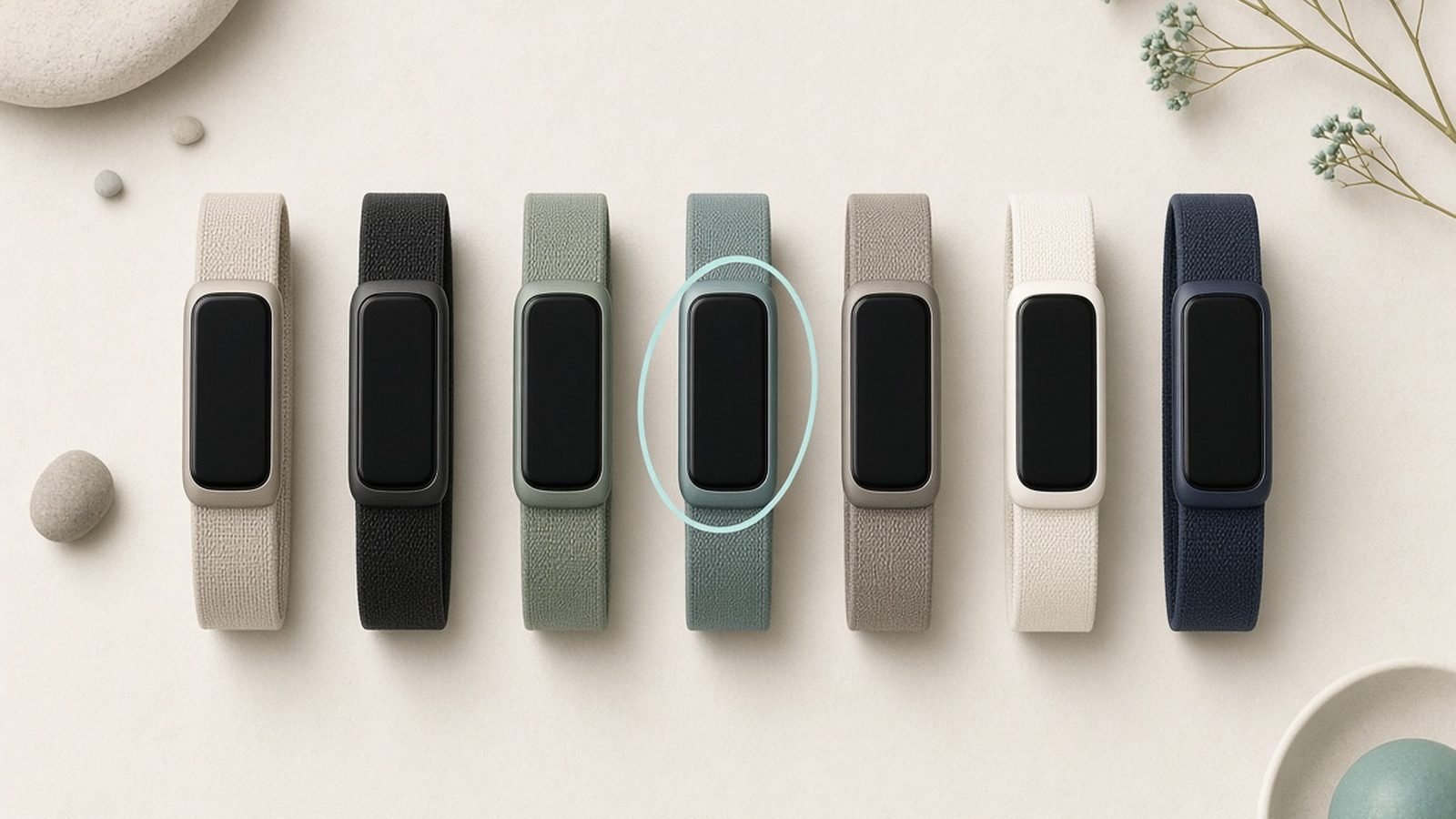
The best fitness tracker 2026 buyers should own is not a smartwatch. It is a slim band that logs your heart rate, sleep, and steps, then gets out of the way. No buzzing email previews, no app grid, no urge to check the screen 40 times a day. If you want data on your body without a tiny phone on your wrist, a dedicated tracker is the smarter buy.
This guide ranks five bands we would actually recommend, splits pricing for the US and UK, and does the one thing most round-ups skip: honest subscription-cost math. Because the sticker price of a fitness tracker in 2026 is often the smallest number you will pay.
Why choose a tracker over a smartwatch in 2026
Smartwatches keep getting bigger, brighter, and more distracting. A fitness band goes the other way. It is the anti-distraction wearable: lighter on your wrist, far longer on battery, and focused on one job.
Three reasons a tracker wins for a lot of people:
Battery you forget about. Most bands here run 7 to 18 days per charge; a smartwatch usually needs charging daily.
Comfort for sleep. A 20-gram band is easy to wear overnight, and sleep tracking is where trackers quietly out-earn watches.
Price. A genuinely good tracker costs less than a smartwatch charging puck.
The trade-off is real too: no full app ecosystem, smaller screens, and — with some brands — a subscription to unlock the good insights. We flag that for every pick.
If you are cross-shopping watches, see our Best Smartwatches Under $200 in 2026: Top Cheap Picks guide. Otherwise, here are the best fitness band 2026 options.
Comparison table
| Tracker | Best for | Battery | Built-in GPS | Subscription | Price (US / UK) |
|---|---|---|---|---|---|
| Fitbit Charge 6 | Best overall | ~7 days | Yes | Optional (Premium) | ~$159 / £139 (street ~$99 / £99) |
| Whoop 5.0 | Screenless coaching | 14+ days | No | Required | ~$199/yr / £169/yr |
| Xiaomi Smart Band 9 | Best budget | ~18 days | No (connected) | None | ~$50 / £35 |
| Garmin Vivosmart 5 | Slim + Apple Health | ~7 days | No (connected) | None | ~$150 / £110 (street ~$99) |
| Fitbit Inspire 3 | Beginners | ~10 days | No (connected) | Optional (Premium) | ~$99 / £84 (street ~$79) |
Prices move constantly, especially around sales. Treat street prices as the number to aim for.
Best overall: Fitbit Charge 6
The Charge 6 is the tracker most people should buy. It is the rare band with built-in GPS, an ECG app, an AMOLED touchscreen, and Google baked in — Maps directions and Wallet payments on your wrist. Battery lands around seven days in real use, which is the sweet spot: long enough to forget, short enough to keep sleep tracking accurate.
In our research and across aggregated owner reports, heart-rate accuracy took a clear step up from the Charge 5, helped by the return of a physical side button that reduces mis-taps mid-workout. The on-board GPS matters more than the spec sheet suggests: you can run, ride, or walk with no phone and still get a mapped route.
The catch is Fitbit Premium. The hardware works without it, but the insights that make Fitbit feel smart — Daily Readiness, detailed sleep analysis, the good trends — sit behind a $9.99 / £7.99 monthly wall. There is also no Apple Health sync, so iPhone die-hards who live in Apple’s health app should look at Garmin below.
Who it’s for: Anyone who wants one do-it-all fitness tracker with GPS and does not mind paying for Premium.
Pros - Built-in GPS and ECG in a slim band - Bright AMOLED touchscreen - Google Maps and Wallet - Strong heart-rate tracking
Cons - Best insights locked behind Fitbit Premium - No Apple Health sync - Only one size option
If Premium annoys you, our Charge 6 alternatives are scattered through this list — the Garmin and Xiaomi picks skip subscriptions entirely.
Check price: Fitbit Charge 6 Check price: Fitbit Charge 6
Best screenless: Whoop 5.0
Whoop is the purest expression of the anti-distraction idea. There is no screen at all. The band just sits there — often worn on the bicep, not the wrist — and feeds everything to your phone. What you get back is the best recovery and strain coaching in the category: a daily readiness score, sleep coaching, and strain targets that genuinely change how you train.
Battery runs 14-plus days, and you charge it with a slide-on pack without taking the band off. Based on owner reports, that “never remove it” design is why Whoop wins the loyalty of athletes and shift workers who hate charging routines.
Here is the Whoop vs Fitbit reality: Whoop is subscription-only. The hardware is free, but you rent it. Plans run about $199/yr (One) or $239/yr (Peak) in the US, roughly £169–£229/yr in the UK. There is no step-counter, badge-collecting mindset here — if you want gamified daily steps, this is the wrong band. If you want a coach that tells you when to push and when to rest, nothing else is close.
Who it’s for: Athletes and biohackers who care about recovery, not notifications, and will use the coaching daily.
Pros - Best-in-class recovery and strain coaching - No screen, no distraction - 14+ day battery, charge without removing - Comfortable enough to forget
Cons - Subscription-only — no ownership - No display or on-wrist feedback - Not built for casual step counters
For the deeper dive, read our Whoop 5.0 Review 2026: Is the Subscription Worth It? and the head-to-head in Whoop vs Oura in 2026: Which Recovery Wearable Wins?.
Best budget: Xiaomi Smart Band 9
The Xiaomi Smart Band 9 is the best cheap fitness tracker you can buy, full stop. Around $50 / £35 gets you a gorgeous AMOLED display, roughly 18 days of battery, and heart-rate, SpO2, and sleep tracking that punches far above the price. Nothing else near this money looks or lasts this good.
It is not perfect, and the compromises are exactly what you would expect at the price. GPS is connected only — you need your phone in your pocket to map a route — and the coaching is generic compared with Fitbit or Garmin. You get numbers, not much guidance. The companion app has also nudged people toward Xiaomi’s own account and store more than we would like.
None of that dents the value. As a first tracker, a gym backup, or a gift, the Band 9 is impossible to argue with. It is also the obvious pick if you want a fitness tracker without a subscription and refuse to spend more than a takeaway meal.
Who it’s for: Budget buyers, first-timers, and anyone who wants huge battery and a great screen for pocket money.
Pros - Stunning value near $50 / £35 - ~18-day battery - Bright AMOLED screen - No subscription
Cons - Connected GPS only (needs phone) - Generic coaching and insights - App pushes Xiaomi’s ecosystem
Check price: Xiaomi Smart Band 9
Best slim band: Garmin Vivosmart 5
The Vivosmart 5 is the tracker for people who find the others too chunky — and for iPhone owners burned by Fitbit’s walled garden. It is genuinely slim, comfortable overnight, and it syncs cleanly with Apple Health, which instantly makes it one of the best fitness tracker UK and US picks for anyone deep in Apple’s ecosystem.
Garmin’s Body Battery feature is the standout. It blends heart-rate variability, stress, and sleep into a single energy score that, in our research, owners find more intuitive than Fitbit’s readiness metrics — and Garmin does not charge a subscription for it. That is a quiet, meaningful win over the Charge 6.
The trade-offs: there is no built-in GPS (it is connected, so bring your phone), and the monochrome OLED display is dim and dated next to the AMOLED screens on the Fitbit and Xiaomi. You are paying for the sensor platform and Body Battery, not the screen.
Who it’s for: iPhone users and minimalists who want serious Garmin health data without a subscription, in the slimmest body here.
Pros - Slim, comfortable, discreet - Body Battery energy tracking, no subscription - Full Apple Health sync - Reliable Garmin sensor data
Cons - No built-in GPS - Dim monochrome display - Pricey at full RRP — wait for street prices
Check price: Garmin Vivosmart 5 Check price: Garmin Vivosmart 5
Best for beginners: Fitbit Inspire 3
The Inspire 3 is where most people should start if they have never worn a tracker. It is light, comfortable, and dead simple: steps, heart rate, sleep, and gentle move reminders, with a colour AMOLED touchscreen and around 10 days of battery. There is no learning curve and nothing to intimidate.
It sits below the Charge 6 on purpose. GPS is connected only, there are no on-wrist payments, and it leans on the same Fitbit Premium upsell for the richer insights. But as a starter band — or a tracker for a parent, teen, or anyone who just wants to see if they like the habit — it is the friendliest option here. Because it shares the Fitbit app, upgrading to a Charge 6 later is painless: your history follows you.
Who it’s for: First-time trackers, gift buyers, and anyone who wants the basics done well without fuss.
Pros - Very comfortable and lightweight - ~10-day battery - Simple, welcoming app - Colour AMOLED touchscreen
Cons - Connected GPS only - No on-wrist payments - Best insights want Fitbit Premium
Subscription costs compared (Fitbit Premium vs Whoop)
This is the number most guides hide. A tracker’s real cost is hardware plus three years of subscription — because that is roughly how long people keep a band. Here is the honest math.
| Tracker | Hardware (street) | Subscription/yr | 3-year total (US) |
|---|---|---|---|
| Xiaomi Smart Band 9 | ~$50 | $0 | ~$50 |
| Garmin Vivosmart 5 | ~$99 | $0 | ~$99 |
| Fitbit Inspire 3 | ~$79 | $0 (or ~$120 w/ Premium) | ~$79–$439 |
| Fitbit Charge 6 | ~$99 | $0 (or ~$120 w/ Premium) | ~$99–$459 |
| Whoop 5.0 (One) | $0 | ~$199 | ~$597 |
The takeaway is stark. A Whoop over three years costs more than ten Xiaomi bands. Fitbit is usable without Premium, but the features people buy Fitbit for effectively add ~$120/£96 a year. Garmin and Xiaomi charge you once and never again — which is why “best fitness tracker without subscription” is a search worth taking seriously.
None of this makes Whoop bad. If you use the coaching daily, it earns its keep. But you should sign up knowing the three-year figure, not the monthly one.
Comparison table and verdict
For most people, the Fitbit Charge 6 is the best fitness tracker 2026 has to offer: GPS, ECG, a great screen, and the largest feature set in a band. Just budget for Premium.
If distraction is the enemy and recovery is the goal, Whoop 5.0 is unmatched — provided you will actually use the coaching every day. For pure value, nothing touches the Xiaomi Smart Band 9; buy it with zero hesitation as a first or backup band. iPhone owners and minimalists should take the Garmin Vivosmart 5 for Body Battery and subscription-free Apple Health sync. And absolute beginners are best served by the Fitbit Inspire 3.
Buy the band that matches how you think about your body: a dashboard (Fitbit), a coach (Whoop), a cheap sensor (Xiaomi), or a quiet health log (Garmin). All five beat a smartwatch at the one job you bought a tracker to do.
For sleep-first buyers, cross-check our Best Sleep Trackers 2026: Rings, Bands & Watches Ranked. And if your current Fitbit is playing up, our Fitbit Not Syncing? 9 Fixes for Charge, Inspire & Versa walkthrough sorts most issues in minutes. More picks live on the Wearables.
FAQ
Is a fitness tracker better than a smartwatch in 2026? For health data, comfort, and battery, yes. Trackers are lighter, last days longer, and cost far less. A smartwatch wins on apps, notifications, and a big screen. If you want fitness and sleep without a tiny phone buzzing on your wrist, a dedicated tracker is the better buy for most people.
Which fitness tracker has built-in GPS? Among our picks, only the Fitbit Charge 6 has built-in GPS, so you can map runs and rides without your phone. The Xiaomi Smart Band 9, Garmin Vivosmart 5, and Fitbit Inspire 3 use connected GPS — accurate, but they need your phone in a pocket to record the route.
Whoop vs Fitbit — which should I buy? Choose Whoop if you want screenless, subscription-based recovery coaching and will use it daily. Choose Fitbit if you want a screen, steps, GPS, and the option to skip the subscription. Over three years Whoop costs far more, so only commit if the coaching genuinely changes how you train and recover.
What is the best cheap fitness tracker? The Xiaomi Smart Band 9 at around $50 / £35. It offers an AMOLED screen, roughly 18 days of battery, and solid heart-rate and sleep tracking with no subscription. The compromises are connected-only GPS and generic coaching, but nothing else near the price gets close on value.
Can I use a fitness tracker without a subscription? Yes. The Garmin Vivosmart 5 and Xiaomi Smart Band 9 charge nothing beyond the hardware. Fitbit’s Charge 6 and Inspire 3 work without Premium too, but their best insights are gated. Whoop is the only pick here that requires a subscription — the hardware is free but rented.
Zen Tech Hub may earn a commission from links on this page, at no extra cost to you.