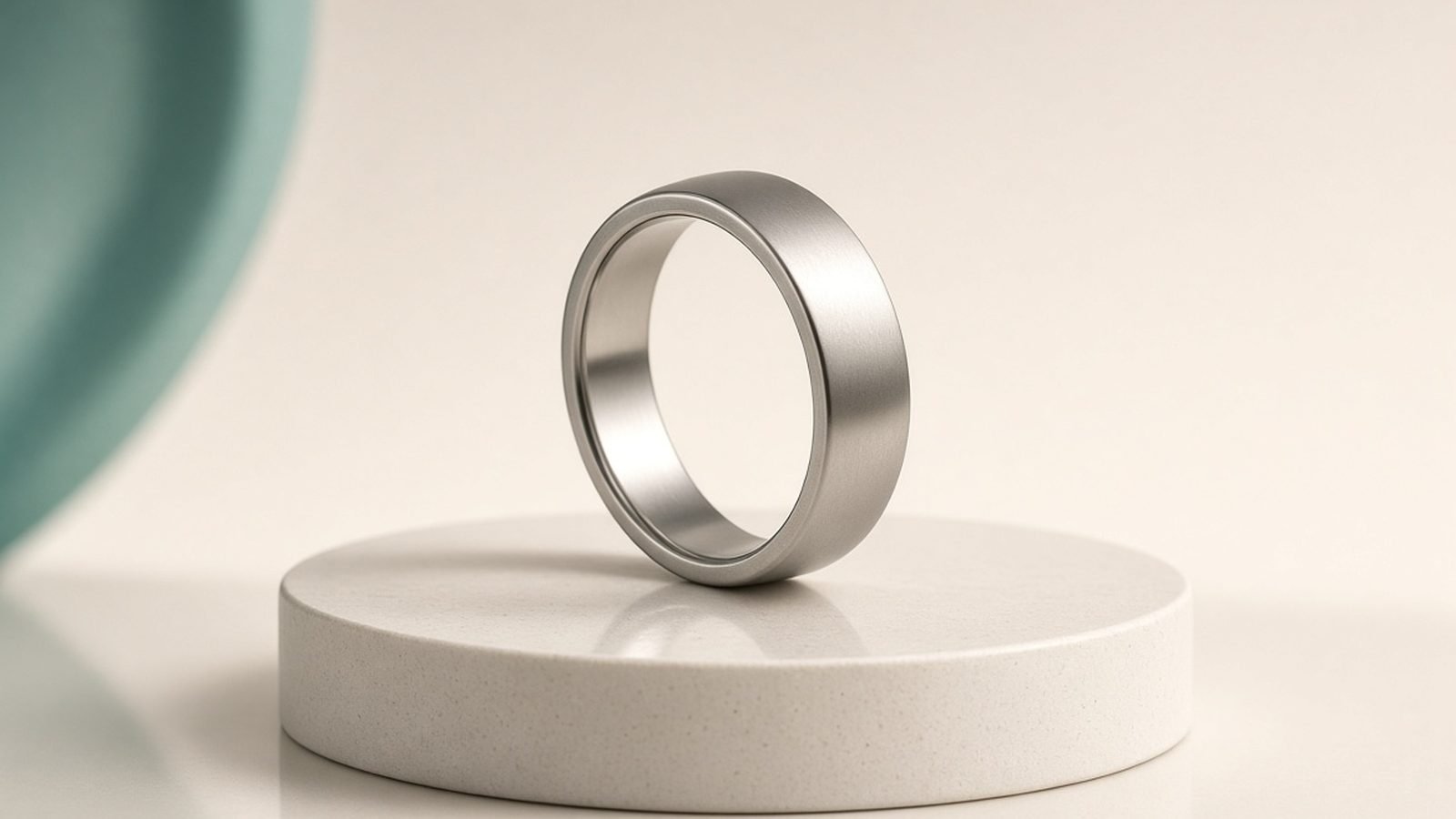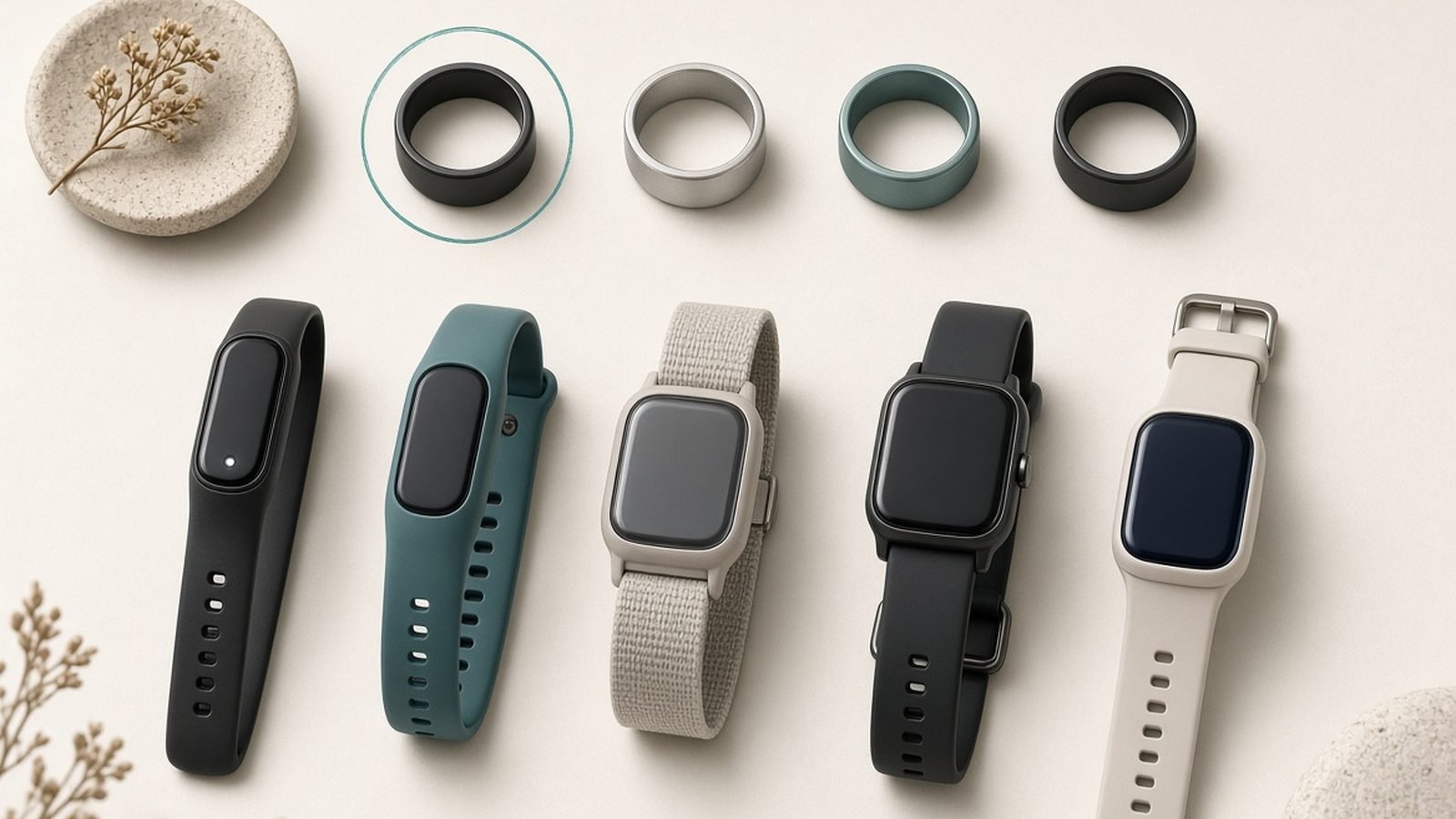
If you want the best smart ring 2026 has to offer, the honest answer is: it depends on whether you can stomach a monthly subscription, which phone you carry, and how much you care about battery life versus polish. The category has matured fast. A finger-worn tracker now measures sleep, heart-rate variability, temperature trends and recovery as accurately as many wrist wearables, without the bulk or the glowing screen on your nightstand.
We have researched every major ring on sale in the US and UK, cross-referenced manufacturer specs with aggregated owner reports, and weighed the thing that actually decides long-term cost: subscriptions. Below are our top five picks, a full comparison table, and a three-year cost breakdown that reframes which ring is really “cheap.”
Comparison: best smart rings 2026 at a glance
| Ring | Best for | Price (US / UK) | Battery | Subscription | Platform |
|---|---|---|---|---|---|
| Oura Ring 4 | Overall / sleep | ~$349 / £349 | 7-8 days | $5.99 / £5.99 per month | iOS + Android |
| Samsung Galaxy Ring | No subscription | ~$399 / £399 | ~7 days | None | Android only |
| RingConn Gen 2 | Battery life | ~$299 / £279 | 10-12 days | None | iOS + Android |
| Ultrahuman Ring Air | Data nerds | ~$349 / £329 | 4-6 days | None | iOS + Android |
| Amazfit Helio Ring | Budget | ~$149 / £150 | ~4 days | None | iOS + Android |
Prices are indicative launch/street prices at the time of writing and shift with sales. A quick note before you shop: an ongoing patent case has disrupted US availability of some Oura Ring alternatives (Ultrahuman especially). We flag it honestly in each section.
How smart rings work and how we evaluated them
A smart ring packs optical heart-rate sensors, a temperature sensor, an accelerometer and a small battery into a titanium or ceramic band. Overnight it captures resting heart rate, HRV, respiratory rate and skin temperature, then an app turns that into a sleep score and a recovery or “readiness” figure. Because your finger’s arteries sit close to the surface, the signal is often cleaner at rest than a wrist tracker’s — which is why rings have become the go-to best smart ring for sleep tracking.
Our approach: we do not run a first-party lab. Instead we analyse published sensor specs, app feature sets, battery claims and firmware histories, then weigh those against aggregated owner feedback and long-term reviews to surface the real trade-offs. Where we cite a weakness — scratching, sync lag, sizing gaps — it reflects patterns in owner reports, not a single anecdote.
Three things separate a good ring from a gimmick: sensor accuracy, app intelligence, and total cost of ownership. Keep those in mind as you read.
Best overall: Oura Ring 4
The Oura Ring 4 remains the ring to beat, and it is still the most complete health platform on a finger. The titanium build is lighter and the recessed sensors sit flush inside the band, which improved fit consistency over the Gen 3. In our research it is the ring reviewers and owners trust most for sleep staging and readiness, with a genuinely useful daytime stress and cycle-tracking layer on top.
Battery runs 7-8 days, and Oura’s app is the most mature in the category — clear, coaching-led, and quick to sync. It works fully on both iPhone and Android, making it the safest smart ring for iPhone owners who want the best data.
The catch is the money. Oura requires a membership at around $5.99 / £5.99 a month to unlock scores and insights; without it the ring is close to inert. Owners also report the titanium finish picks up hairline scratches, especially the brighter colourways.
Pros - Best-in-class sleep and readiness accuracy - Polished, coaching-focused app - Full iOS and Android support
Cons - Mandatory monthly subscription - Finish scratches with daily wear
Best for: anyone who wants the most accurate, best-supported ring and will pay monthly for it.
Best without subscription: Samsung Galaxy Ring
If the Oura membership is a dealbreaker, the Samsung Galaxy Ring is the most polished way to skip it. There is no subscription — you buy the ring and own every feature. Samsung’s Energy Score (its readiness equivalent) is solid, sleep tracking is competitive, and the charging case is the best in the business: it holds multiple charges and doubles as a find-my-ring beacon.
Battery is around seven days. As the best smart ring without subscription from a major brand, it is the natural pick for Samsung Galaxy phone owners, where it slots into Samsung Health and unlocks extras like a pinch gesture to dismiss alarms.
The limitation is platform. It is a smart ring for Android only — and realistically best with a Samsung phone. There is no iOS app, so iPhone users should look elsewhere. Sizing also requires Samsung’s separate sizing kit before you order.
Pros - No subscription, ever - Excellent charging case with locator - Deep Samsung Health integration
Cons - Android only, best on Samsung - No iPhone support at all
Best for: Samsung and Android users who want premium hardware with zero recurring cost.
Check price: Samsung Galaxy Ring
Best battery life: RingConn Gen 2
The RingConn Gen 2 is our value-obsessed favourite, and this RingConn Gen 2 review comes down to one headline: 10-12 days per charge, the longest in the category, plus a charging case that stretches total runtime to weeks. No subscription, either. It also added sleep apnea detection, a feature that punches well above its price.
Sensor accuracy for sleep and heart rate is strong based on owner reports, and the flat, low-profile design wears comfortably. For anyone who hates charging wearables, this is the one you can genuinely forget on your finger.
The trade-offs are software polish. App sync can be slower than Oura’s, and the coaching and insights are more functional than inspiring — you get the numbers, but less hand-holding on what to do with them. Fair, given it undercuts the Galaxy Ring by around $100.
Pros - Class-leading 10-12 day battery - Sleep apnea detection, no subscription - Comfortable low-profile fit
Cons - Slower app sync - Basic coaching and guidance
Best for: battery-life obsessives and value hunters who want the data without a monthly bill.
Best for fitness data nerds: Ultrahuman Ring Air
The Ultrahuman Ring Air is the ring for people who want to see everything. At just 2.4-3.6g it is among the lightest available, carries no subscription, and its app leans hard into metabolic insight — a caffeine window, a movement index, glucose-adjacent guidance, and detailed HRV and recovery breakdowns. For quantified-self types, it is the most interesting Oura Ring alternative on the market.
Here is the honest caveat: US availability is disrupted. An import ruling stemming from a patent dispute has restricted Ultrahuman (and some rivals) from sale in the United States, so American buyers may find it unavailable or limited to grey-market import — which we do not recommend for warranty reasons. In the UK and most of Europe it remains widely on sale, making it a strong smart ring UK pick.
Owners also report the finish scratches easily, similar to Oura.
Pros - Ultralight, no subscription - Deep metabolic and recovery insights - Excellent value in the UK
Cons - US sales disrupted by patent ruling - Finish scratches easily
Best for: UK and EU data enthusiasts who want maximum insight for a one-time price.
Check price: Ultrahuman Ring Air
Best budget: Amazfit Helio Ring
At around $149 / £150 the Amazfit Helio Ring is the cheapest smart ring worth buying, and the answer to “is there a credible sub-$200 option?” It covers the essentials — sleep, HRV, readiness — with no subscription, and it pairs neatly with Amazfit’s affordable watches for people building a low-cost ecosystem.
It works with iOS and Android through the Zepp app, so unlike the Galaxy Ring it is not locked to one platform. For a first ring, or for testing whether you will actually wear one every day, the value is hard to argue with.
Compromises are real, though. Battery is only about four days — short for a ring — and it ships in just three sizes, so fit is hit or miss. The insights are lighter than pricier rivals. But as an entry point, nothing else matches the price.
Pros - Cheapest credible ring, no subscription - Works on iOS and Android - Pairs with Amazfit watches
Cons - Short ~4-day battery - Only three sizes
Best for: first-time buyers and budget shoppers who want the core metrics cheaply.
Check price: Amazfit Helio Ring
Subscription and lifetime-cost comparison
This is the number most buying guides bury. Oura’s ring is competitively priced up front, but the membership changes the maths over time. Here is the estimated three-year cost, using ~$5.99 / £5.99 a month for Oura and no subscription for the rest.
| Ring | Hardware | 3-yr subscription | 3-yr total (US / UK) |
|---|---|---|---|
| Oura Ring 4 | ~$349 / £349 | ~$216 / £216 | ~$565 / £565 |
| Samsung Galaxy Ring | ~$399 / £399 | £0 | ~$399 / £399 |
| RingConn Gen 2 | ~$299 / £279 | £0 | ~$299 / £279 |
| Ultrahuman Ring Air | ~$349 / £329 | £0 | ~$349 / £329 |
| Amazfit Helio Ring | ~$149 / £150 | £0 | ~$149 / £150 |
Over three years, Oura is the most expensive ring here despite a mid-pack sticker price, and RingConn ends up cheaper than the Galaxy Ring even before you count its longer battery. That does not make Oura a bad buy — its data and app justify the cost for many — but if you are optimising spend, a subscription-free ring saves real money. See our Oura Ring 4 vs Samsung Galaxy Ring: Which Wins in 2026? breakdown for a deeper head-to-head.
Sizing, comfort and durability tips
Every brand sells or ships a sizing kit — use it, and wear the plastic sizer for 24 hours before deciding. Fingers swell in heat and after exercise, so a ring that fits perfectly at 9am can feel tight after a workout. Most owners find the index or middle finger gives the cleanest sensor contact.
On durability: titanium rings resist dents but show hairline scratches, particularly Oura and Ultrahuman in lighter finishes. Darker or matte colourways hide wear better. If you lift weights or climb, expect marks — or take the ring off, since a metal band under a loaded barbell is uncomfortable anyway.
For a full walkthrough, see our Oura Ring Sizing Guide: Get the Right Fit First Time. And if you are still deciding between form factors, Smart Ring vs Smartwatch: Which Should You Buy in 2026? covers the trade-offs.
Verdict: which ring for which person
For most people, the Oura Ring 4 is the best smart ring 2026 offers — the accuracy and app are worth the subscription if you will act on the data, and it is the only top pick that fully supports iPhone. If a monthly fee is off the table, the Samsung Galaxy Ring is the premium subscription-free choice for Android and Samsung users.
Value seekers should look hard at the RingConn Gen 2: near-two-week battery, sleep apnea detection and the lowest three-year cost of the mid-range field. UK data enthusiasts get the most from the Ultrahuman Ring Air, provided you are not shopping in the US. And the Amazfit Helio Ring is the low-risk way to find out if ring life suits you at all.
Whichever you pick, cross-check it against our wider Best Sleep Trackers 2026: Rings, Bands & Watches Ranked roundup and the full Samsung Galaxy Ring Review: Worth It Without a Subscription? before you buy. More picks live in the Wearables.
FAQ
Do all smart rings need a subscription? No. Only Oura currently requires a mandatory monthly membership among our picks. The Samsung Galaxy Ring, RingConn Gen 2, Ultrahuman Ring Air and Amazfit Helio Ring all unlock their full feature set for a one-time hardware cost, which makes them meaningfully cheaper over two to three years of ownership.
What is the best smart ring for iPhone users? The Oura Ring 4 is the strongest iPhone pick because it offers full iOS support and the most accurate sleep and readiness data. RingConn Gen 2, Ultrahuman Ring Air and Amazfit Helio Ring also work with iPhone. The Samsung Galaxy Ring does not — it is Android-only, and best with a Samsung phone.
Which smart ring has the best battery life? The RingConn Gen 2 leads at roughly 10-12 days per charge, with a case that extends total runtime to weeks. Oura and the Galaxy Ring last around a week, Ultrahuman roughly four to six days, and the Amazfit Helio Ring about four days — the shortest of our recommended rings.
Can I still buy an Ultrahuman ring in the US? US availability is disrupted. An import ruling tied to a patent dispute has restricted Ultrahuman and some rivals from official US sale. UK and EU buyers can still purchase it normally. We would avoid grey-market imports into the US, since warranty and support coverage becomes unreliable.
Are smart rings accurate for sleep tracking? Generally yes. Because finger arteries sit near the surface, rings capture a clean resting signal, and Oura in particular is well regarded for sleep staging. No consumer wearable matches a clinical sleep study, but for tracking nightly trends in sleep, HRV and recovery, a good ring is among the most reliable options available.
Zen Tech Hub may earn a commission from links on this page, at no extra cost to you.