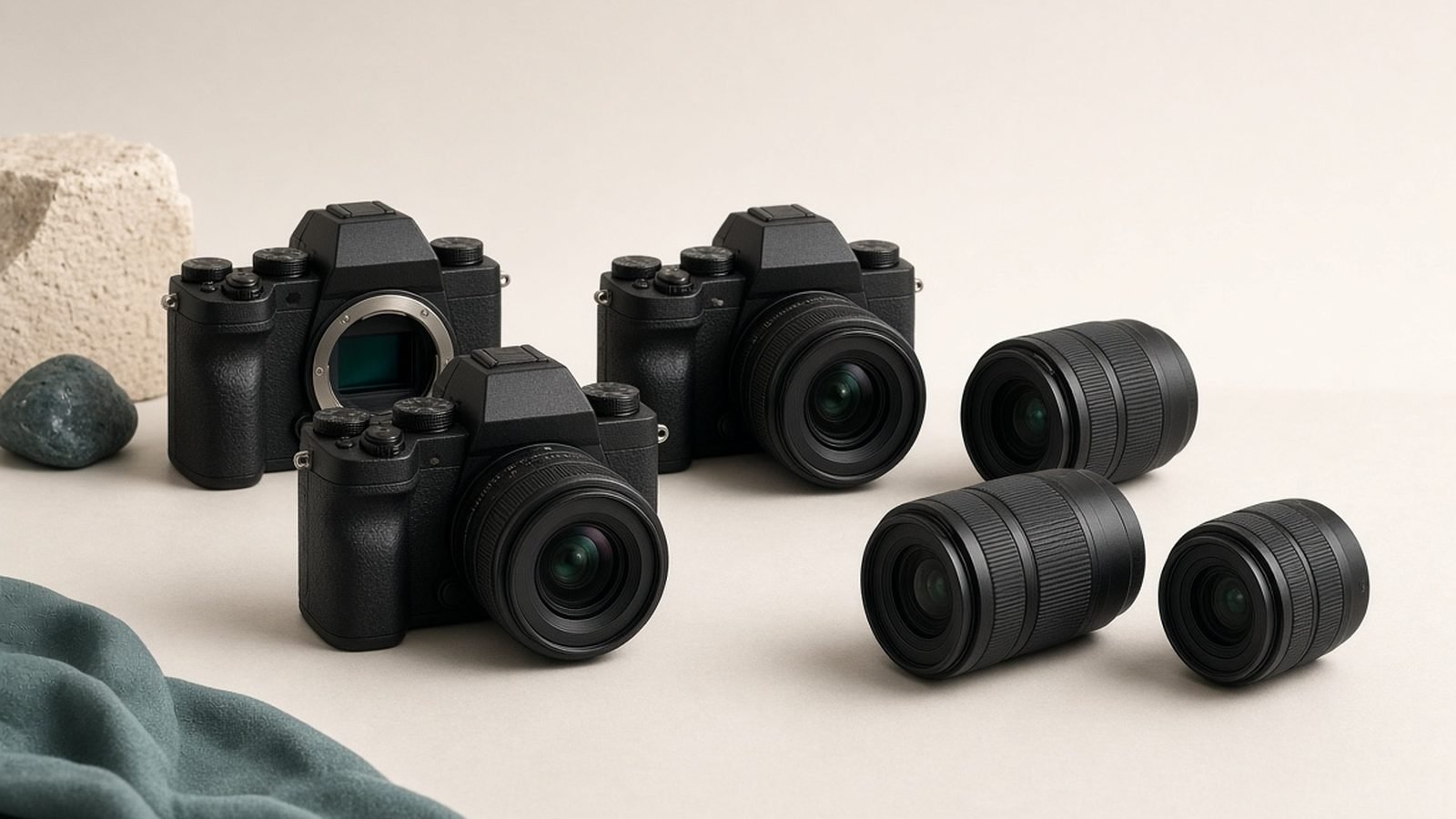
OM System — the brand that carries on Olympus’s camera legacy — is the specialist’s choice, and in 2026 it makes the best compact, weatherproof cameras for hikers, wildlife shooters and travelers who want to carry less. Its Micro Four Thirds bodies pair tank-like weather sealing, superb in-body stabilization and clever computational features (in-camera focus stacking, high-res modes, live ND) with small, light lenses that reach far. The caveats are inescapable: the smaller Four Thirds sensor limits low-light and shallow-depth-of-field performance, the brand is small with a modest lens roadmap and service presence, and its ownership changed hands, which understandably raises long-term questions for some buyers.
Verdict: The best brand for compact, rugged, outdoor and wildlife shooting with clever computational tricks. Caveats are the smaller sensor and OM System’s small scale and evolving ownership.
Company overview
OM System is the camera brand operated by OM Digital Solutions, headquartered in Japan. Its history matters here: the cameras were made by Olympus for decades, but in 2021 Olympus sold its imaging division to Japan Industrial Partners, a private investment fund. The business was rebranded OM System, and while some early bodies still carried Olympus branding, current products are OM System. So the brand is no longer part of the Olympus medical-and-scientific company — it is an independent, privately held camera maker built on Olympus’s engineering heritage.
OM System’s reputation in plain terms: a small, focused brand that does compact, weatherproof, computationally clever cameras better than anyone. Alongside Panasonic, it is one of the two champions of the Micro Four Thirds format. The trade-off is scale: as a small, privately owned company, buyers reasonably wonder about long-term investment, lens development pace and support — questions OM System has answered so far with steady, if modest, new releases and continued firmware support.
What OM System makes
OM System’s range is deliberately focused:
- OM-series flagship bodies — rugged, weather-sealed Micro Four Thirds cameras (the OM-1 line) aimed at wildlife, sports and outdoor shooters.
- OM-5 and mid-range bodies — smaller, lighter weatherproof cameras for travel and hiking.
- PEN series — stylish, compact, entry-level bodies aimed at everyday and creative shooters.
- M.Zuiko lenses — a mature Micro Four Thirds lens lineup, including exceptional compact telephoto and PRO-grade weather-sealed optics.
- Tough compacts — the waterproof, shockproof TG series for adventure and underwater use.
- Audio recorders — a legacy line of handheld recorders under the brand.
The unifying idea is portability and durability: OM System builds the go-anywhere, get-close kit, with computational features that add capability without adding bulk.
Standout OM System products in 2026
The camera that best defines the brand is the OM System OM-1 Mark II, a flagship Micro Four Thirds body that features across our Best Mirrorless Cameras 2026: Full-Frame & APS-C coverage for outdoor and wildlife use. Based on published specs and reviewer consensus, its class-leading weather sealing, fast stacked sensor, deep computational modes and superb stabilization make it a uniquely capable, lightweight system for birds, wildlife and hiking.
Across the rest of the range:
- OM System OM-5 (and OM-5 Mark II) — a compact, weatherproof travel body that appears in our Best Cameras for Beginners 2026: Easy & Affordable and travel picks for people who want rugged simplicity.
- OM System OM-3 — a retro-styled body pairing classic looks with modern computational features.
- PEN E-P7 — a small, stylish entry point for creators and casual shooters, relevant to Best Vlogging Cameras 2026: Creators' Picks for its compactness.
- Tough TG-7 — the waterproof, crushproof compact for adventure, snorkeling and rough conditions.
For the flagship outdoor and wildlife experience, the OM-1 Mark II is the standout:
Strengths
Best-in-class weather sealing. OM System bodies and PRO lenses are exceptionally weatherproof — genuinely rated for heavy rain, dust and cold — which is a real, practical advantage for outdoor and wildlife photographers.
Compact, far-reaching kits. The Micro Four Thirds format doubles effective focal length, so a small, light lens reaches like a much bigger, heavier full-frame telephoto. For wildlife and travel, the size-to-reach ratio is unmatched.
Excellent in-body stabilization. OM System’s IBIS is among the very best in the industry, enabling handheld shots at shutter speeds that would need a tripod on other systems.
Computational photography features. In-camera high-res shot, live ND, focus stacking, hand-held astro and pro-capture (buffering frames before the shutter) add real capability without extra gear — a genuine differentiator.
Rugged, tactile bodies. Durable construction and thoughtful controls make the cameras a pleasure to use in tough field conditions.
Weaknesses & criticisms
Smaller Four Thirds sensor. The core trade-off: the smaller sensor gives up low-light performance, high-ISO cleanliness and shallow-depth-of-field control versus APS-C and full frame. Computational modes mitigate but do not erase this.
Small brand, uncertain scale. As a small, privately held company, OM System has a slower lens roadmap, fewer new bodies and less marketing presence, and some buyers worry about long-term investment and resale.
Ownership transition questions. The move from Olympus to Japan Industrial Partners was smooth but understandably makes some buyers cautious about the brand’s long-term trajectory and support commitments.
Autofocus and video trail leaders. Autofocus has improved but still trails the best from Sony and Canon for the most demanding tracking, and video capability is secondary to stills in the lineup.
Limited service footprint. As a small player, OM System’s repair and support network is thinner than the big brands’ in many regions.
Reliability & support
Based on aggregated user feedback, OM System (and Olympus before it) has an excellent reputation for build quality and durability — these are among the most rugged, weatherproof cameras you can buy, and owners routinely report using them in rain, dust and cold that would sideline other brands. In-body stabilization and mechanisms are proven, and the company has continued to issue firmware updates that add features and refine autofocus for existing bodies, which is reassuring given its small size.
Support, however, is where the brand’s scale shows. OM System provides a standard manufacturer warranty (typically one year, with regional variation and paid extensions) and repair service, but its network is smaller and less consistent than Canon’s or Nikon’s, so turnaround and parts availability depend on where you live. The most common buyer concerns are strategic — the sensor-size trade-off and the brand’s long-term direction under new ownership — rather than reports of unreliable hardware. For its intended outdoor and wildlife use, OM System’s reliability is a core strength; the caution is around ecosystem scale and service reach.
Who should buy OM System
Buy OM System if you: are a wildlife, bird, hiking, travel or adventure photographer who wants the lightest, most weatherproof kit with long reach and clever computational features. If carrying less and shooting in rough conditions matters more than ultimate low-light quality, nothing else matches it.
Look elsewhere if you: prioritize low-light performance, shallow depth of field, video, or the widest lens ecosystem and resale value — full-frame or APS-C systems from Sony, Canon, Nikon or Fujifilm will serve you better. Weigh the trade-offs in our Best Mirrorless Cameras 2026: Full-Frame & APS-C guide before committing to Micro Four Thirds.
FAQ
Is OM System a good brand?
Yes, for the right buyer. OM System makes the best compact, weatherproof cameras for outdoor, wildlife and travel photography, with superb stabilization and unique computational features. The main caveats are the smaller Four Thirds sensor’s low-light limits and the brand’s small scale and evolving ownership.
Is OM System reliable?
Very, in the field. OM System and its Olympus predecessor are renowned for rugged, weather-sealed bodies and lenses that survive harsh conditions, backed by continued firmware support. The bigger uncertainties are the size of its service network and long-term brand direction, not day-to-day hardware reliability.
Where is OM System from and who owns it?
OM System is a Japanese camera brand run by OM Digital Solutions. It was formerly Olympus’s imaging division, which was sold in 2021 to Japan Industrial Partners, a private investment fund. It is now an independent, privately held company separate from the Olympus medical business.
Is OM System the same as Olympus?
Effectively, yes, in heritage. OM System carries on Olympus’s camera business and engineering after Olympus sold the imaging division in 2021. Older cameras may still say Olympus, while current products are branded OM System, but they share the same Micro Four Thirds lens mount and design lineage.
Is the Micro Four Thirds sensor a dealbreaker?
Not for its intended use. The smaller sensor trades some low-light and shallow-depth-of-field ability for much smaller, lighter lenses with greater reach and excellent stabilization. For wildlife, travel and outdoor shooting it is a smart trade; for low-light and cinematic depth, larger sensors are better.
Which OM System camera should a beginner buy first?
The OM-5 is the friendliest starting point — a compact, weatherproof body that is simple to use yet capable, ideal for travel and hiking. The stylish PEN E-P7 is another easy on-ramp. See our Best Cameras for Beginners 2026: Easy & Affordable guide for the full comparison.
Zen Tech Hub may earn a commission from links on this page, at no extra cost to you.