If you are shopping for an APS-C vlogging camera in 2026, the Sony ZV-E10 II vs Canon R50 V debate is the one that keeps coming up. Both are built for creators who talk to a screen, both shoot crisp 4K, and both flip that display to face you. But they take very different routes to get there: one is a mini stills-and-video hybrid with a deep lens catalogue, the other is a stripped-down, video-first streaming machine at a lower price. Here is how they actually compare.
Quick Verdict
The Canon EOS R50 V is the better buy for budget-conscious beginners and livestreamers who want to plug in and go. The Sony ZV-E10 II costs more but rewards you with sharper autofocus, a much bigger battery, and one of the largest lens ecosystems on the planet — the pick if you want room to grow into stills and glass.
| Sony ZV-E10 II | Canon EOS R50 V | |
|---|---|---|
| Body price | around $999 / £909 | around $649 / £729 |
| Sensor | 26MP APS-C | 24MP APS-C |
| 4K video | 4K/60p (Super35) | 4K/30p oversampled, 4K/60p cropped |
| Viewfinder | None | None |
| Battery | NP-FZ100 (large) | LP-E17 (smaller) |
| Streaming | UVC/UAC USB webcam | UVC/UAC + tally lamp, streaming tools |
| Lens mount | Sony E (huge range) | Canon RF-S (growing) |
| Best for | Growth, lenses, stills | Budget, beginners, live |
Price and Kit Options
Pricing is the first place these two split. The Canon EOS R50 V launches at around $649 / £729 body-only, and Canon sells it in a kit with the compact RF-S 14-30mm PZ power-zoom lens — a genuinely useful vlogging pairing that keeps the whole rig small.
The Sony ZV-E10 II sits higher at around $999 / £909 body-only, or roughly $1,099 / £999 with the 16-50mm PZ II kit lens. That is a meaningful gap: in the US the Sony is about 50% dearer before you add glass.
Note the regional quirk: the Canon is notably cheaper in the US but the price gap narrows in the UK, where the R50 V lands at £729 against the Sony’s £909. UK buyers should weigh that more carefully than the US headline suggests.
Design and Vlogging Features
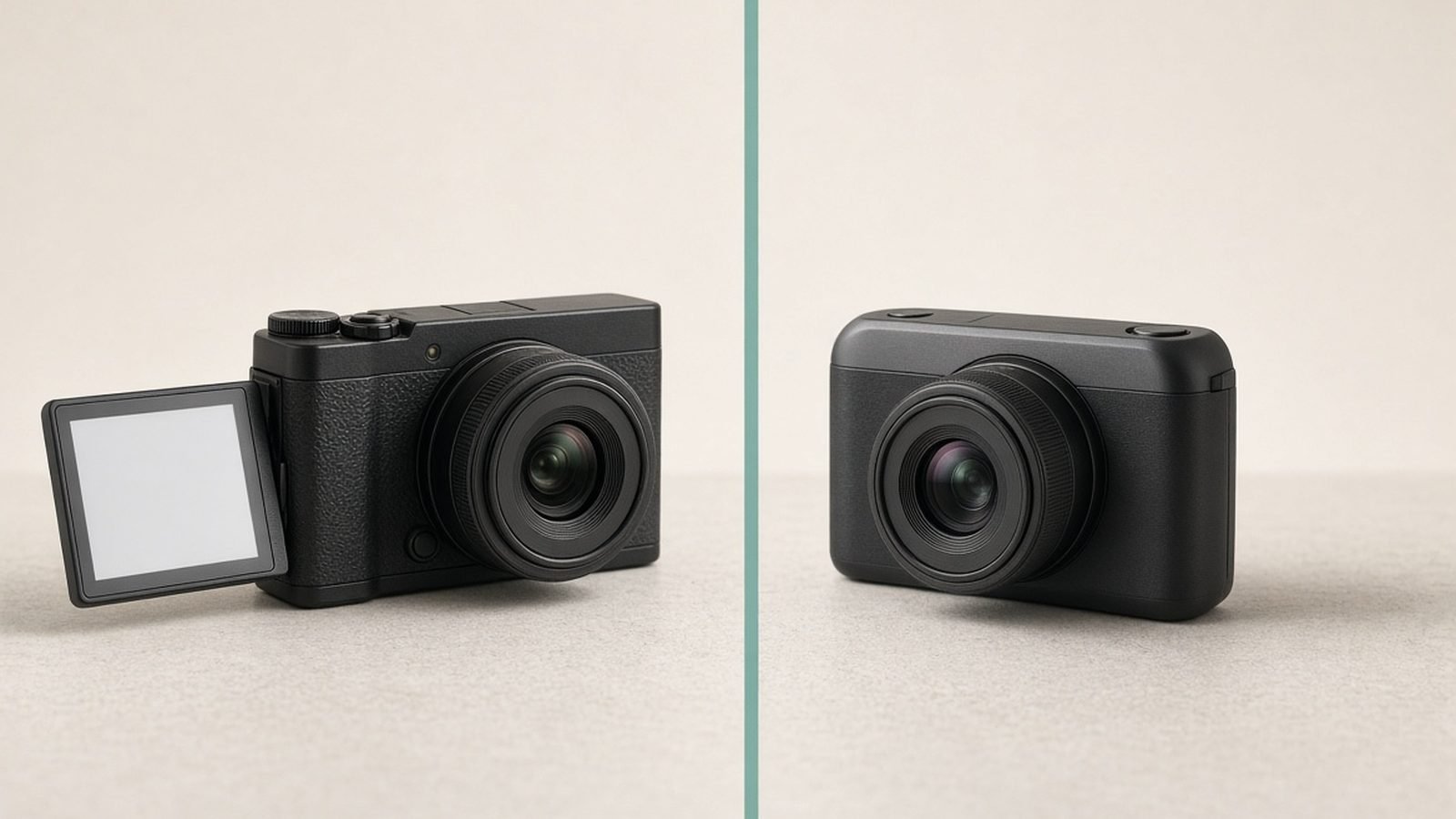
Neither camera has a viewfinder — both lean fully into the flip-out, face-you-selfie screen that defines a modern content creator camera. But the R50 V wears its video-first intent on its sleeve.
Canon gave the R50 V a dedicated switch between video and slow-and-fast recording modes, a front-facing red tally lamp so you know you are rolling (or live), and a tripod-friendly, boxy body with a big record button on top for shooting horizontally on a desk. Based on owner reports, that layout makes it one of the most stream-ready bodies at this price.
The ZV-E10 II is the more refined little hybrid. It keeps Sony’s signature Background Defocus button, Product Showcase mode that racks focus to an object you hold up, and a bright tally light of its own. Its grip is deeper and, crucially, it takes Sony’s larger NP-FZ100 battery — in our research, the single biggest real-world quality-of-life difference between these two.
Video Quality and Autofocus
Both cameras deliver clean, sharp 4K that looks great on any phone or TV. The differences are in the details.
The ZV-E10 II shoots 4K up to 60p (using a Super35 crop) and oversamples 4K/30p from the full sensor width for extra bite. The R50 V oversamples a lovely 4K/30p and offers 4K/60p with a crop too, plus Canon’s much-loved colour science straight out of camera — skin tones that need almost no grading.
Autofocus is where Sony still edges ahead. Both use capable subject-detection AF, but based on aggregated owner feedback, Sony’s AI-driven tracking is a touch stickier for fast movement and walk-and-talk vlogging. Canon’s Dual Pixel AF is excellent and arguably more intuitive, but the ZV-E10 II is the one pros reach for when the shot gets unpredictable.
For the sony vs canon vlogging colour question, it comes down to taste: Canon for warm, ready-to-post footage; Sony for flatter S-Log profiles and more grading headroom.
Lens Ecosystem
This is the ZV-E10 II’s trump card. The Sony E-mount has existed since 2010, so you get hundreds of native lenses from Sony, Sigma, Tamron, Viltrox and more — cheap primes, fast zooms, cine glass, the lot. If you plan to grow, that catalogue is a moat.
Canon’s RF-S mount is younger and the first-party range is still thin, though third-party support from Sigma and Tamron has finally started arriving. For a pure vlogging setup with one wide zoom, that is fine. For anyone eyeing portraits, low light, or specialist lenses down the line, the Sony gives you far more runway.
Best Mirrorless Camera for Vlogging in 2026
Audio and Connectivity
Both cameras include a 3.5mm mic input and a headphone-capable USB-C setup, and both work as plug-and-play USB webcams (UVC/UAC) with no capture card needed — a big deal for streamers.
The R50 V pushes further on the live side, with more built-in streaming and connectivity conveniences aimed at Twitch and YouTube Live, plus that tally lamp for on-air confidence. The ZV-E10 II counters with a smart hot-shoe digital audio interface, so Sony’s ECM mics pass clean, uncompressed sound with no extra cable. Both support vertical-video metadata for Shorts, Reels and TikTok.
Which Should You Buy?
Choose the Canon EOS R50 V if you are on a budget, new to cameras, or stream a lot. It is cheaper (especially in the US), delightfully simple, streaming-ready out of the box, and its colours look great with zero effort. This is the easiest recommendation for a first serious aps-c vlogging camera.
Pros: Lower price, tally lamp and streaming features, gorgeous Canon colour, compact kit lens. Cons: Smaller battery, thinner RF-S lens range, autofocus a step behind Sony.
Choose the Sony ZV-E10 II if you want a camera you will not outgrow. The stickier autofocus, far bigger battery, stronger stills chops and enormous lens ecosystem make it the long-term investment — worth the extra spend if you see photography and better glass in your future.
Pros: Best-in-class autofocus, large NP-FZ100 battery, huge E-mount lens choice, strong stills. Cons: Pricier, fewer built-in streaming extras, menus still a little dense.
Still deciding between the two? Our full Sony ZV-E10 II Review: Best APS-C Vlogging Camera? digs deeper into the Sony’s real-world performance.
FAQ
Is the Sony ZV-E10 II worth the extra money over the Canon R50 V?
For most beginners, no — the R50 V does 90% of what you need for far less. But if you plan to shoot stills, buy nicer lenses, or do fast-paced walk-and-talk vlogging, the ZV-E10 II’s superior autofocus, larger battery and vast E-mount catalogue justify the premium over the camera’s lifetime.
Which has better autofocus for vlogging, ZV-E10 II or R50 V?
Both are very good, but Sony’s AI-driven tracking on the ZV-E10 II is slightly more reliable for fast or unpredictable movement, based on owner reports. Canon’s Dual Pixel AF is excellent and more intuitive to set up, so the gap is small and matters most for run-and-gun creators.
Do these cameras have a viewfinder?
No. Neither the Sony ZV-E10 II nor the Canon EOS R50 V includes an electronic viewfinder. Both are designed around a fully articulating flip-to-front screen for selfie-style vlogging. If you need a viewfinder for bright outdoor shooting or stills, look at a different body such as the Canon R50 or Sony a6700.
Which is the best vlogging camera in 2026 for streaming?
The Canon EOS R50 V edges it for live streaming. It works as a plug-and-play USB webcam, adds a front tally lamp so you know when you are on air, and includes more built-in streaming conveniences. The ZV-E10 II also streams over USB but leans more toward all-round hybrid shooting.
Zen Tech Hub may earn a commission from links on this page, at no extra cost to you.