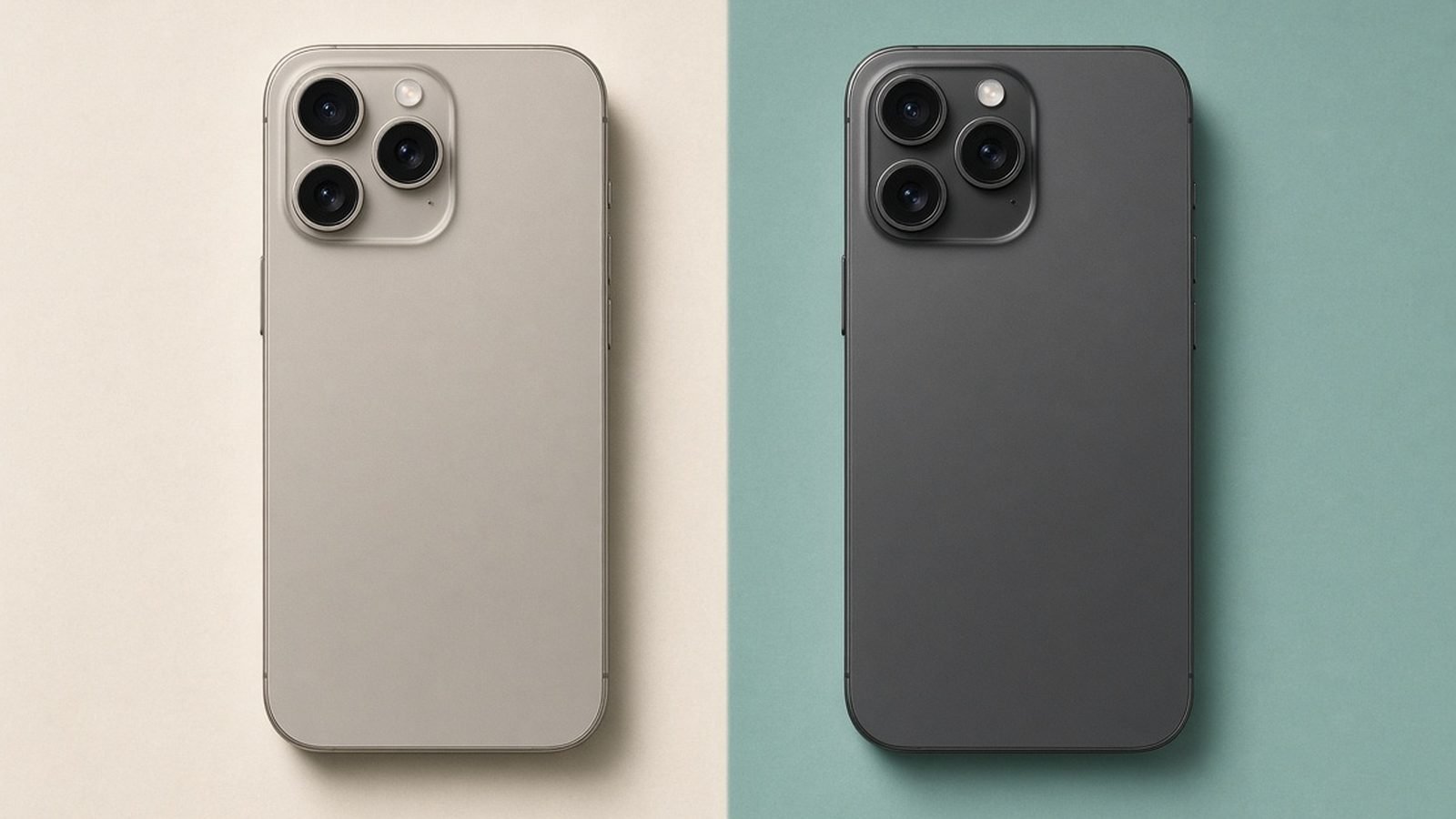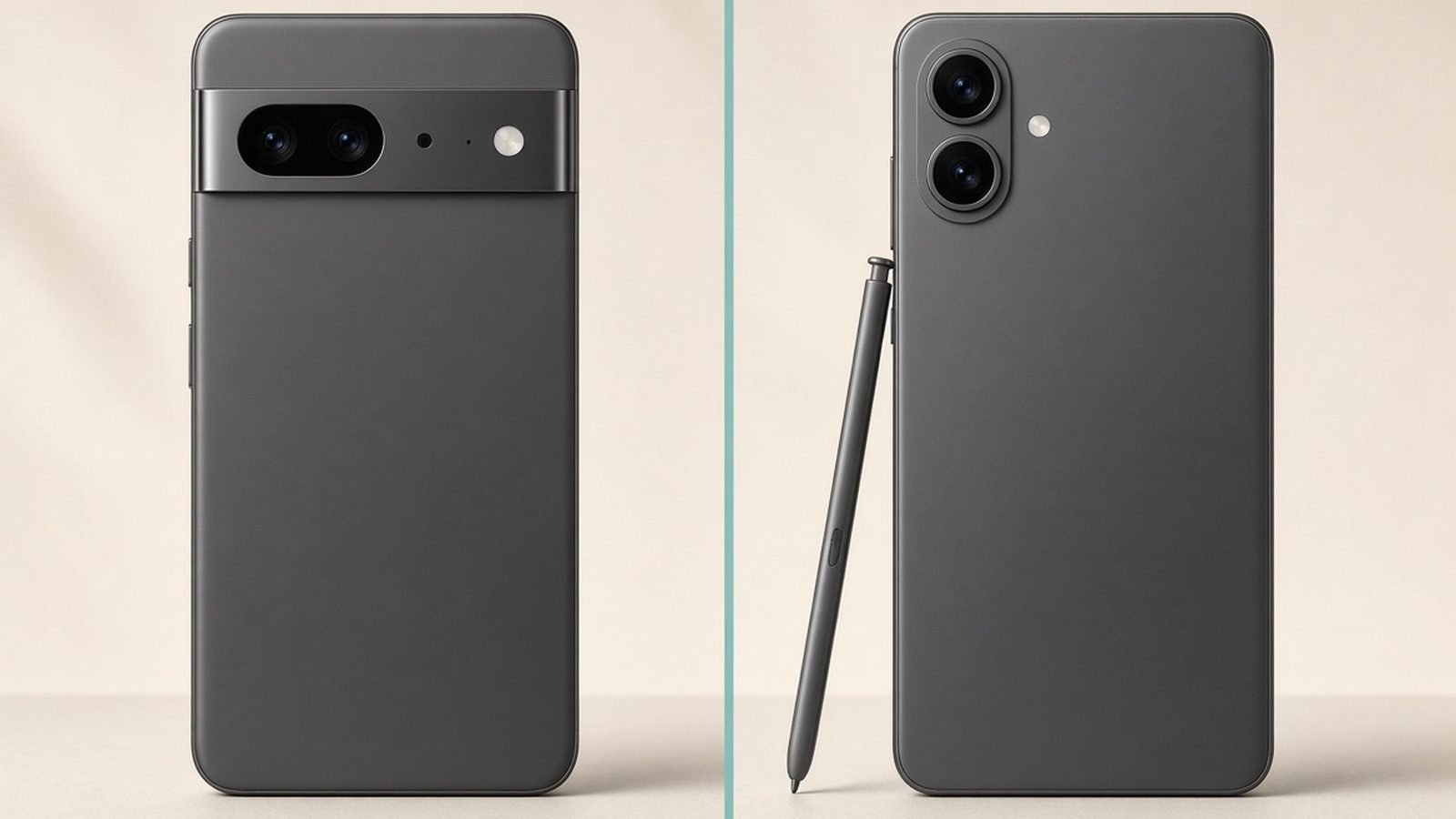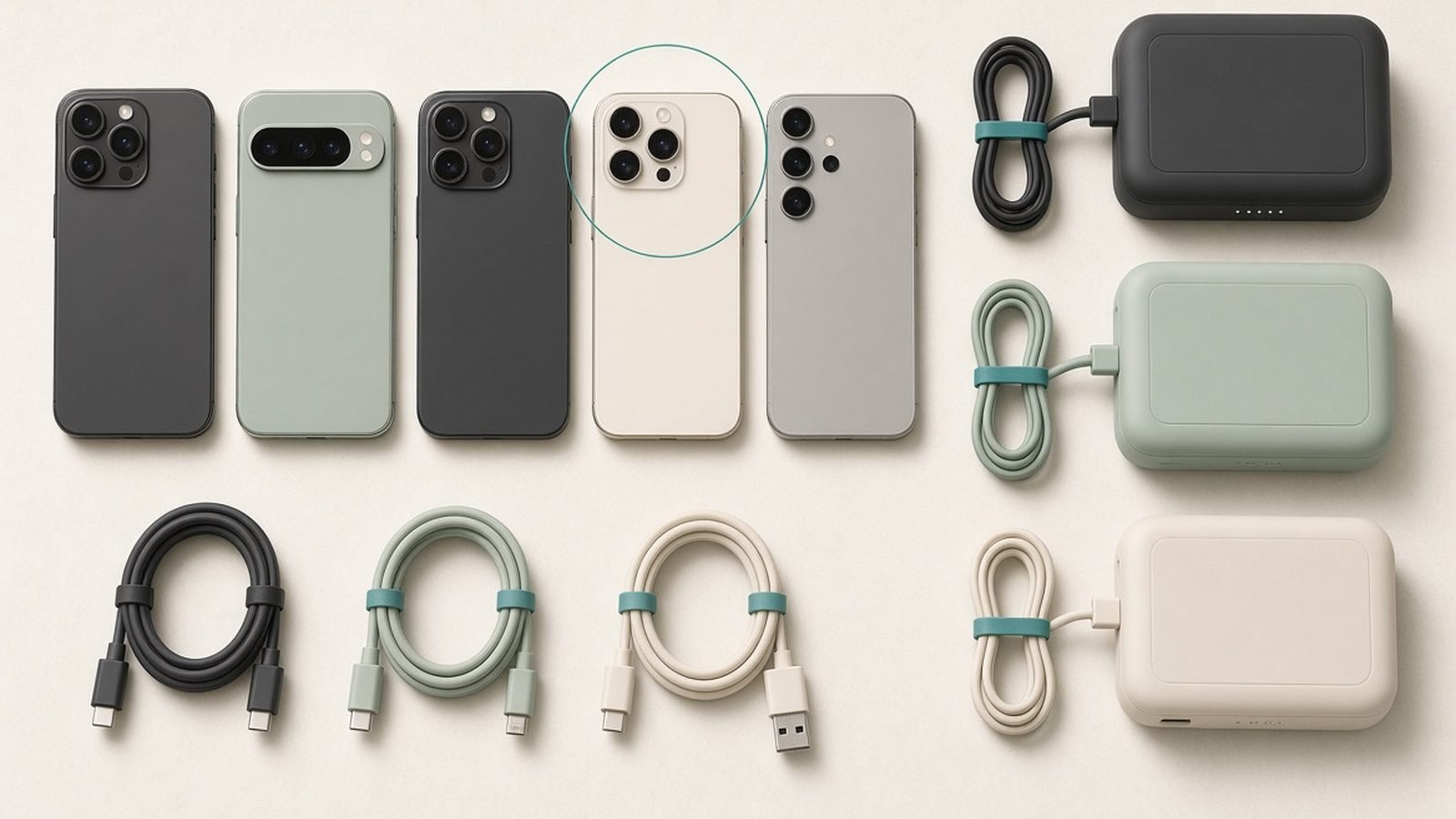
The best phone for battery life in 2026 is the iPhone 17 Pro Max if you want a flagship, and the OnePlus 15 if you want the single longest-lasting screen-on time from a phone you can actually buy in the US and UK. Both routinely clear a full heavy day with charge to spare, and on lighter days stretch into a second. If your only real requirement is “never think about the charger,” start with one of those two.
The bigger story in 2026 is silicon-carbon battery chemistry, which lets phones pack 6,000mAh or more into the same thickness that held 5,000mAh a year ago. Below we rank the best endurance phones across flagship and mid-range tiers, based on published capacities, chipset efficiency data and aggregated real-world screen-on-time reports — not lab claims. Every pick names its trade-off.
Best phone battery life 2026 at a glance
| Pick | Phone | Best for | Price (US / UK) |
|---|---|---|---|
| Best overall | iPhone 17 Pro Max | Flagship endurance + everything else | around $1,199 / £1,199 |
| Longest screen-on time | OnePlus 15 | Biggest real-world battery, fast charging | around $899 / £849 |
| Best Android all-rounder | Galaxy S26 Ultra | Endurance plus best camera and S Pen | around $1,299 / £1,249 |
| Best mid-range endurance | Redmi Note 15 Pro+ | Two-day battery on a budget | around $349 / £329 |
| Best compact with real battery | Galaxy S26+ | All-day life in a smaller body | around $999 / £999 |
| Best big-battery value flagship | Poco F8 Pro | Huge battery, flagship chip, low price | around $499 / £479 |
If battery is important but not your only concern, our broader Best Smartphones 2026: Top Picks for Every Budget and Best Android Phones 2026: Flagship to Budget roundups weigh cameras and software support alongside endurance.
How we picked
Battery life comes down to three variables: cell capacity (mAh), chip efficiency, and display power draw. A big battery on an inefficient chip can lose to a smaller battery on an efficient one, which is why raw mAh alone is misleading. We weighted the combination — capacity and the efficiency of the processor and screen — and cross-checked it against aggregated owner reports of screen-on time, the only number that reflects real use.
Our analysis draws on published battery capacities, chipset efficiency documentation (Apple A19 Pro, Snapdragon 8 Elite Gen 2, and mid-range Dimensity parts), display specs, and hundreds of owner reviews across US and UK retailers. We have not run standardized battery rundown tests ourselves; endurance claims reflect that public evidence. We also weighted charging speed, because a phone that recharges in 25 minutes changes how much battery anxiety you feel day to day.
Best overall: iPhone 17 Pro Max
Apple A19 Pro · 6.9” 120Hz OLED · around $1,199 / £1,199
Apple’s biggest iPhone has quietly become one of the longest-lasting phones you can buy, and it’s the iphone longest battery life pick by a wide margin. The combination of the efficient A19 Pro chip, an aggressively power-managed 120Hz OLED, and iOS’s tight background control means it consistently delivers the best all-day endurance of any iPhone — heavy users finish the day with meaningful charge left, and moderate users genuinely reach a second day.
What makes it “best overall” rather than just “best iPhone” is that you don’t sacrifice anything to get the battery. This is also the best camera iPhone, has the best resale value here, and enjoys the longest practical software support of any phone on the list. The endurance comes as part of a complete flagship rather than as a trade-off.
The downsides are the obvious ones: it’s expensive, it’s large and heavy, and charging — while improved — still isn’t as fast as the Android rivals, so a full top-up takes longer than the OnePlus or Poco. If you want the quickest recharge, look elsewhere; if you want the best complete phone that also lasts, this is it.
Pros:
- Best real-world endurance of any iPhone; often reaches two days
- No compromise — also the best camera and resale value here
- Longest practical software support on the list
- Excellent efficiency from the A19 Pro chip
Cons:
- Expensive; large and heavy
- Charging slower than the Android big-battery picks
- No charger in the box
Who it’s for: Buyers who want the best all-round flagship and treat long battery life as a top priority, without giving up camera or software support.
Longest screen-on time: OnePlus 15
Snapdragon 8 Elite Gen 2 · 6.8” 120Hz AMOLED · ~7,000mAh silicon-carbon · around $899 / £849
If the metric is raw screen-on time — hours of active use before the phone dies — the OnePlus 15 is the longest lasting phone battery here. It uses a large silicon-carbon cell (around 7,000mAh) that packs far more capacity into a normal-thickness body than older lithium chemistry allowed, and pairs it with the efficient Snapdragon 8 Elite Gen 2. The result is a two day battery phone for moderate users and a comfortable heavy-day-plus for everyone else.
The other half of the story is charging. OnePlus continues to offer some of the fastest wired charging in the market — a near-full top-up in well under half an hour — which, combined with the huge battery, essentially eliminates battery anxiety. You can forget to charge overnight and still recover in the time it takes to shower and eat breakfast.
The compromises are modest but real. The camera is very good but a step behind the iPhone and Galaxy Ultra, software support is shorter than Apple’s or Samsung’s, and OxygenOS has drifted closer to its Chinese-market sibling in ways longtime fans debate. For pure endurance plus charging speed at a sub-flagship price, though, nothing here beats it.
Pros:
- Longest real-world screen-on time on the list
- Very fast wired charging nearly eliminates battery anxiety
- Large silicon-carbon battery in a normal-thickness body
- Priced below the flagship pack
Cons:
- Camera trails the iPhone and Galaxy Ultra
- Shorter software support than Apple or Samsung
- Software direction won’t please every longtime OnePlus fan
Who it’s for: Heavy users who want the single longest-lasting phone plus the fastest recharge, and don’t need the absolute best camera.
Best Android all-rounder: Samsung Galaxy S26 Ultra
Snapdragon 8 Elite Gen 2 · 6.9” 120Hz AMOLED · 5,000mAh · around $1,299 / £1,249
The S26 Ultra doesn’t have the biggest battery here, but it’s the best battery life android phone if you want endurance inside a genuine do-everything flagship. The efficient Snapdragon 8 Elite Gen 2 and Samsung’s mature power management get more out of its 5,000mAh cell than the raw number suggests, delivering reliable all-day life for heavy users and easy day-and-a-half for moderate ones.
You choose it over the pure-endurance picks because of everything else: the best camera system in this roundup, the S Pen, a stunning display, and seven years of software updates. It’s the phone for someone who wants long battery life and refuses to compromise on photography or longevity of support.
The honest limitation is that its battery, while good, isn’t class-leading — the OnePlus 15 and Poco F8 Pro will outlast it on a heavy day, and its charging, though decent, is slower than either. You’re paying a premium for the complete package, and the battery is one excellent element of it rather than the headline.
Pros:
- Strong all-day endurance from an efficient chip
- Best camera, display and S Pen in this roundup
- Seven years of software updates
- Premium do-everything flagship
Cons:
- Battery capacity not class-leading; big-battery rivals outlast it
- Slower charging than OnePlus or Poco
- Most expensive pick here
Who it’s for: Buyers who want a top-tier all-round phone with dependable battery life and the best camera, and will pay for it.
Best mid-range endurance: Redmi Note 15 Pro+
Dimensity 8000-series · 6.7” 120Hz AMOLED · ~6,500mAh · around $349 / £329
The Redmi Note line has long been the endurance champion of the mid-range, and the Note 15 Pro+ continues it. A large silicon-carbon battery (around 6,500mAh) paired with an efficient, mid-tier Dimensity chip and a well-managed AMOLED display makes this a genuine two-day phone for most people — the kind you charge every other night without thinking about it. For the money, nothing here comes close on raw endurance.
It also charges quickly for its price, includes a charger in many regions (unlike the flagships), and has a display and build that punch above the sub-$350 bracket. This is the value pick for someone whose single most important requirement is a phone that lasts, with everything else being “good enough.”
The trade-offs are what you’d expect at the price. The cameras are decent in good light and weak in low light, performance is fine for everyday use but not for heavy gaming, and software support is shorter than the flagships. If you want a phone that outlasts a $1,000 flagship for a third of the price and can accept those limits, it’s outstanding value. For more options at this level, see Best Budget Smartphones 2026: Under $400 / £400.
Pros:
- Genuine two-day battery for most users
- Excellent value; fast charging and often a charger in-box
- Good AMOLED display and build for the price
Cons:
- Cameras weak in low light
- Not for heavy gaming
- Shorter software support than flagships
Who it’s for: Budget buyers whose top priority is battery life and who don’t need a flagship camera or heavy gaming performance.
Best compact with real battery: Samsung Galaxy S26+
Snapdragon 8 Elite Gen 2 · 6.7” 120Hz AMOLED · ~4,900mAh · around $999 / £999
Most people who want long battery life get told to buy a giant phone. The Galaxy S26+ is the answer for someone who wants strong endurance without a slab that dominates a pocket. It’s still a sizeable phone, but noticeably more manageable than the Ultra, and its efficient chip plus a well-sized battery deliver reliable all-day life — a phone that lasts all day for genuine heavy users, comfortably.
You give up the Ultra’s S Pen, its telephoto reach and a little battery headroom, but you keep the excellent display, the seven-year support promise, and a more comfortable form factor. It’s the sensible middle path: real endurance, flagship polish, less bulk.
The catch is value. At around $999 / £999 it sits awkwardly close to the Ultra, and the pure-endurance champions (OnePlus 15, Poco F8 Pro) will outlast it for less money. You’re paying for Samsung’s ecosystem, support and a more pocketable size rather than for the biggest battery.
Pros:
- Genuine all-day endurance in a more manageable size
- Excellent display and seven-year software support
- Flagship performance and polish
Cons:
- Priced close to the bigger, longer-lasting Ultra
- Out-endured by cheaper big-battery rivals
- No S Pen or telephoto camera
Who it’s for: Buyers who want dependable all-day battery life and flagship quality without carrying the largest phone available.
Best big-battery value flagship: Poco F8 Pro
Snapdragon 8 Elite Gen 2 · 6.7” 120Hz AMOLED · ~6,000mAh silicon-carbon · around $499 / £479
The Poco F-series has built its reputation on flagship chips at mid-range prices, and the F8 Pro adds serious endurance to the formula. A roughly 6,000mAh silicon-carbon battery, the flagship Snapdragon 8 Elite Gen 2, and fast wired charging combine to make this the phone with biggest battery relative to price on our list — genuine heavy-day-plus endurance and quick recharges for around $499 / £479.
It’s the pick for a performance-minded buyer who also wants great battery life and refuses to pay flagship money. You get near-flagship speed, a strong AMOLED display, and endurance that embarrasses phones costing twice as much.
The compromises keep the price down: the cameras are good-not-great, the software carries more pre-installed clutter than the premium brands, and long-term update support is shorter. For raw performance-plus-endurance value, though, it’s the standout, and a natural cross-shop against our Best Budget Smartphones 2026: Under $400 / £400 picks.
Pros:
- Flagship chip and ~6,000mAh battery for a mid-range price
- Fast charging; heavy-day-plus endurance
- Strong AMOLED display
Cons:
- Cameras good, not great
- More pre-installed software clutter
- Shorter update support than premium brands
Who it’s for: Performance-focused value buyers who want flagship speed and big-battery endurance without paying flagship prices.
How to choose a long-battery-life phone
Endurance isn’t just about the biggest mAh number. Weigh these:
- Capacity and chip efficiency together. A 6,000mAh silicon-carbon battery on an efficient chip beats a 5,000mAh cell on a power-hungry one. In 2026, silicon-carbon batteries (OnePlus 15, Poco F8 Pro, Redmi Note 15 Pro+) are the ones packing the most capacity into normal-thickness bodies.
- Screen-on time, not standby claims. The useful number is how many hours the screen stays on during active use. Standby endurance is easy; active endurance is what saves you.
- Charging speed as a backstop. A huge battery plus fast charging (OnePlus, Poco) all but eliminates battery anxiety, because a 20-minute top-up recovers a full day. Slower-charging phones (iPhone) lean harder on raw capacity.
- Size tolerance. The longest-lasting phones tend to be large. If you want endurance in a smaller body, expect to pay more per hour of battery (the Galaxy S26+ is the compromise).
FAQ
Which phone has the best battery life in 2026?
For a flagship, the iPhone 17 Pro Max delivers the best all-round endurance and often reaches a second day. For the single longest screen-on time, the OnePlus 15 wins thanks to its large silicon-carbon battery. On a budget, the Redmi Note 15 Pro+ is a genuine two-day phone for far less money.
What is a silicon-carbon battery and why does it matter?
Silicon-carbon is a newer battery chemistry that stores more energy in the same physical space than traditional lithium. In practice, it lets 2026 phones like the OnePlus 15 and Poco F8 Pro fit 6,000–7,000mAh into a normal-thickness body, so you get significantly longer battery life without a thicker or heavier phone.
Do any phones really last two days?
Yes, for moderate users. The Redmi Note 15 Pro+ and OnePlus 15 comfortably reach two days on lighter use, and the iPhone 17 Pro Max gets there for many people. Heavy users — lots of gaming, camera, hotspot — will still charge every night, but will end the day with meaningful charge left rather than scrambling for a socket.
Is a bigger mAh number always better?
No. Battery life depends on capacity and how efficiently the chip and screen use it. An efficient flagship chip can make a 5,000mAh phone outlast a 6,000mAh phone with a power-hungry processor. That’s why the iPhone 17 Pro Max competes with much larger batteries despite a modest-sounding capacity — its A19 Pro chip is very efficient.
Does fast charging hurt long-term battery health?
Modern fast-charging systems manage heat and voltage to limit long-term wear, and reputable brands rate their batteries to retain a healthy capacity percentage after hundreds of cycles. Heat is the real enemy, so charging in a cool place and avoiding constant 100% top-ups helps. For most people over a typical two-to-three-year ownership, fast charging is fine.
Should I buy a power bank instead of a big-battery phone?
They solve different problems. A big-battery phone means never carrying anything extra; a power bank adds bulk but rescues any phone in a pinch, including on trips. If you travel or game heavily, a laptop-grade bank is a smart companion even to a long-lasting phone — see our Best Power Banks for Laptops in 2026: 100W+ Picks Compared guide.
Verdict: which long-battery phone should you buy?
If you want the best complete flagship that also lasts, buy the iPhone 17 Pro Max at around $1,199 / £1,199 — the endurance comes with no other compromise. If your single priority is the longest screen-on time plus the fastest recharge, the OnePlus 15 at around $899 / £849 is the pick.
On a budget, the Redmi Note 15 Pro+ at around $349 / £329 is a genuine two-day phone that outlasts flagships for a third of the price, and the Poco F8 Pro adds flagship speed for a bit more. Want endurance in a smaller body, or a top camera alongside it? The Galaxy S26+ and S26 Ultra are your answers. Still weighing everything else a phone does? Start with Best Smartphones 2026: Top Picks for Every Budget.
Zen Tech Hub may earn a commission from links on this page, at no extra cost to you.