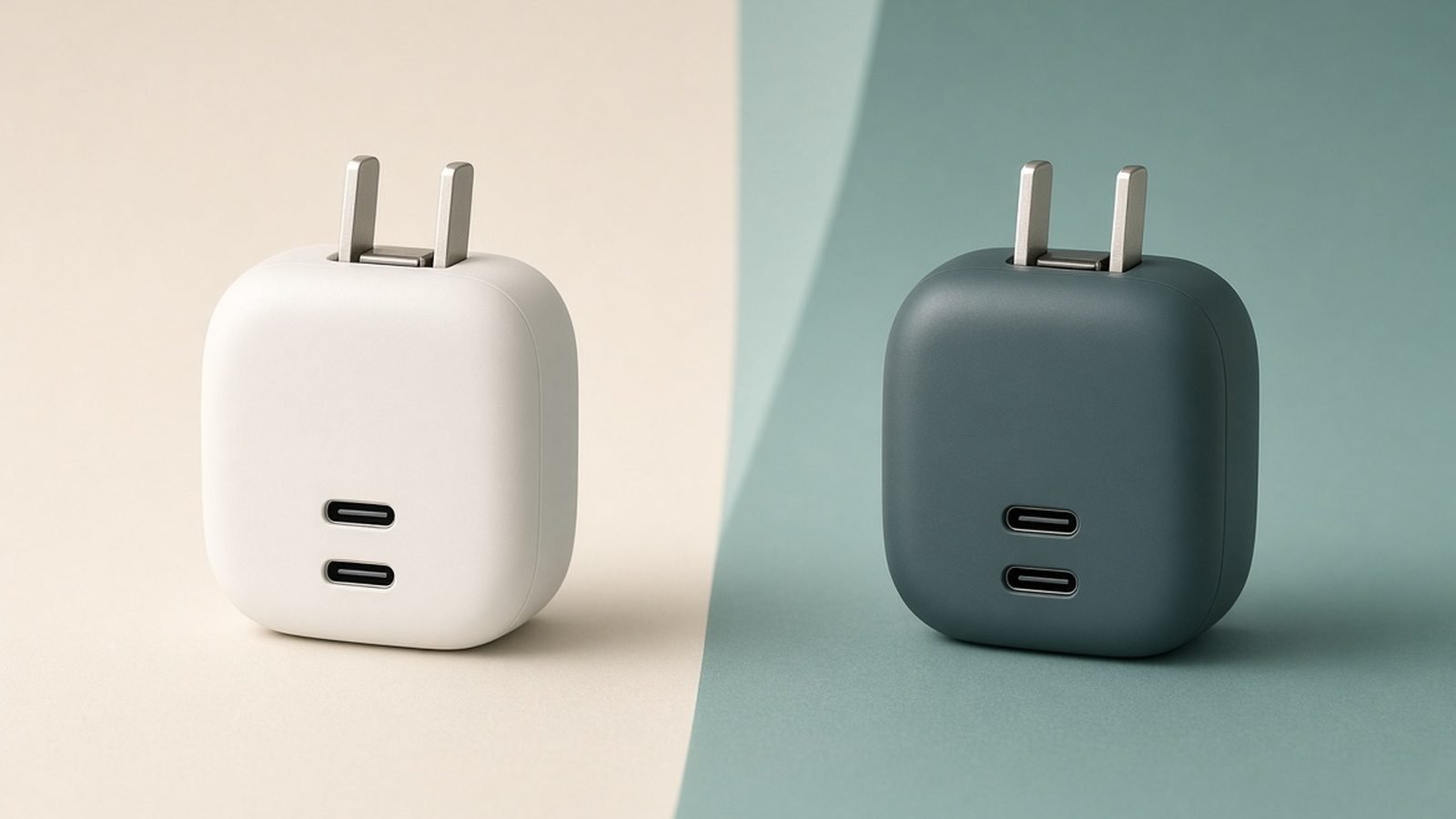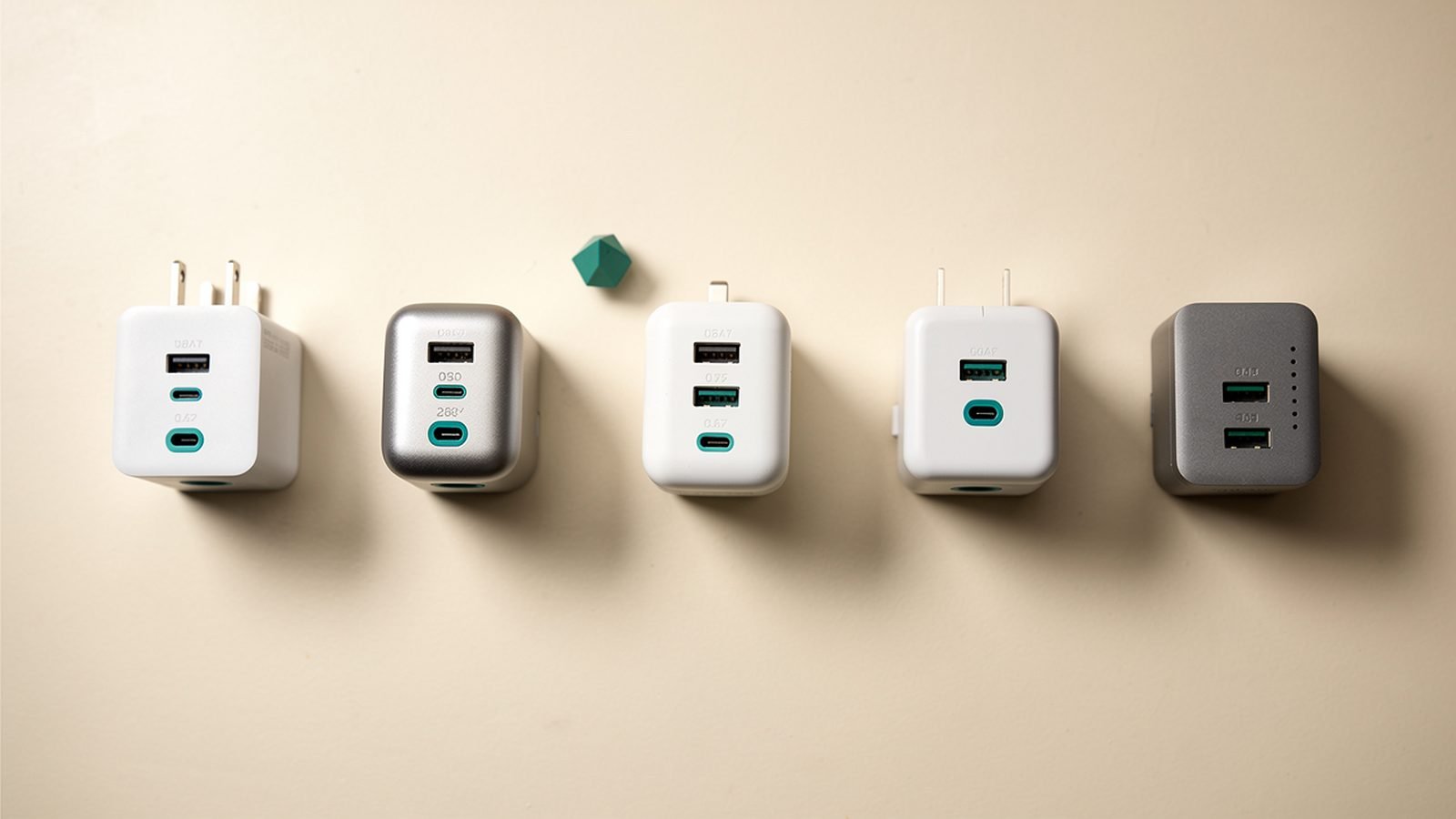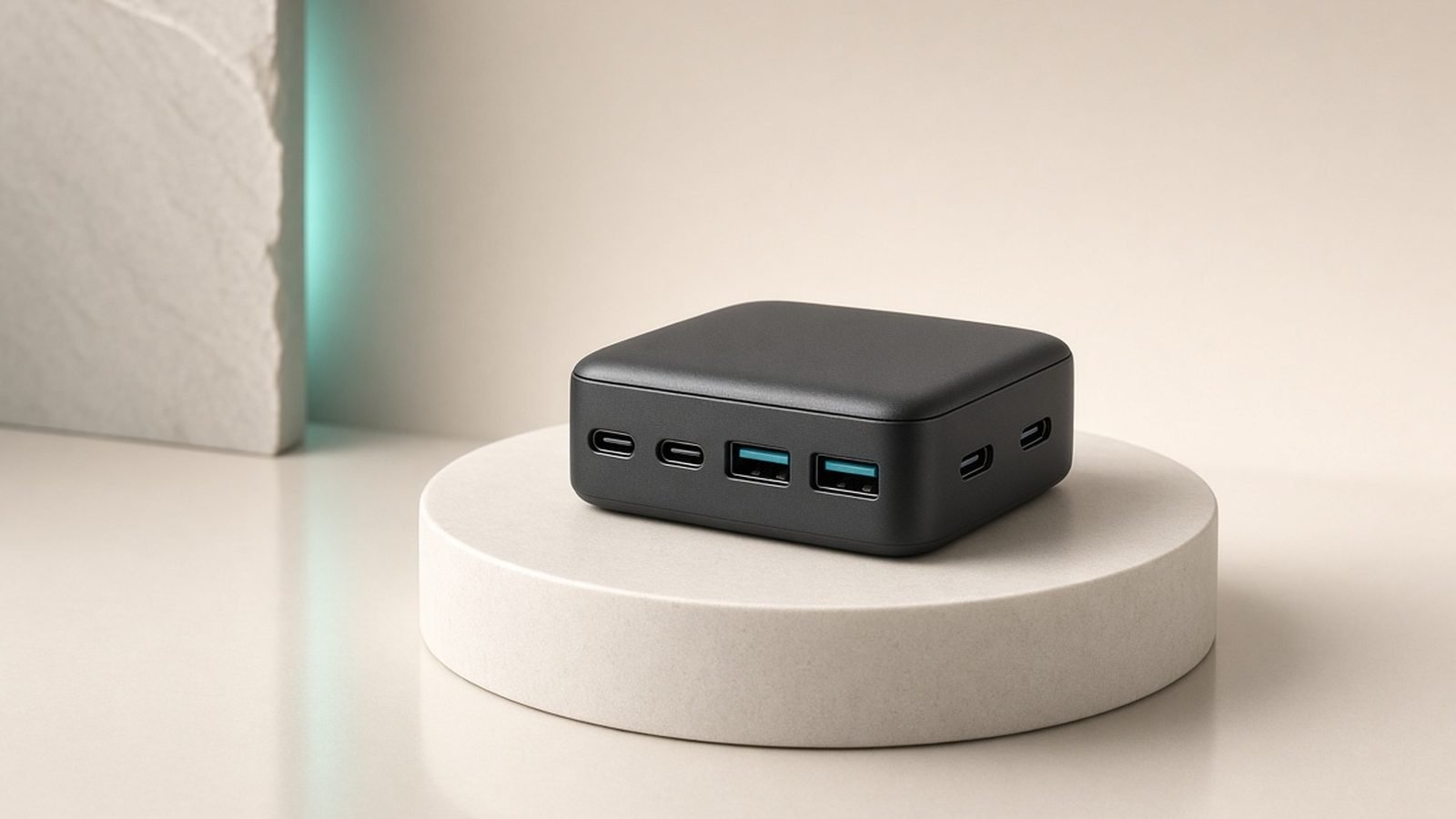
GaN charging refers to chargers built with gallium nitride semiconductors instead of traditional silicon. Gallium nitride handles electricity more efficiently and runs cooler, which lets manufacturers shrink a charger dramatically while pushing the same or higher wattage. In plain terms: a GaN charger is smaller, cooler and often more powerful than the silicon brick it replaces — a 65W GaN unit can be roughly half the size of an old 65W charger.
That’s the headline. This guide explains what gallium nitride actually is, why it beats silicon for chargers, what you gain and give up, and whether a GaN charger is worth buying in 2026.
What Gallium Nitride Is
Gallium nitride is a semiconductor material — the same category as the silicon that has run electronics for decades. The difference is in its physical properties. GaN has a wider bandgap than silicon, which is an engineer’s way of saying it can tolerate higher voltages and switch on and off far faster without breaking down.
For a charger, “switching” is the whole job. A charger constantly converts high-voltage AC from the wall into the low-voltage DC your device wants, flipping current on and off millions of times a second. The better a material does that switching, the less energy it wastes as heat — and heat is what forces silicon chargers to be big.
Why GaN Chargers Are Smaller
The size advantage flows directly from efficiency. Because GaN switches faster and wastes less energy as heat, a GaN charger needs:
- Less heat-dissipation material — smaller heatsinks, thinner casing.
- Fewer and smaller internal components, because faster switching lets designers use tinier transformers and capacitors.
- Less physical spacing between components, since there’s less heat to manage.
Stack those up and you get chargers that are commonly 40–50% smaller and lighter than silicon equivalents at the same wattage. A 100W GaN charger can be pocketable; a silicon 100W charger is a brick. For travellers packing a single charger for a laptop and phone, that’s a genuine difference.
Why They Run Cooler and More Efficiently
Efficiency and heat are two sides of the same coin. GaN’s faster, cleaner switching means more of the wall’s energy reaches your device and less is lost. Practical effects:
- Lower running temperature. A cooler charger is more comfortable, safer in tight spaces, and gentler on the devices it charges.
- Slightly lower electricity waste over the charger’s life — small per charge, but real across years and multiple ports.
- Sustained high output. Silicon chargers sometimes throttle when hot; GaN units hold their rated wattage more reliably. This helps with consistent USB Power Delivery (USB-PD) Explained performance.
GaN vs Silicon: The Quick Comparison
| Factor | GaN charger | Silicon charger |
|---|---|---|
| Size at same wattage | 40–50% smaller | Larger, heavier |
| Operating temperature | Cooler | Warmer |
| Efficiency | Higher | Lower |
| Max practical wattage | Very high (200W+) | Limited by heat |
| Price | Modest premium | Cheaper |
| Multi-port high power | Common | Rare or bulky |
The takeaway: GaN wins on nearly every technical measure, and the only real trade-off is a small price premium — one that has shrunk sharply as GaN went mainstream.
What GaN Charging Is Not
A common misunderstanding worth clearing up: GaN is about the charger, not the charging speed standard. GaN doesn’t make your phone charge faster on its own. Charging speed is still governed by USB Power Delivery negotiation between charger and device — GaN simply lets the charger deliver that power in a smaller, cooler package.
So a 30W GaN charger and a 30W silicon charger charge your phone at the same speed. GaN’s advantage is size, heat and the ability to pack high wattage and multiple ports into something you’d actually carry. For how the speed itself is decided, see USB Power Delivery (USB-PD) Explained and, if yours is slow, How to Fix Slow USB-C Charging.
Are GaN Chargers Safe?
Yes — often safer than the cheap silicon bricks they replace. Lower operating temperature reduces heat stress on components, and reputable GaN chargers include the same protections as any good charger: over-voltage, over-current, over-temperature and short-circuit safeguards. As always, buy from established brands and avoid no-name units, which can cut corners regardless of the semiconductor inside.
Who Should Buy a GaN Charger
- Travellers and commuters: the size and weight saving is the main draw. One compact multi-port GaN charger replaces several bricks.
- Laptop users: GaN makes 65–100W chargers small enough to leave in a bag permanently, and pairs well with a capable Best Power Banks for Laptops in 2026: 100W+ Picks Compared.
- Multi-device households: a single GaN charger with three or four ports can charge a laptop, phone and earbuds at once without the bulk.
- Anyone with an old brick: replacing a hot, oversized silicon charger with a cooler GaN one is a cheap, worthwhile upgrade.
If you want specific recommendations across wattages and port counts, our tested picks are in Best GaN Chargers 2026: 30W to 160W Compared & Ranked. Whatever you buy, pair it with a properly rated cable — USB-C Cables Explained: Why They're Not All the Same explains why that matters as much as the charger.
The Bottom Line
GaN charging is a genuine, mature improvement, not a marketing gimmick. Gallium nitride’s efficiency lets chargers be smaller, cooler and more powerful than silicon allows, and the price premium is now minor. It won’t make a device charge faster than its USB-PD rating permits, but for the same wattage it delivers that power in a far more convenient package. In 2026, a GaN charger is the sensible default for almost any new charger purchase.
FAQ
What does GaN mean in a charger?
GaN stands for gallium nitride, the semiconductor material used inside the charger instead of traditional silicon. Gallium nitride switches electricity faster and wastes less energy as heat, which lets the charger be smaller, cooler and more efficient at the same wattage. It’s a component upgrade, not a new charging speed standard.
Do GaN chargers charge faster than normal chargers?
No, not inherently. Charging speed is set by USB Power Delivery negotiation and the device’s own limit, so a 30W GaN charger and a 30W silicon charger charge at the same rate. GaN’s advantage is delivering that wattage in a smaller, cooler body — and packing high power and multiple ports into a portable size.
Are GaN chargers safe to use?
Yes, and often safer than cheap silicon bricks. They run cooler, which reduces heat stress, and reputable models include over-voltage, over-current, over-temperature and short-circuit protection. As with any charger, buy from an established brand — the risk comes from no-name units cutting corners, not from the gallium nitride itself.
Is a GaN charger worth the extra money?
For most people, yes. The price premium over silicon has shrunk to a few dollars or pounds, and you get a charger that’s roughly half the size, runs cooler, and can pack more wattage and ports. It’s especially worth it for travel, laptops, and multi-device charging where size and heat matter.
Can I use a GaN charger with any phone or laptop?
Yes. GaN chargers use standard USB-C (and sometimes USB-A) ports and support USB Power Delivery, so they work with virtually any modern phone, tablet or laptop. Each device negotiates the safe amount of power it wants. Just match the charger’s wattage to your device’s needs and use a properly rated cable.
Why are GaN chargers so much smaller?
Because gallium nitride switches faster and wastes less energy as heat than silicon. Less heat means smaller heatsinks and thinner casing, and faster switching allows smaller internal transformers and capacitors. Together these let a GaN charger be 40–50% smaller than a silicon charger of the same wattage.
Zen Tech Hub may earn a commission from links on this page, at no extra cost to you.