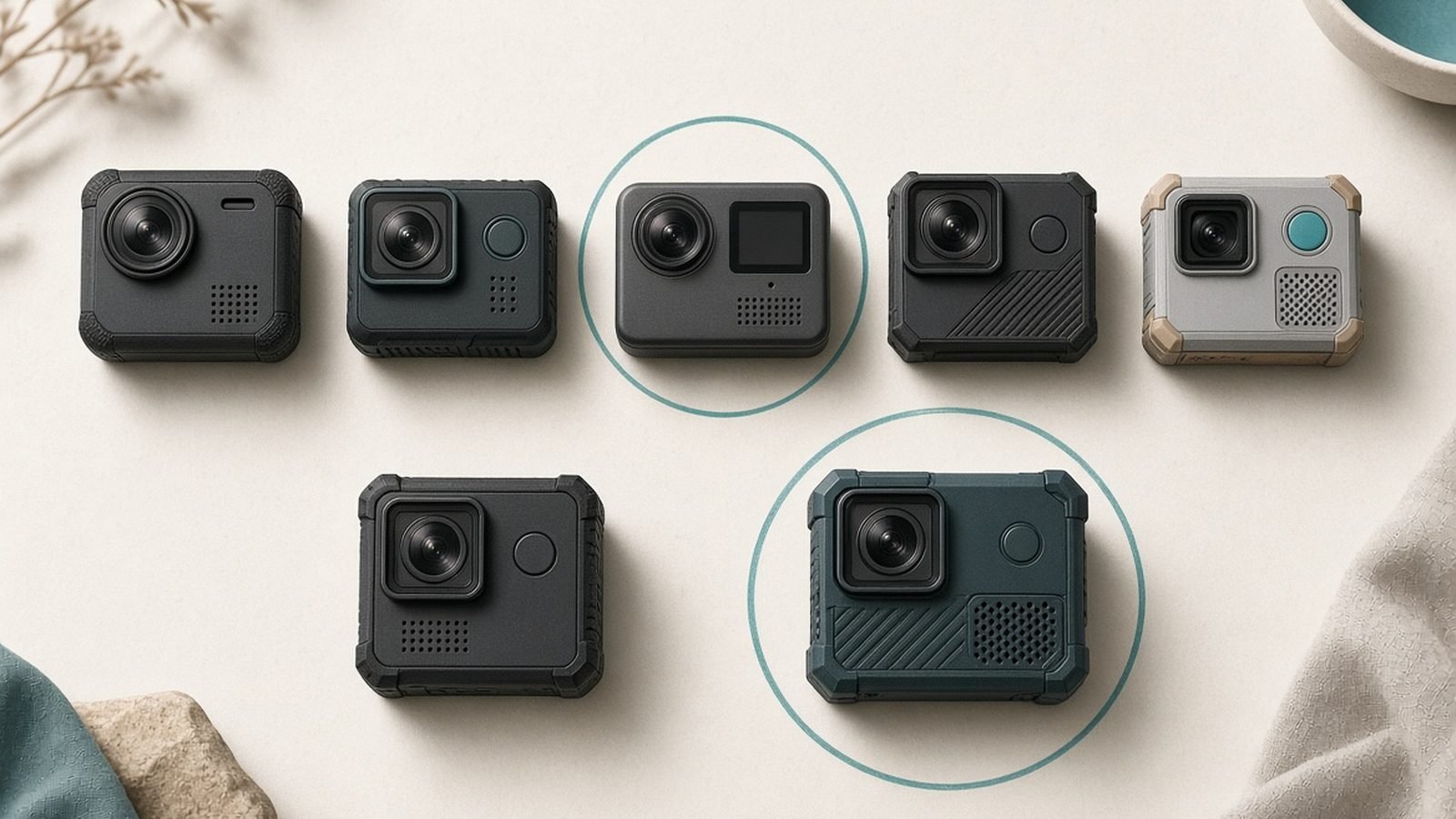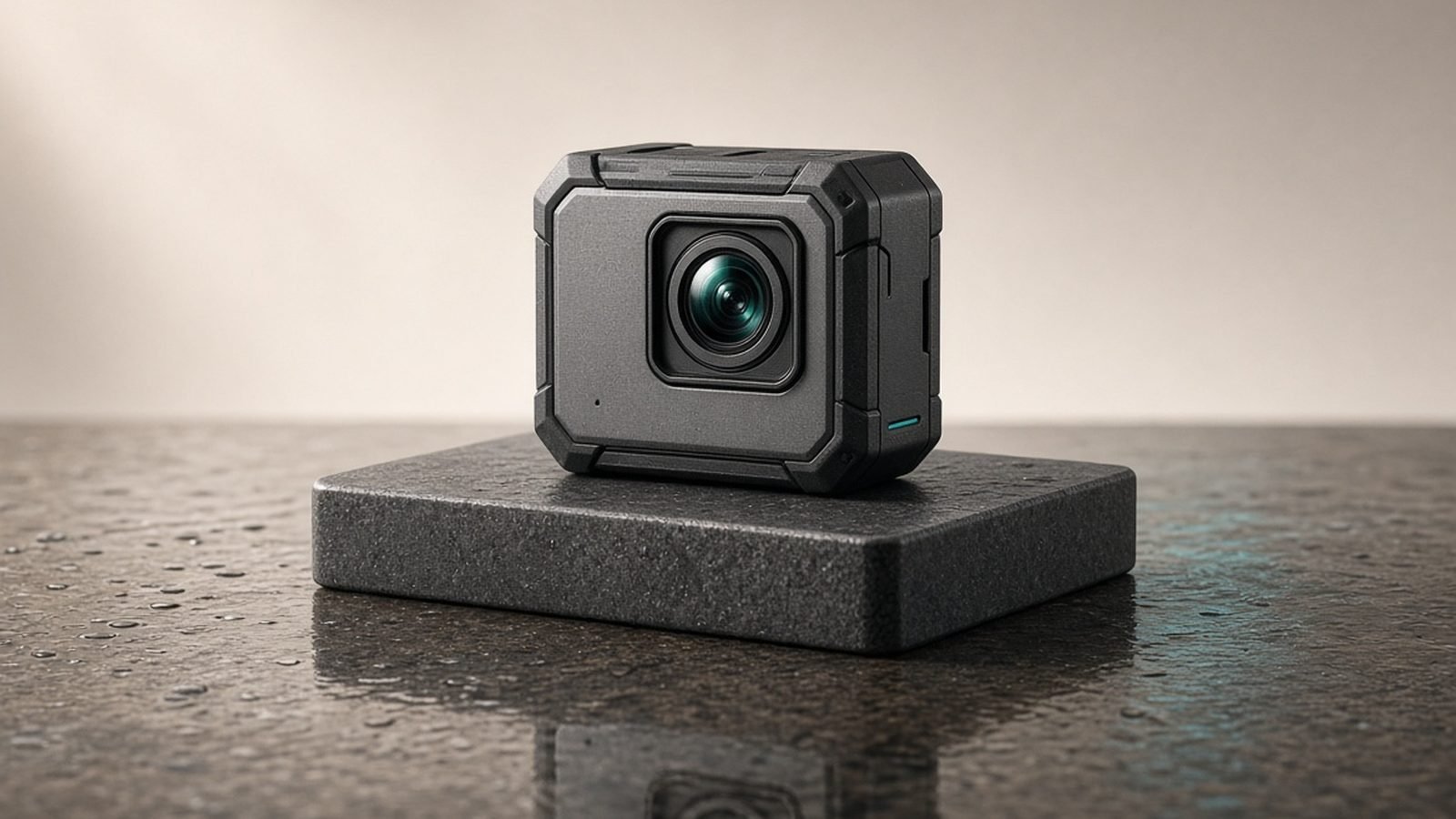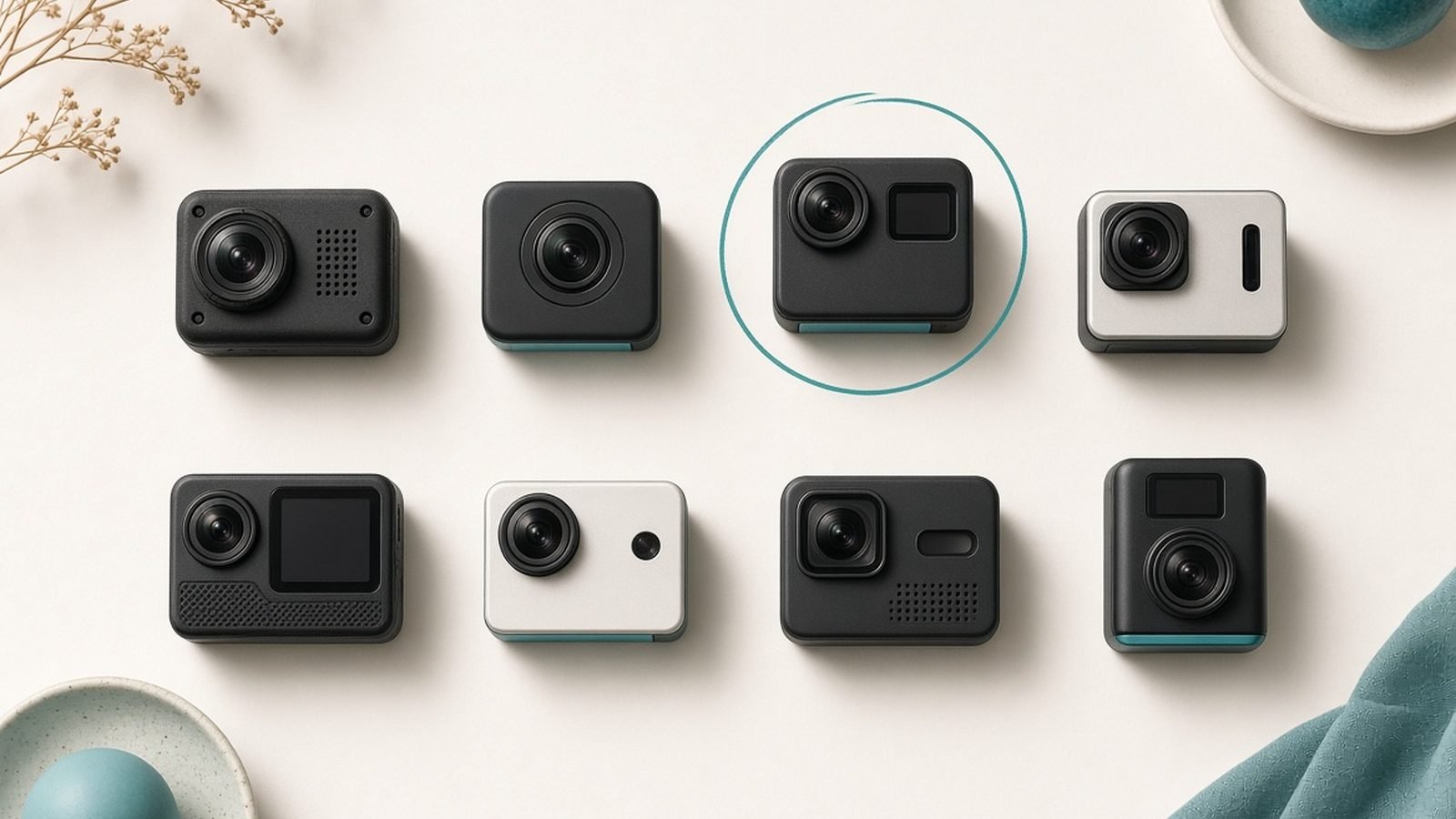
The picks in this guide are sorted by the problem a beginner most wants solved, not by spec sheet. One needs the least attention for everyday shooting, one gives the smoothest footage on bikes, skis and anything fast and jarring, one finds the highlights and cuts the clip for people who dread editing, and one weighs 52 grams and clips to a cap for hands-free shots. The best action camera for beginners overall is the DJI Osmo Action 6, but “best” depends on what you shoot, so we have picked the right camera for five different beginners below.
Action cameras have quietly become the easiest cameras to own. There is no lens to change, nothing to focus, and they survive being dropped in a river. The hard part is not using one, it is choosing between the three brands that dominate the category: GoPro, DJI and Insta360. This guide cuts through the spec-sheet noise and tells you which one fits your budget and your patience. Every pick here is genuinely beginner-friendly, with no editing degree or cage of accessories required to get a usable clip on day one.
Quick Comparison: Best Action Cameras 2026
| Camera | Best for | Price (approx) | Waterproof | Standout feature |
|---|---|---|---|---|
| DJI Osmo Action 6 | Best overall for beginners | $399 / £369 | 20m | Larger sensor, dual screens, magnetic mounts |
| GoPro HERO13 Black | Best stabilisation & ecosystem | $399 / £399 | 10m | HyperSmooth, swappable HB lenses |
| Insta360 Ace Pro 2 | Best AI features & POV vlogging | $399 / £429 | 12m | Leica lens, flip-up screen, AI editing |
| DJI Osmo Nano | Best tiny/wearable | $299 / £289 | 10m | 52g magnetic body, hands-free POV |
Prices move around launch windows and sales, so treat the figures above as a guide and check the live price before you buy.
What Beginners Actually Need in an Action Camera
Forget 8K for a minute. When you are new, four things matter far more than the headline resolution.
Stabilisation. The feature that makes footage look “professional” versus “phone in a shaky hand.” Every camera here has excellent electronic stabilisation, so even walking clips look smooth. It is the single biggest reason action-cam footage beats a normal camera for travel and sport.
Ease of use. The easiest action camera to use is one you can arm and fire without diving into menus. Look for a good touchscreen, voice control, and a front screen so you can frame yourself for vlogging.
Mounting. An action camera is only as good as the places you can stick it. Magnetic quick-release systems (DJI and Insta360) are friendlier for beginners than fiddly folding fingers, though GoPro’s ecosystem is the largest by a wide margin.
Waterproofing. A proper waterproof action camera goes in the pool, the sea or the rain with no case. All four picks are waterproof to at least 10 metres as standard.
Battery life and low-light are the two areas where cheaper cameras fall down, so we flag those honestly in each pick.
How We Evaluate Action Cameras
We do not run a sponsored lab, and we will not pretend we do. Our recommendations come from detailed spec research, hands-on impressions published across the camera community, and aggregated owner feedback from thousands of real buyers.
For each camera we weigh stabilisation, low-light noise, colour straight out of camera, real-world battery endurance versus the rated figure, heat reports, app reliability, and the total cost once you add the mounts and batteries you will genuinely use. Where owner reports consistently flag an issue, such as a camera running warm, we say so, and we never invent benchmark numbers.
Best Overall: DJI Osmo Action 6
The Osmo Action 6 is the camera we would hand a first-time buyer without a second thought. DJI’s headline change this generation is a larger 1/1.1-inch square sensor with a variable aperture, and it matters: in our research it is the pick that most reliably turns in clean footage as the light drops, which is exactly when beginner clips usually fall apart.
Everything about it removes friction. Dual touchscreens (front and rear) make framing a piece to camera easy, the magnetic mount clicks on and off in a second, and it is waterproof to 20 metres without a case, the deepest here. The square sensor also makes it genuinely good for the vertical clips you post to TikTok, Reels or Shorts.
Battery life is strong, and close-focus macro is a fun bonus for travel detail shots. The one honest caveat: DJI’s accessory ecosystem, while excellent, is still smaller than GoPro’s.
Who it’s for: almost every beginner, especially travellers who shoot a mix of daylight and dim scenes.
Pros - Larger sensor with the best low-light of the group for the money - Dual screens make vlogging genuinely easy - 20m waterproof and fast magnetic mounting - Strong battery life and handy macro focus
Cons - Smaller accessory ecosystem than GoPro - No swappable lenses
Check price: DJI Osmo Action 6
Verdict: The most well-rounded, lowest-stress action camera of 2026. If you are not sure which to get, get this.
See our full GoPro HERO13 vs DJI Osmo Action 6: Which Wins? comparison.
Best Stabilisation: GoPro HERO13 Black
GoPro invented this category, and the HERO13 Black is still the reference for smooth footage. Its HyperSmooth stabilisation remains class-leading for gimbal-like motion, especially on mountain bikes, skis and anything fast and jarring. If your main goal is high-speed sport, this is the safest choice.
The other reason to buy GoPro is the ecosystem. No other brand comes close for mounts, clips and helmets, so whatever you want to strap a camera to, someone makes the part. The HERO13 also adds swappable HB-series lenses (macro, ultra-wide, ND), a creative runway you will not outgrow quickly.
Two honest trade-offs. Based on owner reports the HERO13 can run warm during long 4K/5K sessions, so long continuous takes in hot weather need a little planning. And GoPro’s best value only appears with a GoPro subscription, which bundles cloud backup, damage replacement and a lower camera price, so factor that in rather than treating the sticker price as final.
Who it’s for: action sports shooters and anyone who wants the biggest accessory ecosystem on the planet.
Pros - Best-in-class HyperSmooth stabilisation - Enormous, mature mount and accessory ecosystem - Swappable HB lenses add real creative range - Excellent app and Quik editing
Cons - Can run warm on long high-res clips - Best pricing is tied to a subscription
Check price: GoPro HERO13 Black
Verdict: The go-to for sport and the deepest ecosystem in the business. Beginners who film fast, buy this.
New to GoPro? Our How to Set Up a GoPro for Vlogging (Best Settings) guide gets you filming fast, and the full GoPro HERO13 Black Review 2026: Worth It? covers the rest.
Best AI Features: Insta360 Ace Pro 2
The Ace Pro 2 is the smart choice for people who dread editing. Its AI tools automatically find highlights, cut a watchable clip and clean up low-light footage with impressive results, removing the single biggest reason beginners abandon their footage on a memory card forever.
Hardware-wise it is a treat. The Leica-tuned lens gives a richer, more filmic look straight out of camera, and the flip-up screen is the best design here for talking-head POV, letting you see yourself while the camera points forward on a chest or helmet mount. Low-light is a genuine strength, rivalling the Osmo Action 6.
The catch is size: the Ace Pro 2 is bulkier and heavier than its rivals, which you notice on a helmet or a long day of wearing it. Not a dealbreaker, but if you want the smallest possible camera this is not it.
Who it’s for: vloggers and talking-head creators who want great footage with the least editing effort.
Pros - Standout AI editing and highlight tools - Leica lens gives a distinctive, filmic look - Flip-up screen is ideal for POV vlogging - Excellent low-light performance
Cons - Bulkier and heavier than rivals - AI features work best inside Insta360’s app
Check price: Insta360 Ace Pro 2
Verdict: The best pick if editing scares you and you talk to camera. The AI does the boring work.
Best Tiny/Wearable: DJI Osmo Nano
To capture a moment without holding anything, the Osmo Nano is the most fun camera here. It weighs just 52 grams, clips magnetically to a lanyard, cap or clothing, and shoots 4K 10-bit footage from a body smaller than a matchbox. For hands-free, first-person POV, nothing else here is as effortless.
It ships with a clever Vision Dock that acts as a screen, battery bank and charging base: you frame from the dock, then detach the tiny cube to wear it. That split design is brilliant for cooking, crafts, parenting and any moment where a normal camera gets in the way.
Be clear-eyed about the compromises. Standalone battery life is shorter than the full-size cameras, and the naked camera has no large screen, so you lean on the dock or your phone. It is a brilliant second camera, or a specialist first camera for POV creators.
Who it’s for: POV and lifestyle creators who want a camera they can forget they are wearing.
Pros - Tiny 52g magnetic body, truly hands-free - 4K 10-bit footage from a wearable - Clever Vision Dock for control and charging
Cons - Shorter standalone battery life - No large built-in screen
Verdict: The most wearable camera here, and a joy for POV. Pair it with the dock and a spare charge.
Best Value Pick
Here is the honest truth about cheap action cameras: the sub-$100 no-name models look tempting, but their stabilisation and low-light are usually poor enough that the footage disappoints and the camera ends up in a drawer. The best cheap action camera is the one you keep using, not the cheapest one.
For most beginners, the best value in 2026 is the DJI Osmo Nano at around $299 / £289. It undercuts the flagships by a hundred dollars, shoots genuinely good 4K, and its wearable form factor gets used daily rather than once a year.
If you want a full-size, do-everything camera on a budget, watch for last-generation flagships. Models like the DJI Osmo Action 5 Pro and GoPro HERO12 often drop sharply once new versions arrive, and a discounted last-gen flagship frequently beats a current-gen budget model. Whatever you choose, buy from a brand with a real app and firmware support.
Mounts and Accessories You’ll Need
The camera is only half the purchase. These accessories actually get used, and bundling them at checkout avoids a second shipping wait.
A spare battery (or two). The most important add-on. A cold or long day drains a small battery fast. Non-negotiable for travel.
The right mount. An adhesive mount for helmets and boards, a suction mount for cars, and a chest clip cover 90% of beginner shots. DJI and Insta360 magnetic mounts are easiest to live with.
A short extension pole / “invisible” selfie stick. Doubles as a grip and boom, and vanishes from the frame for that floating drone-style shot.
A fast microSD card. High-bitrate 4K needs a V30 or faster card; a slow card causes recording errors.
Buy the spare battery and a mount bundle on day one. Add the rest as you learn what you shoot.
Verdict: The Best Action Camera for Beginners
Best overall: DJI Osmo Action 6. The easiest, most well-rounded choice for almost everyone.
Best for sport and accessories: GoPro HERO13 Black. Class-leading stabilisation, biggest ecosystem.
Best for vloggers who hate editing: Insta360 Ace Pro 2. AI does the heavy lifting; the flip screen is ideal for POV.
Best wearable and value: DJI Osmo Nano. Tiny, hands-free and a hundred dollars cheaper.
There is no wrong answer among these four. Start with how you plan to shoot, not the spec sheet, and you will pick right.
FAQ
What is the easiest action camera to use for a total beginner? The DJI Osmo Action 6 is the easiest to live with. Its dual touchscreens let you frame yourself, the magnetic mounts click on in a second, and the default settings produce steady, well-exposed footage with no menu diving. You can genuinely take it out of the box and film something good within minutes.
Is GoPro or DJI better for beginners? Both are excellent. DJI edges ahead for ease of use, low-light and value, while GoPro wins on stabilisation for fast sport and the sheer size of its accessory ecosystem. If you film extreme action or want endless mounting options, choose GoPro; for everything else, DJI is the friendlier start.
Are all these action cameras waterproof? Yes, every camera here is waterproof without a case: the Osmo Action 6 to 20m, Insta360 Ace Pro 2 to 12m, and both the GoPro HERO13 and Osmo Nano to 10m. That covers swimming, snorkelling and watersports. For scuba diving deeper than the rated limit, you will need an optional dive housing.
What is the best cheap action camera worth buying? Skip the sub-$100 no-name models; their footage usually disappoints. The best value is the DJI Osmo Nano at around $299 / £289, or a discounted last-generation flagship like the DJI Osmo Action 5 Pro or GoPro HERO12, which often drop in price once new models launch and still outperform current budget cameras.
Do I need an action camera for travel or is my phone enough? For travel, an action camera earns its place through stabilisation and waterproofing. It handles rain, pools, beaches and bumpy activities that would worry your phone, and its ultra-wide, stabilised footage looks far better than handheld phone video. For a stills-first travel setup, see our Best Vlogging Camera Under $500 in 2026 guide.
Want more? Browse the Cameras & Creator Gear for reviews, comparisons and setup guides.
Zen Tech Hub may earn a commission from links on this page, at no extra cost to you.